Consumption

Data centres: the energy cost of AI – Google sees a 37 per cent rise in electricity demand, Amazon a 16 per cent rise in emissions

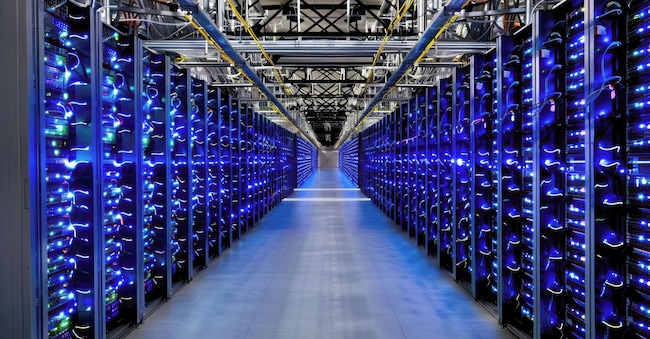
The expansion of artificial intelligence is taking an increasingly evident toll on energy consumption.

 Hammam - stock.adobe.com

3' min read

Translated by AI
Versione italiana

3' min read

Translated by AI
Versione italiana

The race for artificial intelligence is beginning to show a measurable environmental impact in the sustainability reports of major technology groups.

Google and Amazon, two of the leading providers of the cloud infrastructure on which AI models, services and applications run, ended 2025 with rising electricity consumption and emissions, whilst continuing to highlight their investments in renewables, data centre efficiency and cooling technologies.

Loading...

In its 2026 Environmental Report, Google forecasts a 37 per cent increase in electricity demand for 2025 – the largest annual increase in its history. The company attributes this growth to the expansion of the technical infrastructure required to support AI, cloud computing, Search, YouTube and other digital services. Operational emissions fell by 2 per cent, partly due to the purchase of clean energy, but emissions from the supply chain rose by 25 per cent. This is due not only to the electricity used in data centres, but also to the production of servers, chips, networking equipment and physical infrastructure.

It’s the same story with Amazon. In its 2025 Sustainability Report, the group reports a total carbon footprint of 80.85 million tonnes of CO₂e, up 16 per cent on 2024. Emissions linked to purchased electricity rose by 34 per cent, driven by data centres and the electrification of the logistics network and buildings. Indirect Scope 3 emissions reached 61.74 million tonnes, an increase of 20 per cent.

In short: AI is transforming data centres from digital assets into major consumers of energy, capital, water and advanced components. This is much as local communities and politicians in the US (and increasingly in Italia too https://www.ilsole24ore.com/art/data-center-tre-richieste-sfidano-paletti-regionali-lombardia-AICIZ0kD), to the extent that they have even managed to block some projects.

So far this year, public opposition and protests have halted or delayed at least 75 data centre projects worldwide, with an estimated value of nearly 130 billion dollars.

For years, big tech companies have been able to portray digital growth as a trajectory that is relatively compatible with climate targets: greater efficiency, more renewable energy purchase agreements, and better use of servers. Not to mention the benefits of remote working and video conferencing in terms of reducing travel and traffic.

Generative AI challenges this narrative, because it requires high-density clusters, specialised accelerators, more sophisticated cooling systems and network connections (and therefore data centres) located in the right places, close to users, in order to improve performance.

Google explicitly admits this: the roll-out of AI infrastructure is proceeding faster than the decarbonisation of electricity grids. Amazon reports that, in 2025, it added more global data centre capacity than any other company, including over 1.2 gigawatts in the fourth quarter alone, and forecasts further growth in cloud and AI.

Efficiency remains an issue. Amazon reports an average global PUE of 1.14 for its data centres and a water use effectiveness of 0.12 litres per kWh of IT load. Google reports contracts for over 12 gigawatts of new clean energy by 2025 and claims that its initiatives have prevented over 58 million tonnes of CO₂e. However, economies of scale are offsetting a significant portion of the technological progress.

The battle is not lost. Amazon has confirmed its commitment under the Climate Pledge to achieve net-zero carbon emissions by 2040; Google remains committed to achieving net-zero emissions across its operations and value chain by 2030. However, the growth of AI makes these targets more costly and more dependent on external factors: network connection times, the availability of carbon-free energy, the location of suppliers, and the ability to decarbonise semiconductors and components.

This is already a systemic issue. The International Energy Agency estimates that global electricity consumption by data centres could double to around 945 TWh by 2030, with AI among the main drivers of this growth.

Copyright reserved ©
Loading...

Brand connect

Loading...

Newsletter

Notizie e approfondimenti sugli avvenimenti politici, economici e finanziari.

Iscriviti