
“Data centres require energy planning; it is short-sighted to rule out SMRs”
An interview with Undersecretary Alessio Butti. A data centre, he says, is not measured solely in square metres or servers, but in available megawatts.

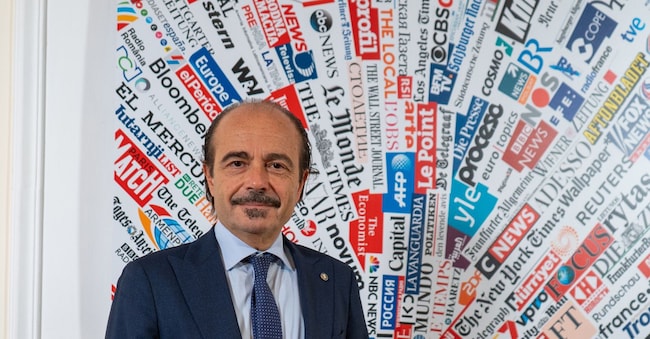
Italia has the advantage of its geographical location to position itself as a European hub for data centres and supercomputing, but the real challenge lies in the energy required to power them. And on this front, ‘dedicated planning’ is needed. This is according to Alessio Butti, Under-Secretary to the Prime Minister’s Office with responsibility for Technological Innovation, in an interview with DigitEconomy.24, in collaboration with Digit’Ed, a group active in training and digital learning. Undersecretary Butti is working very closely with the Minister for the Environment and Energy Security, Gilberto Pichetto, to find a solution. Part of this solution could involve SMRs – small modular reactors. Resolving this issue is, moreover, essential given the strategic importance of these assets.
“Data centres,” says Butti, “are an essential part of digital sovereignty and national security. Whoever controls data and critical infrastructure controls an increasing share of decision-making processes within the economy and the state. This is why Italy must set its sights high. We have a number of objective advantages, such as our geographical position in the Mediterranean and our undersea fibre-optic cables. The Digital Decade Report acknowledges that Italia is above the EU average in terms of 5G, fibre, digital services, cloud computing and data usage, and also recognises Italia’s leading role in AI governance. The point, however, is not simply to host other countries’ infrastructure, but to develop national and European capabilities. This is the rationale behind the launch of major initiatives such as Q-ARCA, in collaboration with the Ministry of Defence: a national HPC, AI and quantum computing platform, under public governance, open to research and industry, capable of supporting strategic applications in healthcare, energy and defence. We must give the development of data centres a national strategic framework.’
Undersecretary, the Milan area is currently seeing the fastest growth in data centres – is there a risk of other geographical areas being left out?
Milan is currently the most dynamic market because it brings together demand, businesses and connectivity. Liguria also has a strong potential in this area. But we cannot build a digital country at a single pace.
The South, and Sicily in particular, has some very interesting characteristics: its location in the Mediterranean, its submarine cables, its proximity to digital data flows between Europe, Africa and the Middle East, and the availability of land and energy potential. Palermo and Sicily could become a key component of a decentralised national strategy.

