
AI data centres: what they’re like today and what they’ll be like in five years’ time
A tour of Vertiv’s facility in Rugvica, Croatia, where the infrastructure for digital life is built. The challenge? It lies in rethinking the systems that make up the server rooms,

_20261005074033-U13865136440jMs-1440x752@IlSole24Ore-Web.jpg?r=650x341)
ZAGREB – Artificial intelligence is reshaping data centres, and this process of change ranges from rack density to the systems that supply power and dissipate heat. The issue is well known: infrastructure is required to support heavier workloads and ensure ever-faster processing cycles, whilst projects involving the use of AI are growing in scale. Part of the solution is built in the factory, whilst other aspects concern technologies for cooling and controlling the systems, with liquid-cooling solutions and digital tools becoming increasingly prevalent. Looking ahead to the next five years, more powerful rack systems and modular architectures are expected to become the norm, though this will depend on how quickly they can be implemented in the face of critical constraints such as actual energy availability, heat dissipation and connection times. During Vertiv Week 2026, which also included a stop at the American manufacturer’s Rugvica facility, further confirmation emerged of the ‘transition’ taking place in the world of data centres and how the growth in the infrastructure needed to power AI is also accelerating investment in production sites across Europe. Indeed, Vertiv itself announced just a few days ago the expansion of its campus in Nové Mesto nad Váhom, in Slovakia, which over the next 18–24 months will add approximately 22,000 square metres of power systems, switchboards, thermal management equipment and liquid cooling solutions to strengthen the EMEA region’s response capacity.
-U17564600120Ayr-600x313@IlSole24Ore-Web.jpg)
Inside the Rugvica factory
Il Sole 24 Ore, together with a select group of Italian technology publications, visited the facility on the outskirts of the Croatian capital, where various systems for data centres are designed and assembled, including the so-called ‘containers’ which house arrays of equipment ready to be added to an existing server farm. One of the trends that has emerged clearly is the shift towards carrying out an increasing proportion of operations in the factory, operations which, in the past, were carried out and integrated directly on-site at data centres. Vertiv’s flagship product in this regard is SmartRun, a comprehensive modular solution that combines power distribution and cooling elements with monitoring and control components. In systems designed for very high AI loads, where both the power required by the racks and the heat to be dissipated increase, the integration of these elements becomes essential for coordinating power supply and thermal management. The advantage of the ‘prefabricated data centre’, as the company’s engineers explained, lies primarily in the process: components designed to work together are assembled and tested at the factory, then transported to the site for connection and commissioning. This model reduces the number of operations requiring on-site coordination and makes installation more easily repeatable, whilst allowing for variables in terms of configuration and equipment that must take into account the project’s specific characteristics and the regulations of the country hosting the data centre. Another key aspect of the visit to Rugvica is the pervasive role of digital technology in the management of operations and facilities, and the ever-increasing convergence between the virtual and physical worlds: the status of certain electrical equipment, for example, can be visualised in a three-dimensional environment, whilst simulation software helps to analyse the thermal behaviour of the systems. Everything, from design to equipment testing, forms part of an industrial process designed to deliver increasingly complete AI modules to data centres as quickly as possible, ready to be put into operation.
-U65562018158EuY-600x313@IlSole24Ore-Web.jpg)
“Changing the way systems are designed and manufactured”
Five key elements are reshaping the data centre: computing density, speed, scale, complexity and load profiles. According to Paul Ryan, Vertiv’s EMEA President, the combination of these factors requires a shift not only in the technologies used, but also in the way infrastructure is designed and built. “The markets in which we operate are transforming, and we must transform accordingly, changing the way we design systems and industrialise their production,” he said during his speech at the event in Zagreb. Speed, in particular, is one of the most evident changes, as demonstrated by a few figures. Whilst in the past it was reasonable to build 10 or 20 megawatt plants over a year and a half, today’s projects aim for much greater capacities in radically shorter timescales, which can be reduced to six to eight months.
To keep up with this pace, according to Ryan, it is not enough simply to increase the production of individual units; the entire process must be industrialised. A UPS, a ‘chiller’ (cooling unit) or an electrical switchboard can now be assembled into factory-tested systems and installed on-site ready for connection, reducing the risk of integration and configuration errors. “A system that operates in a coordinated manner throughout the entire electrical chain,” explained the manager, “is also more efficient”, and this logic underpins solutions such as the aforementioned SmartRun or OneCore, which combines electrical and thermal modules within a broader configuration. “We are no longer talking about producing individual devices but about producing AI factories on an industrial scale,” Ryan added, noting that the speed of building an artificial intelligence infrastructure is accompanied by other critical factors, such as the number of tokens generated per watt, the time between the project’s launch and the first results, and the cost per token. These are all indicators that are inextricably linked to performance, efficiency, timelines and investment in data centres and which, according to Vertiv’s president, highlight the importance of designing power supply and cooling (liquid cooling is experiencing steady and significant growth), IT equipment and services as parts of a single system, capable of operating in a coordinated manner and being optimised over time, throughout its entire lifecycle.
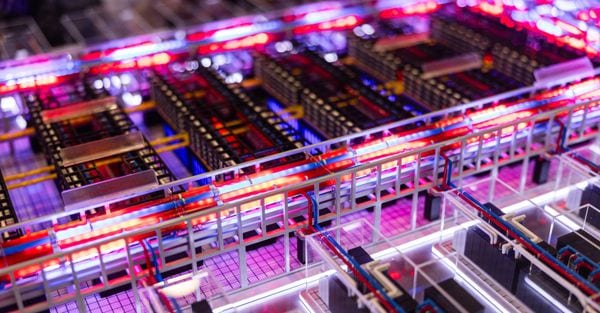
From the server room to the AI factory: Nvidia’s formula
According to Rod Evans, Vice President of Supercomputing, AI and Cloud Infrastructure at NVIDIA in EMEA, a special guest at Vertiv Week 2026, the data centre is becoming a computing factory. “AI factories,” he declared from the stage, using a metaphor, “are the industrial infrastructure of the age of artificial intelligence: energy goes in at one end, and tokens come out at the other.” The focus is therefore shifting from individual servers to the complete system, because the common goal is to get the infrastructure into production quickly and enable it to generate as much useful computing power as possible. To achieve this, Nvidia’s approach consists of five interconnected layers – power, chips, infrastructure, models and applications – and must take into account mutually influencing constraints such as available power, cooling, space and connectivity. The latter, in particular, is certainly not a secondary consideration. “The network is the computer,” Evans summarised the concept, echoing a well-known phrase from the IT industry, whereby, where thousands of accelerators work together, the ability to connect them becomes an integral part of the performance of the entire system.

