Cinema

David di Donatello: triumph of 'The Cities of Plain' with eight statuettes

Great success for Francesco Sossai, best actress Aurora Quattrocchi, best actor Sergio Romano, but the cinema suffers and the workers protest

by Stefano Biolchini and Andrea Chimento

Il regista Francesco Sossai

4' min read

Translated by AI
Versione italiana

4' min read

Translated by AI
Versione italiana

Italia's cinema celebrates itself, and wins what many considered to be 'the outsider', but its workers are at the brink of exhaustion due to funding cuts, and their protests, debates and protests are the constant background of the awards evening. And so, honour to the credit above all: the winner of the 71st edition of the David di Donatello, the Oscars of Italia cinema, was 'Le città di pianura' by Francesco Sossai, which took home eight statuettes (it actually boasted 16 nominations), including that for best film and best director. "This award is important for me and for everyone who worked on this film. But also for all the crew who are not here with us on this stage," was his comment.

David di Donatello: le foto dei vincitori

Photogallery17 foto

The invisibles of the cinema, one might say, because while rightly speaking of those who won, we cannot fail to point out how the entire ceremony was accompanied by the multiple stances and protests of the trade associations that expressed their concern and discontent with the cuts to a sector that is suffering greatly.

Loading...

David di Donatello: il red carpet

Photogallery31 foto

Piera Detassis

During the customary visit to the Quirinale on the eve of the ceremony, Piera Detassis, president and artistic director of the Fondazione Accademia del Cinema Italia, read out some passages from the associations' letter, emphasising how the dialogue between the institutions and the world of cinema has been difficult, to say the least, over the past year and hoping that this occasion would allow the resumption of a constructive dialogue between cinema and politics.
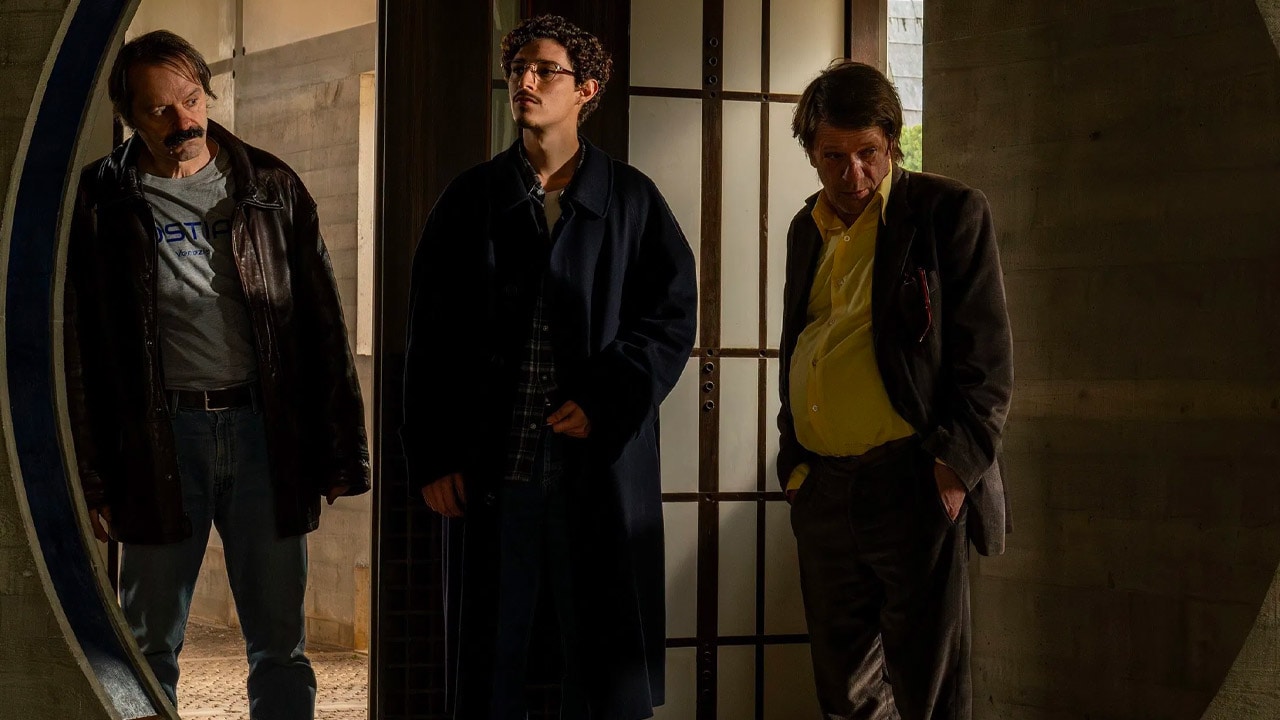
Le città di pianura

President of the Republic Sergio Mattarella emphasised how much cinema is work, a heritage of our country that must be supported, and how the path of the Seventh Art is also our path, declaring himself optimistic about the success of finding a balance between the different requirements.

The speech that caused the most controversy was that of the Minister of Culture Alessandro Giuli, who stated that some films had received undeserved public funding and that others, although deserving, had not: the reference was above all to the film 'Tutto il male del mondo', dedicated to Giulio Regeni, which had been deprived of public funds, on which Giuli said: 'my heartfelt thoughts go out to his memory and my promise, already partly fulfilled, to put order and an extra moral conscience where opacity and imprecision prevailed instead. Never again'.

The ceremony and the main awards

The echo of these premises reverberated throughout the awards ceremony with important messages in this regard, starting with presenter Flavio Insinna who pointed out how a country that does not defend the cinema runs the risk of ceasing to dream. 'A country that does not defend the cinema and the films to be produced is a country that stops dreaming. I am especially worried about a country that stops dreaming better,' the presenter's comment at the opening of the ceremony.

Arriving at the most important awards, in addition to those for best film and best director, Francesco Sossai's 'La città di pianura' was awarded the prizes for best production, best original screenplay, best editing, best original song, best casting and best leading actor to Sergio Romano. "So many things have been said and I don't think we can pretend nothing has been said, however, not wanting to be used or misinterpreted, we all know what the moment is and what we are experiencing, not only in the world of cinema, but in the world in general. So let me simply share a reflection on our work. Our country needs to be told, so it needs to be seen. Like a child needs to be seen. Like each of us needs to be seen and mirrored in the eyes of others,' the actor commented.

The David for Best Leading Actress went to Aurora Quattrocchi for 'Gioia mia' by Margherita Spampinato (a film that also deservedly won Best Debut), while the title of Best Supporting Actress saw Matilda De Angelis win for 'Fuori' by Mario Martone.

Best Supporting Actor is instead Lino Musella for his excellent performance in Valerio Mastandrea's 'Nonostante'. "Art is a threat to autocrats and fascists said Robert De Niro some time ago. And I want to thank the men and women of the Global Sumund Flottilla and those who fight against the horrors of the world. I will try to do my best and expose myself in work and in life. I will never stop saying: Pfree Palestine," were Musella's words.

No awards to Sorrentino and Guadagnino

And here it is the total absence of statuettes for Paolo Sorrentino's 'La grazia' that makes the headlines, as well as the disappointment at the failure of Luca Guadagnino's courageous 'Queer' to win several nominations where it would have well deserved to raise the David.

The other statuettes

The title for best non-original screenplay went to 'Le assaggiatrici' by Silvio Soldini, a film that also won the David Giovani and that for best make-up.

Four statuettes for Damiano Michieletto's 'Primavera', which won for best composer, best costumes, best sound and best hairstyle.

Three Davids went to "The Forbidden City" by Gabriele Mainetti: best set design, best visual effects and best cinematographer. The best documentary was "Roberto Rossellini - More than one life", while the best short film was "Everyday in Gaza" by Omar Rammal.

Already awarded before the ceremony, the David of the Spectator to Gennaro Nunziante's 'Buen camino' with Checco Zalone and the David for Best International Film to Paul Thomas Anderson's memorable 'A Battle After Another'.

Among the most exciting moments of the evening were the David alla Carriera award to Gianni Amelio, the David Speciale to Bruno Bozzetto and the Cinecittà David 71 award presented by Stefania Sandrelli to the extraordinary director of photography Vittorio Storaro.

Copyright reserved ©

Brand connect

Loading...

Newsletter

Notizie e approfondimenti sugli avvenimenti politici, economici e finanziari.

Iscriviti