
David Richardson, the painter-romancer who handles natural disasters (but ignores hurricanes)
He has a military background, an artistic streak and no experience in civil defence. Yet today he heads the agency that is supposed to protect millions of Americans from natural disasters

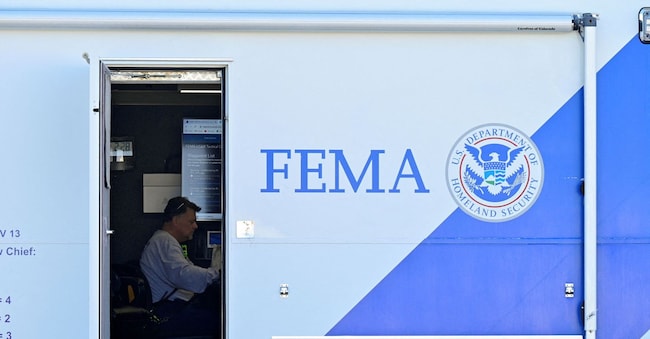
In theory, David Richardson is supposed to be the man leading the US federal response to natural disasters. In practice, he is a former Marine officer with artistic ambitions, a controversial pen and crusading rhetoric. His appointment as acting head of Fema - the Federal Emergency Management Agency - came at a crucial time, just as the hurricane season was beginning. Yet, it was at an internal briefing that Richardson triggered outrage from politicians and observers when he stated - in his joking manner - that he"didn't know the United States had a hurricane season". Every year, hurricanes cause the deaths of dozens of people and generate economic damage exceeding hundreds of millions of dollars in several American states. With global warming, these storms are becoming progressively more intense, frequent, and costly, so much so that according to the National Oceanic and Atmospheric Administration this year's season could bring up to ten hurricanes.
The statement, relayed by Reuters, sparked the ire of the Democrats. Chuck Schumer, Senate minority leader, openly called for his dismissal. Texas Congresswoman Jasmine Crockett commented: 'This is what happens when you choose vibes over competence'. But it was only a misinterpreted irony, they assured the Department of Homeland Security (DHS), of which Fema is a member. The controversy, however, was not enough to obscure the bigger picture: the ideological and structural transformation Richardson is imprinting on Fema under the leadership of President Donald Trump and DHS Secretary Kristi Noem.
From battlefield to federal disaster
Born in 1991, Richardson spent over 20 years in the Marines. He has fought in Iraq, Afghanistan and Africa, and has taught military history at George Washington University and strategy at the Army Artillery School. He has won awards for valour, but nothing in his CV links him to civil defence or environmental crisis management. Yet in January 2025, he was appointed assistant secretary for the DHS in the area dealing with nuclear, chemical and biological threats. And a month later, without any Senate confirmation, he became the number one - albeit on an interim basis - at Fema.
Richardson's first speech to the agency staff lasted 17 minutes. It was enough for him to summon the martial spirit to the cry of "don't stand in my way, I'll pass you over". He promised to take the body out of Washington's 'centralist ballast' and transform it into a 'streamlined, responsive force at the service of the states'. He also cancelled the multi-year strategic plan, calling it 'disconnected from the mission', and promised a new strategy for the period 2026-2030. He then emphasised that"I - and only I - speak for Fema", raising more than one eyebrow among the Ageniza veterans.
Yet, his priorities seem more oriented towards reducing the federal presence than improving efficiency. In keeping with the Trumpian vision (the same one that brought Elon Musk to head the Department of Government Efficiency, albeit for only four months) downsizing the agency is a stated goal. Former administrator Cameron Hamilton was removed after saying it was 'not in the best interests of Americans to eliminate Fema'. Under Richardson, the agency has already seen hundreds of layoffs and cuts to programmes such as door-to-door visits, infrastructure funding, training, and hurricane seminars for state and local officials.


