
Dazn bets on the 2026 World Cup: home-grown and partnerships under consideration
For Serie A, the axis with Mediaset group's Publitalia remains, but not replicated on the upcoming World Cup. Road show at the start in media agencies while atthe centre rumours the hypothesis quote

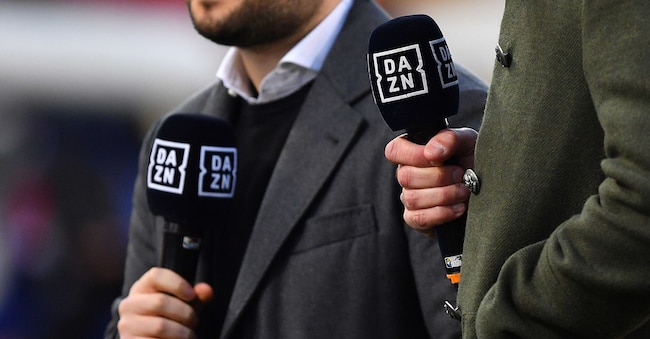
New distribution partnerships are being studied, but also a strong bet on the advertising side: for the 2026 World Cup, according to what Il Sole 24 Ore was able to verify, Dazn will keep the collection in house. There is no backing for Publitalia, the Mediaset group's concessionaire, which for the 'Netflix of sport' continues, however, to deal - and with reciprocal certificates of satisfaction - with the collection for Serie A, of which Dazn has the rights for all the matches and whose ratings are up 18% compared to the previous season.
The company owned by the magnate Len Blavatnik's Access Industries is warming up its engines in view of the highlight of the summer, which will see Dazn broadcast all 104 matches of the tournament to be played in the USA, Mexico and Canada, with RAI taking home the free-to-air rights for 35 matches.
It is a different scheme from the one experimented with the World Cup 2025, when the platform had been able to sub-license to Mediaset 22 matches in free-to-air and co-exclusive. This time the risk has been closed upstream: with RAI already holding the exclusive free-to-air rights, there is no room for another generalist.
The operational machine has now already started. A number of media agencies have been notified of the departure, in the coming days and in any case by March, of a roadshow to present the commercial offer dedicated to the 2026 World Cup. Having acquired the rights for three key markets - Italia, Spain and Japan - the Dazn group has in fact chosen to implement a multi-territory strategy to maximise synergies and offer brands unprecedented global visibility. At this point, for the company led in Italia by Stefano Azzi, the dossier becomes twofold: maximising advertising monetisation of the tournament and, at the same time, using the World Cup as a retention and subscriber acquisition lever.
The move is far from minor. Bringing the world's most important football tournament into the summer portfolio allows the platform to build continuity of consumption between the end of Serie A, the World Cup, and the restart of the new season, while also flanking the European women's and men's volleyball championships. At a time when the business of sports streaming is increasingly playing on the ability to reduce churn, i.e. the abandonment of users in the less strong months of the calendar, the World Cup becomes at the same time an editorial product, a commercial lever and a positioning tool.


