Mining

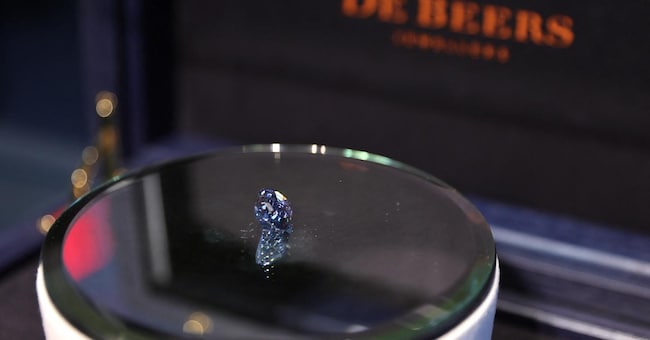
De Beers' diamonds are now a ballast for Anglo's accounts: divestment in sight?

The mining group's balance sheet sunk by $2.6 billion in write-downs, more than half of which was for the historic subsidiary. Anglo American also fears a structural crisis in the platinum sector and launches a portfolio review
by Sissi Bellomo

Gemme meno preziose. I prezzi dei diamanti sono crollati, timori di crisi strutturale

3' min read

3' min read

Diamonds and platinum are no longer as valuable to Anglo American as they once were. On the contrary, they have become a ball and chain and the mining giant - increasingly in crisis - may be tempted not only to downsize its activities in these areas, as it has already begun to do, but perhaps even to get rid of them.

Speculation about a possible sale of De Beers in particular has been circulating for some time now. And they are bound to flare up again after Anglo on Thursday 21 announced write-downs of $2.4 billion, of which $1.6 billion related to the diamond company, and the intention to subject the group's entire portfolio of projects and holdings to a thorough 'review'.

Loading...

At the end of the process, which will take about a year, "absolutely nothing is ruled out," said CEO Duncan Wandblad, who until recently dismissed any suggestion of divestments. "Each asset has to play a role at each stage of the cycle, no one can be good only when you are at the peak (of the cycle)," he added, interviewed by Bloomberg TV.

Anglo American's balance sheet was affected by heavy write-downs of USD 800 million, which also affected its nickel assets in Barro Alto, Brazil. Profits in 2023 plummeted by 94% to USD 283 million, the group reported, while operating profit (EBITDA) fell by more than 30% to USD 10 billion, in line with expectations. Profitability is now three-quarters dependent on iron ore and copper (and operational difficulties have also emerged in these areas in recent months).

All the mining biggies, from Bhp to Rio Tinto to Glencore, have felt the impact of falling commodity prices and many have cut their dividends: which Anglo has also done, reducing them to $0.96 per share (-52%).Nickel mines are proving to be a problem for everyone: the metal's price has halved in a year due to the huge growth in production in Indonesia, which has put most operations in the rest of the world out of business.But Anglo American is further penalised by specific difficulties, largely related to activities that distinguish it from its competitors and that were once considered strengths.

Wandblad himself, at the helm since April 2022, does not hesitate today to point to diamonds and platinum as the main culprits for the group's crisis. The risk - which has not escaped the CEO and will be taken into account in the portfolio review - is that they will remain a burden in the future: for both, a structural contraction in demand is looming, caused in the case of diamonds by synthetic gems (which have already conquered 10-15% of the market) and in the case of platinum by the spread of electric vehicles, given that this metal and others from the same group, such as palladium, are used in the mufflers of combustion engines.

The stock market on Thursday 21 pardoned Anglo: the stock nevertheless rose 3% in London, perhaps helped by the announcement of a deal with Vale to develop the Serpentina iron ore deposit with the Minas Rio deposit in Brazil (Vale will pay $157.5 million and will have 15% of the integrated operations). But in the past year, the group's capitalisation has shrunk by more than 40%, to GBP 23.8 billion (EUR 27.8 billion). A disastrous performance, which has prompted speculation that the entire group will become prey to takeovers.

As for De Beers and Amplats, the South African platinum-producing subsidiary, many analysts have long regarded a sale as not only plausible but desirable from Anglo's point of view.At the moment, the group - engaged in a billion-dollar cost-cutting exercise - seems more inclined to downsize them, buffering the damage.

On Monday 19, 3,700 redundancies were announced at Amplats, while for De Beers Anglo is 'actively considering' the spin-off of assets in southern Africa. Or at least, that is what Wandblad had said in early February, when interviewed by the Financial Times.

Breaking the link with the diamond bigwig would be a drastic step for Anglo American, whose history has always been intertwined with that of De Beers. The mining group, founded in 1917 by Ernest Oppenheimer, has controlled the company since 1926. In 2011 it also took over the De Beers share that had remained in the hands of the Oppenheimer family, rising from 45% to 85% (the remaining 15% is held by the Botswana government).

Copyright reserved ©
Loading...

Brand connect

Loading...

Newsletter

Notizie e approfondimenti sugli avvenimenti politici, economici e finanziari.

Iscriviti