
De Filippo, ‘the Italian Chekhov’, on stage in Ontario
At the Avon Theatre in Stratford, the Sunday lunch from Saturday, Sunday and Monday, directed by Antoni Cimolino

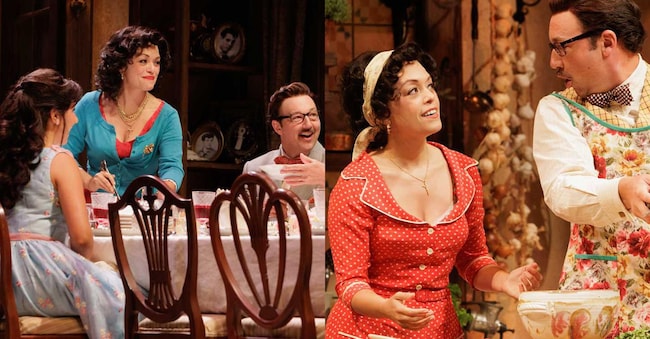
At the moment, the rich aroma of ragù wafts through the Avon Theatre in Stratford. It is the Sunday lunch from Saturday, Sunday and Monday, the comedy by Eduardo De Filippo chosen by Antoni Cimolino for his final production as artistic director of the Stratford Festival.
From April to October, this small town in Ontario, a couple of hours’ drive from Toronto, becomes Canada’s theatre capital. The Festival, one of North America’s leading repertory theatres, attracts over 400,000 spectators a year, with a programme centred on the Shakespearean canon and a history marked by performers of the calibre of Alec Guinness, Christopher Plummer and Maggie Smith. De Filippo therefore crosses the ocean in a sort of private jet, arriving at one of the key events in the country’s theatrical calendar.
And yet his name is by no means new to these pages. Over the last thirty years, Cimolino, an Italian-Canadian director, has worked tirelessly to include him in the company’s repertoire. He describes him as ‘the Italian Chekhov’, considering him an author ‘indispensable to the repertoire of any company that aspires to stage the world’s classics’. Bringing him to Stratford also means broadening a tradition that has historically been dominated, in his words, by ‘a very Anglophone perspective, with the addition of Molière’.
Translating Eduardo, however, and bringing his world to life for a Canadian audience is no easy task. Saturday, Sunday and Monday is set, moreover, in an Italia that is now a distant memory. ‘These domestic situations stem from a world that predates legal abortion, the pill and even divorce in Italia,’ observes Cimolino.
We are in Naples in 1959. Against the backdrop of the Avon, set designer Douglas Paraschuk has recreated a cerulean Vesuvius behind the spacious kitchen of the Priore family home. Peppino is consumed by the suspicion that his wife, Donna Rosa, is having an affair with their neighbour, Luigi Ianniello. An entire family gathers around his jealousy: children, grandparents, relatives, neighbours, friends, and here and there glimpses of proto-feminist sentiment. Eduardo crafts a polyphonic ensemble of seventeen characters. ‘It’s like an orchestral piece,’ explains Cimolino. ‘There are various instruments, and each has its own thematic function.’

