
De Gennaro (GdF): widespread evasion among influencers and digital creators
The Commander General of the Italian Finance Police at the Festival of Economics: strategies include a mix of repression and prevention. Increasing focus on phenomena linked to new technologies

Key points
- Income detection
- Protocol with the Revenue
- The phenomenon of abusive doctors and surgeons
- Pos linked to foreign accounts
- From e-commerce to booking platforms
- The numbers of the unobserved economy
- Prevention and repression
- Money laundering in Italia between 25 and 35 billion
- Artificial Intelligence's help in risk analysis
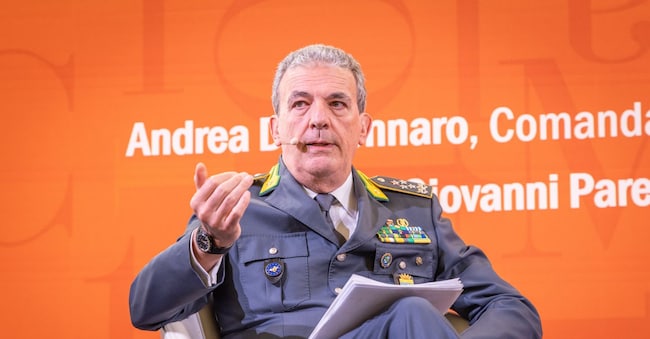
The evasion of influencers and digital creators 'continues to be wide and widespread' but the fight goes on in synergy with the Revenue Agency with a joint activity plan that 'tries to identify the disproportion between declared income and various contents, views, the number of subscribers to the channel: often there is a strong disproportion'. This is one of the aspects mentioned by Andrea De Gennaro, commanding general of the Guardia di Finanza, during his speech in the panel 'Submerged economy, the other face of Italia' at the Festival of Economics in Trento, organised by Sole 24 Ore and Trentino Marketing.
The identification of income
"I note that a difficulty has arisen in the actual identification of the type of income produced by digital creators, is it business income, of the profession?" the commander general emphasised. It is 'a new profession, also carried out by many people who are not yet web stars, maybe they would like to become one, and also by categories that tended to hide from being detectable by the tax authorities' and also by 'those who work on sites like Only Fans'.
The protocol with the Revenue
There have been cases, De Gennaro pointed out, 'of digital content creators coming forward with the Revenue Agency claiming that they did not know whether to pay tax and under which category. In the line of countering evasion in this sector, which continues to be broad and widespread, there is one of the moments of greatest sharing of activities with the Revenue Agency,' and we have entered into a specific protocol with the Agency to draw common operational lines in the digital economy sector of digital content creators'. The joint activity plan, he concluded, 'seeks to identify the disproportion between declared income and various content, views, the number of subscribers to the channel, often there is a strong disproportion'.
The phenomenon of abusive doctors and surgeons
There is not only a problem in digital. "There is another important phenomenon that is growing a lot in this period which is that of abusive doctors and surgeons," indicated De Gennaro. "In the face of the sharp increase in demand evident in recent years we have seen growing numbers of the phenomenon, then we often see it in TV broadcasts with the striking cases. But against the striking cases there are many others that end well from the point of view of the patient's health but conceal a total, complete and widespread evasion. It is a particularly intrusive and dangerous phenomenon, and our attention is always growing. In addition to the fact of tax evasion that is almost certain, there is another major reflection, which is that of unfair competition against professionals who practise with the due authorisations, and above all there is an issue of patient health,' he added.
Pos linked to foreign accounts
The discourse, however, is much broader and multifaceted. "The forms of total evasion from paying taxes," emphasised the commanding general of the Guardia di Finanza, "are different, from hiding income to more advanced ones, such as non-invoicing or invoicing for non-existent transactions or other. The electronic invoicing obligation is a tool that has helped a lot. We think a lot can be done by the recent rule that electronically links the Pos with the cash register, because often the shopkeeper has two or three Pos linked with foreign current accounts in countries that do not have very strict tax collaboration regimes. So there are uncontrolled outgoings despite having a traced payment. With the linking rule there is an extra step'.


