
De Gennaro, the letter written before his suicide: defending his honour, his relations with prime ministers and the hard drives
In his ‘moral testament’, the former Chief of Police names Prodi, Amato, Enrico Letta, Conte and Gianni Letta. His account of the digital archives sought by the investigators

Key points
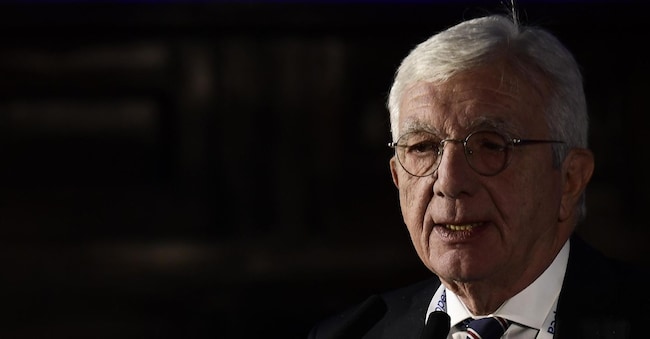
“I challenge anyone to claim that I ever asked for anything for myself.” To prove this, Gianni De Gennaro names four former Prime Ministers – Romano Prodi, Giuliano Amato, Enrico Letta and Giuseppe Conte – and the former Under-Secretary to the Prime Minister, Gianni Letta. Five politicians with whom he is linked through various stages of his career, from the end of his term as Chief of Police to his senior roles at Finmeccanica, Banca Popolare di Bari and Eurolink.
It is one of the most politically significant passages in the eight handwritten pages left by the former prefect before he took his own life at his country home in the Maremma, revealed exclusively by Fiorenza Sarzanini and Giovanni Bianconi in the *Corriere della Sera*. De Gennaro describes this document as his ‘moral testament’, in which he also addresses the issue of the digital archives that have long been at the centre of the investigations by the Caltanissetta Public Prosecutor’s Office.
Appointments and links with politics
De Gennaro maintains that he has never sought appointments and that, on the contrary, he has on several occasions tried to avoid political requests. “Enrico Letta can testify to my reluctance to take the helm at Finmeccanica, to the extent that, to persuade me, he had the President of the Republic ring me. Giuseppe Conte can tell you that I tried in vain – though I eventually complied with the order – to avoid taking on the role of chairman of Banca Popolare di Bari. Gianni Letta can confirm that he was the one who conveyed the request for me to take on the role of chairman of Eurolink.”
The tone was quite different when referring to Romano Prodi, Prime Minister in 2007, when De Gennaro stepped down as head of the State Police. ‘I was dismissed from my post as Chief of Police by Romano Prodi, who had the foresight to let me find out about it through his response during “Question Time”, and thus on live television.’ As for his professional aspirations in the wake of that incident, the former Chief of Police suggests contacting Giuliano Amato, who was Minister of the Interior at the time: “He will confirm that, in a written letter, I did not ask for any post other than that of being able to carry out my duties as Prefect in any city.”
Defending one’s actions
De Gennaro cites the circumstances in which the appointments were made in support of a broader defence of his conduct within the institutions. The former prefect was under investigation by the Caltanissetta Public Prosecutor’s Office for obstructing justice, aggravated by the intention to aid the Mafia, as part of the inquiries into the Via D’Amelio massacre, the disappearance of Paolo Borsellino’s ‘red diary’ and possible external accomplices of Cosa Nostra. The magistrates had requested that he be placed under house arrest, but this was refused by the investigating judge.

