Real Estate and Surveillance

Dea Capital Re, Bankitalia's accusations against former top management on money laundering risks

The Authority document notes shortcomings in actions, functions and organisation. The appointment of the new CEO is awaited

by Laura Cavestri and Vitaliano D'Angerio

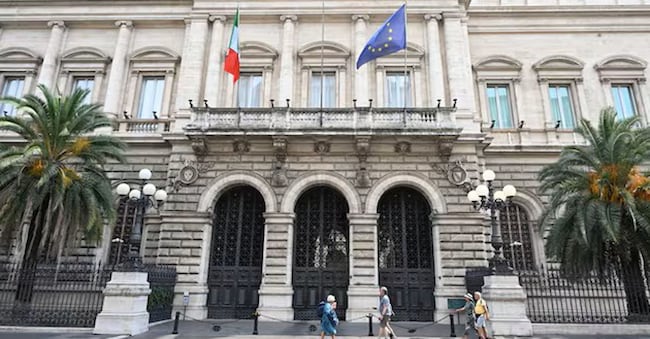
Palazzo Koch, sede principale della Banca d’Italia a Roma. ANSA

4' min read

Translated by AI
Versione italiana

4' min read

Translated by AI
Versione italiana

Harsh accusations for the former top management of the management company Dea Capital Real Estate. An act that leaves no doubt as to the shortcomings of anti-money laundering regulations.

This was set down in black and white in the document drawn up by the five Bankitalia inspectors who, from 22 September to 12 December 2025, sifted through the minutes, internal regulations and management reports of one of Italy's largest real estate asset management companies, which at the end of June last year managed 51 funds, with assets under management worth EUR 11.7 billion.

Loading...

The accusations against former top management

In the inspection report, of which Il Sole 24Ore came into possession, with regard to the anti-money laundering risk, the inspectors write that 'the board of directors did not show adequate attention to the risk under consideration'. And yet, from the register of suspicious transaction reports (Sos) "reports emerged referring to the operations of 5 of the 8 new funds launched since 2022 (equal to 70% of the assets managed by the funds set up in the same period) and to no. 12 disinvestments of assets (worth about EUR 600 million, equal to about 23% of the total) relating mainly to funds previously set up".

In the SOS register the findings were therefore there. "The chairman of the board of directors and the chairman of the board of statutory auditors," the inspectors write, "never carried out an examination of the SOS register in order to grasp the relevance of the phenomena reported therein.

Branded as 'inadequate' the contribution of the 'managing director to the definition of a framework of internal rules suitable for ensuring adequate participation in the process by the various units involved'.

The inspectors' criticism affects everyone: the contributions of the Risk and Control Committee and those of the Board of Statutory Auditors are considered 'insufficient'; in the former case because 'in dealing with individual transactions prior to board debates, it has always overlooked the risk under examination'; in relation to the Board of Statutory Auditors, the criticism concerns the fact that 'it has not carried out independent in-depth investigations'. Finally, 'the activity of the anti-money laundering and internal auditing functions was neither incisive nor sufficiently extensive'.

A step backwards

At this point, we need to take a step back. The results of the inspection (see also Il Sole 24 Ore of 21 May) have already resulted in the resetting of the old top management, with the departure of CEO Emanuele Caniggia in particular, who had held that position since 2014. Also gone are the members of the board of directors and the board of statutory auditors. The position of CEO is still vacant. Appointed instead last Friday, together with the new members of the governance bodies, was also the new chairman, in the figure of Giancarlo Scotti, former managing director of Cdp Real Asset and a solid track record in the Italia real estate environment.

New Funds and Commissions

Under the inspectors' lens ended up mainly the new funds established since 2022. With a particular focus on performance fees.

"The operations connected to some of the newly established funds," they write in the report, "would become a relevant driver of the variable remunerations of the CEO and a series of employees involved in the AML (Anti-money laundering, Ed.) process upon achievement of the objectives; we refer above all to the benefits connected to the so-called performance fees, provided for by the fund management regulations, for which the Board of Directors on 14 July 2022 approved a plan that provides, for a series of funds, for the retrocession of a part of them to the subjects in question.

In practice, the Board of Directors was accused by the inspectors, in particular, of having "frequently approved the start of operations of new funds even when the due diligence analyses on the relevant subscribers had not yet been concluded (four out of the seven funds examined during the inspection) and, in any case, always without knowing the risk profile assigned to them, limiting itself to generically delegating to the managing director and his staff the management of the subsequent process of finalising the resolutions". And they added that the Board of Directors 'did not examine with the necessary critical spirit the reports of the audits conducted by the Anti-Money Laundering Function and the annual report'.

Foreign and non-institutional customers

Finally, the passage from the Bankitalia report on foreign clients is worth mentioning: "Over time, the type of SGR clientele has shown not insignificant changes, also due to the effects on the Aml fulfilments, considering the higher intrinsic riskiness of the new type of counterparties". And it is added: "In particular, in recent years, the incidence of foreign clients has increased significantly (83 per cent for funds launched since 2022 compared with 33 per cent for funds established in previous years); the proportion of parties other than so-called 'institutional' clients (insurance companies, banks, foundations with a banking matrix, public and private pension funds: 83 per cent vs. 70 per cent) has also grown".

Copyright reserved ©
Loading...

Brand connect

Loading...

Newsletter

Notizie e approfondimenti sugli avvenimenti politici, economici e finanziari.

Iscriviti