
Italo Rota, the architect of Milan's Museo del Novecento, has died. He was 71 years old
One of the most interesting and multifaceted figures on the Italian architectural scene. Boeri's memory

2' min read
Key points
2' min read
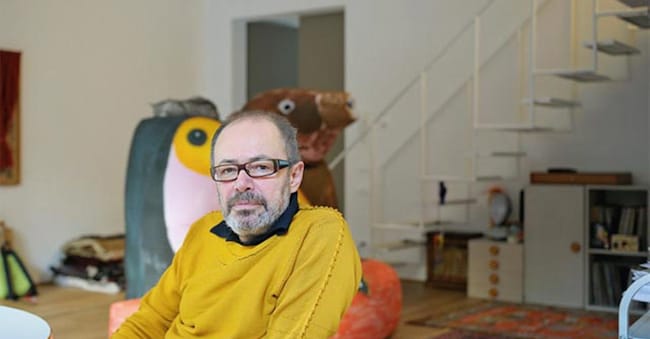
Twentieth-century museum architect Italo Rota has died in Milan, where he was born in 1953. Triennale Milano president Stefano Boeri told ANSA, explaining that "the funeral chamber will certainly be held at the Triennale, which is his home".
Who Italo Rota was
One of the most interesting and multifaceted figures on the Italian architectural scene, Italo Rota graduated from the Milan Polytechnic in 1982, training first in Franco Albini's studio and later in Vittorio Gregotti's. At the end of the 1980s, he moved to Paris, where he signed the renovation of the Museum of Modern Art at the Centre Pompidou with Gae Aulenti, the new halls of the French school at the Cour Carré of the Louvre, the illumination of Notre Dame Cathedral and along the Seine, and the renovation of the centre of Nantes.
He returned to Italy in the mid-1990s and the activity of his new Milanese studio began to range from masterplanning to product design, in projects characterised by the choice of innovative materials, cutting-edge technologies and in-depth research into light. The Foro Italico promenade in Palermo (Gold Medal for Italian Architecture for Public Spaces 2006) and the Museo del Novecento in the Palazzo dell'Arengario in Piazza Duomo in Milan (2010) stand out in his production. In addition to France, numerous works have been realised internationally, such as the Casa Italiana at Columbia University, New York (1997); the Hindu Temple in Mumbay (2009); the Chameleon Club at the Byblos Hotel, Dubai (2011).
Boeri's remembrance
."We lose a friend and a very important person from the last years of Italian culture. A sophisticated man with an unexpected and original way of thinking. For Triennale it is an enormous loss": this is how Triennale president Stefano Boeri remembers Italo Rota. "He started working at Triennale in his thirties and never stopped. We cannot count the installations, ideas, books and catalogues on architecture. His last contribution,' he concludes, 'was the exhibition on Italian painting for which he curated an installation'.

