Music

Sonny Rollins, 'sax giant' and sacred monster of jazz, dead

A dominant figure in the post-World War II music scene, he died at his home in Woodstock, New York State. He was 95 years old
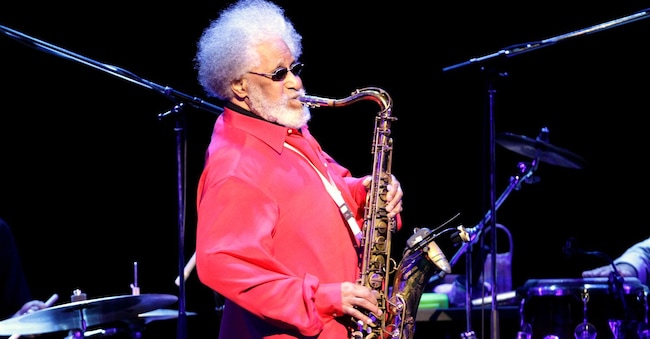
Sonny Rollins si esibisce durante un concerto a Tokyo, il 4 ottobre 2010. (Foto AP/Junji Kurokawa, archivio)      Associated Press/ LaPresse Solo Italia e Spagna APN

3' min read

Translated by AI
Versione italiana

3' min read

Translated by AI
Versione italiana

Sonny Rollins, one of the greatest saxophonists in jazz history and a dominant figure in the post-World War II music scene, has died at his home in Woodstock, New York State. He was 95 years old.

His death was announced by his publicist, Terri Hinte. Rollins was considered one of the greatest improvisers of modern jazz, capable of combining energy, melodic invention and a powerful, personal, instantly recognisable sound.

Loading...

Born in Harlem on 7 September 1930 to parents originally from the Virgin Islands, Walter Theodore Rollins grew up in the Sugar Hill neighbourhood, in an environment marked by the presence of great figures of African-American culture. As a boy, he was deeply impressed by the saxophone of Coleman Hawkins, who would remain one of his idols, and soon switched from alto to tenor saxophone.

By the end of the 1940s, he was already active on the New York jazz scene. He recorded for the first time in 1949 with singer Babs Gonzales and in the following years played with musicians such as Miles Davis, Thelonious Monk, Bud Powell and Charlie Parker. In the 1950s, after overcoming a heroin addiction, he achieved national fame in the quintet of drummer Max Roach and trumpeter Clifford Brown.

1956 was the year of consecration. Rollins recorded 'Tenor Madness', which contains his only recording encounter with John Coltrane, and 'Saxophone Colossus', an album that became a classic. On that record was 'St. Thomas', an adaptation of a traditional West Indian tune and one of his most famous compositions.

In 1958, he published 'Freedom Suite', a long composition dedicated to the plight of African Americans and denouncing racial discrimination. It was one of the first explicit stances against racial injustice to emerge from the jazz world.

Just as his career seemed launched, Rollins disappeared from the scene in 1959. Dissatisfied with his own playing, he began a period of intensive study. For more than two years he often practised at night on the Williamsburg Bridge, near his home on Manhattan's Lower East Side, so as not to disturb the neighbours. Out of this experience came the album 'The Bridge' in 1962, which marked his comeback.

Rollins would then alternate phases of intense activity with new breaks, including a period between Japan and India in the late 1960s, also linked to a spiritual quest. In the course of his career he experimented with avant-garde, fusion, rock rhythms, calypso and formations without a piano, without ever allowing himself to be pigeonholed into one category.

"Every time I pick up the sax, I want to hear something fresh," he said in a 2002 interview. The search for improvisation as immediate creation remained the centre of his work.

In the 1970s and 1980s, he was criticised by the specialist press for his use of electric instruments, backbeats and more accessible solutions for the public, but he continued to be a major concert attraction in jazz. In 1981, he also played on three tracks on the Rolling Stones' 'Tattoo You' album, including 'Waiting for a Friend', although he later refused to tour with the band.

His wife Lucille Pearson, who he married in 1965 and died in 2004, was also his manager and co-producer of many albums. Rollins often attributed an important part of the stability and success of his career to her.

Over the years, he has received numerous awards. He won two Grammys, was awarded a Lifetime Achievement Grammy in 2004, was named Jazz Master by the National Endowment for the Arts, received the National Medal of Arts and the Kennedy Center Honour in 2011. In 2010, he was elected to the American Academy of Arts and Sciences and became the first jazz musician to receive the Edward MacDowell Medal.

He continued to perform until 2012, when he gave his last public concert. Two years later he also stopped playing at home, due to respiratory problems related to pulmonary fibrosis. "When I had to stop playing, it was quite traumatic," he said in 2020. "But I realised that instead of complaining and crying I had to be thankful that I was able to make music all my life."

In 2017, his archives, with hundreds of rehearsal recordings and studio sessions, were acquired by the Schomburg Center for Research in Black Culture in Harlem. With the death of Benny Golson in 2024, Rollins had become the last survivor of the 58 musicians portrayed in Art Kane's famous 'Harlem 1958' photograph for Esquire.

Considered for decades the greatest living improviser in jazz, Rollins leaves behind a legacy founded on compositions that have become standards, such as "St. Thomas", "Oleo" and "Doxy", but above all on a way of playing that turned every solo into an open quest.

Copyright reserved ©
Loading...

Brand connect

Loading...

Newsletter

Notizie e approfondimenti sugli avvenimenti politici, economici e finanziari.

Iscriviti