Price rises

Energy costs, Confcommercio: bills are getting heavier and heavier; costs must be reduced as a matter of urgency

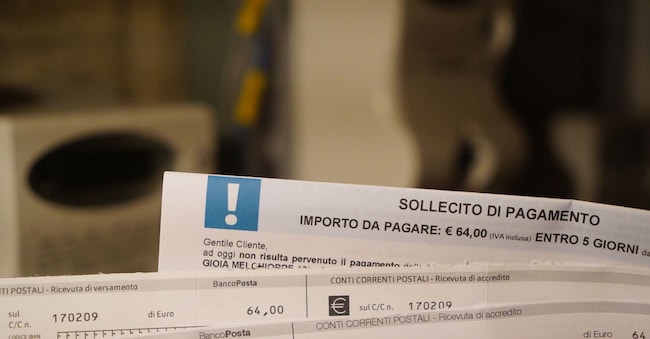
According to the confederation, in the third quarter of 2026, electricity expenditure by service sector businesses reached 3.8 billion euros, whilst gas expenditure stood at 788 million

 IMAGOECONOMICA

3' min read

Translated by AI
Versione italiana

3' min read

Translated by AI
Versione italiana

Rising energy bills continue to hit service sector businesses hard, with increasingly severe effects on operating costs and competitiveness. Confcommercio has sounded the alarm: according to estimates from the confederation’s Energy Observatory (OCEN), in the third quarter of 2026, expenditure on electricity and gas by businesses in the sector soared due to rises in international energy prices.

Electricity bills

In the third quarter of 2026 – as reported by OCEN – electricity costs incurred by businesses in the sector rose by 46.2 per cent compared with the same period last year and by 66.4 per cent compared with the previous quarter, reaching a total of 3.8 billion euros.

Loading...

The result was a marked increase in the average monthly bill, which totalled nearly 29,700 euros. Bars (+133 per cent), hotels (+68 per cent) and large retail outlets (+67 per cent) were particularly hard hit.

The cost of gas

Confcommercio also notes a highly critical situation regarding gas, with record increases: in the third quarter, total expenditure by service sector businesses stood at 788 million euros, representing 72.7 per cent of the 2025 figure. The average monthly bill, meanwhile, exceeded 11,000 euros, representing an overall increase of 66.9 per cent year-on-year.

The reason for the increases

According to Confcommercio, the increasingly steep bills are being driven by the latest surge in energy prices on global markets, which reached their highest levels of the year in early November. Brent crude oil exceeded $100 per barrel, recording a year-on-year increase of 69.4 per cent in October, whilst gas on the Amsterdam TTF rose to 96.3 euros/MWh (+173.4 per cent year-on-year).

Consequently, in Italia, the price of electricity has peaked at 280 euros/MWh (+143 per cent). This situation – explains the confederation – ‘risks further undermining the profit margins of businesses, which are already grappling with an economic climate characterised by weak growth and consumption that remains uncertain’.

The required measurements

Confcommercio is therefore calling for urgent measures to support the competitiveness of businesses in the service sector. The priority is to rapidly reduce the burden of energy bills, ‘by supplementing the measures to support energy investments already provided for in the Budget Bill — such as the extension and reorganisation of tax relief schemes for energy retrofitting and building renovation, as well as support measures for non-energy-intensive micro, small and medium-sized enterprises (MSMEs) to encourage investment in renewables and energy efficiency — with measures capable of producing immediate benefits for businesses’.

Specifically, the solution proposed by the confederation is to allocate the additional revenue resulting from the increase in the IRAP rate for companies in the energy sector towards reducing general system charges, ‘continuing the process already initiated by the 2026 Energy Bills Decree to ease energy costs’.

In this context, Confcommercio ‘also welcomes the proposal to introduce, via the forthcoming “Bollette bis” decree, a cap on the price of gas at 58.9 euros/MWh, which could help to curb price rises and reduce bills by up to 10 per cent’. The measure described above would be useful, however, ‘particularly during emergencies’, but cannot be expected to ‘replace structural measures’.

According to the confederation, it is, in fact, urgent to tackle the root causes of the energy cost gap between Italia and the main European countries ‘by intervening in the mechanism that determines electricity prices and reducing its dependence on gas prices’.

Copyright reserved ©

Brand connect

Loading...

Newsletter

Notizie e approfondimenti sugli avvenimenti politici, economici e finanziari.

Iscriviti