
Rising fuel prices: new excise duty cut by Saturday, followed by targeted support for workers
Government working on incentives for businesses to support their employees. Giorgetti: ‘Parliamentary debate on the use of EU flexibility’. Italian budget allows for 1.4–2 billion euros in net expenditure

Key points
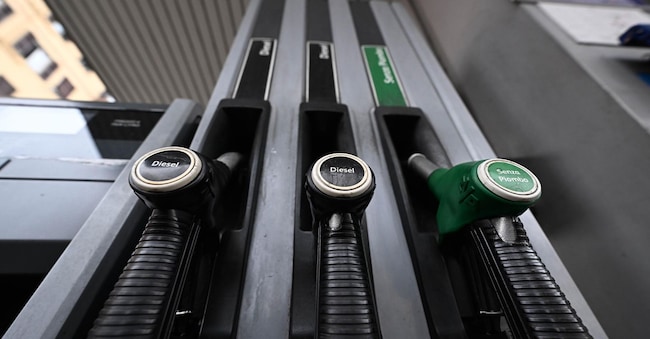
The Government’s plans the new measure to tackle high fuel prices, which, as scheduled, will be introduced by tomorrow via another interministerial decree to fund the ‘variable excise duties’ using the extra VAT revenue from May, will represent the final round of generalised discounts. Then the focus will shift to ‘targeted’ aid, requested by the European Union (but also by the IMF and the OECD) and long considered more effective even by the Ministry of the Economy. The aim is to focus support on workers who need it because they are forced to use a car to get to the office or factory; in particular on employees, whose fixed income is most affected by the extra cost of petrol and diesel, especially when it is low to medium.
Giorgetti confirms that the new ministerial decree will be issued by 6 June
The directive has been issued to officials at Via XX Settembre, who are working on solutions set to take shape in the coming weeks. “There is currently no need for legislation or for the Council of Ministers,” explained Giancarlo Giorgetti yesterday ahead of the government meeting, at which the issue of fuel was not discussed. The Minister for the Economy also confirmed the arrival of the new ministerial decree by 6 June, when “the excise duty discounts expire” that were introduced by the latest decree-law two weeks ago reduced to 12.2 cents per litre for diesel, whilst maintaining the 6.1 cents per litre for petrol. The size and duration of the new cut will depend on the inflation-linked VAT collected in May, which will be accounted for in the coming hours. The latest decree on variable excise duties, dated 8 May, had used 191.2 million, but at that time the more generous cut of 24.4 cents per litre was still in place for diesel. Now, smaller sums may suffice to keep prices below or around the psychological threshold of two euros per litre (yesterday the average cost of diesel was 1.988 euros per litre, 1.93 euros for petrol).
Government working on incentives for businesses to support their employees
The next step – the introduction of targeted measures for workers – will be taken by companies, as they are the only ones capable of accurately identifying, on a case-by-case basis, the groups for whom such support would be most effective. There is no shortage of precedents here either; starting with the measures of 2022, when, to counter the last wave of energy inflation, the Draghi government introduced a €200 fuel bonus in March, which companies could grant to their employees in exchange for tax and social security relief on the sum. This was followed by a tightening of the limits on fringe benefits, raised first to €600 and then to €3,000 per year. This approach is more flexible, as it allows businesses to provide support for energy bills as well, thereby mitigating the price rises that will occur in the coming months.
Such a measure will form part of the wider range of measures that can be implemented once the European ‘flexibility’ announced on Wednesday by the European Commission has been definitively approved. But that is not the only factor: because the figures released by the Commission (page 56 of the fiscal statistics in the Spring Package) show that Italy’s net expenditure is 2 billion below the agreed ceiling for 2026, and 1.4 billion below the limit when calculated cumulatively with last year. This too could provide scope for action, taking into account the delicate balance on the deficit (now at 2.9%).
“We will need a debate in Parliament” on how to use the budgetary leeway created by the exemption, Giorgetti explained yesterday in the Senate, stating that he was “pleased, having travelled across half of Europe, to have secured this outcome for Italian families and businesses. “We will have to use these resources wisely,” the minister warned.


