
Immigration decisive for agribusiness in the North-East
The contribution of labourers
3' min read
3' min read
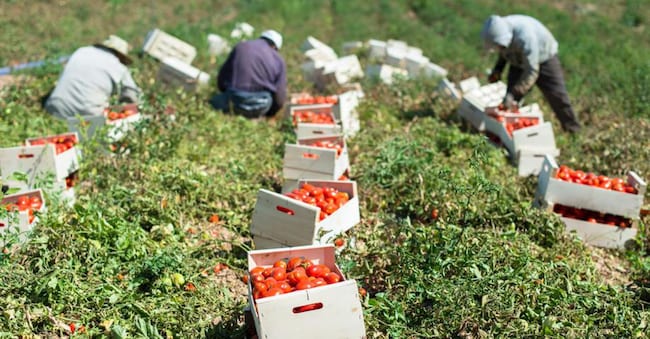
Made in Italy agro-food products depend largely on the presence of immigrant workers in the countryside or in processing companies. Whether harvesting apples, tomatoes, tobacco, fruit, vegetables, or grapes or employed in the care of stables and in the processing of meat, milk, and other products, foreigners contribute in a decisive way to the cultivation or preparation of national PDOs, which are exported all over the world. And yet the chronicles continue to recount experiences of exploitation and 'caporalato' (forced labour) to the detriment of labourers, often employed without rights, even in the north-eastern countryside. The book 'Made in Immigritaly. Terre, colture, culture', the first report on immigrant workers in the Italian agri-food industry. Commissioned by Fai-Cisl, the research was carried out by the Confronti Study Centre. It examines in over 500 pages the ways in which foreign labour is managed and analyses the different profiles of the phenomenon, including the virtuous mechanisms of cooperation and local integration that are taking place in the workplace. Nine territorial case studies are cited, including the experiences of Val di Non, with its apple production, the cultivation and harvesting of asparagus between lower Padua and Polesine, and the Valpolicella wine-growing area.
In Trentino, seasonal labour from Romania was heavily used for decades, enticed by the possibility of obtaining work contracts in fruit storage and packaging sites, where the activity lasts up to 11 months a year. In the post-Covid era, the routes changed for many workers from the East, who preferred to look for more stable or better-paid solutions in Germany. Thus, among the rows of apple trees, the employment of refugees and asylum seekers from Pakistan and some North African countries has gained in importance. The interview survey conducted in the area among foreign workers reveals that the share of regular contracts offered is decidedly better than in other national areas and that even finding a housing solution and settling in the area with the family is less complex than elsewhere, but there is still no awareness of the economic value that the work of immigrants generates in the area. Even in Veneto, especially in the Valpolicella wine-growing areas, significant efforts have been made to improve the living conditions of seasonal workers arriving from Romania as well as Africa, by providing housing solutions and time brackets for prayer for Islamic labourers. In this way, companies can count on a fairly stable availability of labour over the years.
Immigrants working regularly in Italy, the Report states, number about 2.4 million, more than 10% of the employed. In agriculture, however, their contribution is more significant: foreigners in the sector number almost 362,000 at the end of 2022, and they cover 31.7% of registered working days. 'At least half of our agri-food excellence exists because companies can count on these workers,' admits Matteo Merlin, secretary of Fai Cisl Verona, the most agricultural province in the Veneto region. Last year, as Letizia Bertazzon of Veneto Lavoro points out, in the Verona area alone there were more than 8,000 seasonal workers, recruited mainly during the grape harvest, of whom more than 6,200 were foreign, mainly from Morocco, Romania and Pakistan. 'Almost half of the labourers soon disappear because they consider agricultural work to be occasional and transitory, often representing a parenthesis. In recent years there has been a gradual substitution effect of labourers who come less and less from Eastern European countries, while the weight of non-EU areas increases,' he explains. It is becoming increasingly clear that agricultural labour depends on the efficiency of the flows decree, which, however, works in fits and starts. "To facilitate the matching of labour supply and demand in the primary sector, we need a leaner bureaucracy and faster issuing of residence permits,' insists Massaer Diane, president of Anolf Veneto (national association beyond borders, ed.), 'otherwise companies cannot hire. The fact remains that Veneto is virtuous: here half a million legal immigrants work in various sectors'.

