
Deepfake, concern grows among companies and citizens
71% of Italians are aware of the phenomenon but few know how to recognise it. Undersecretary Barachini: 'An ad hoc crime is provided for in the draft law on artificial intelligence'.

3' min read
3' min read
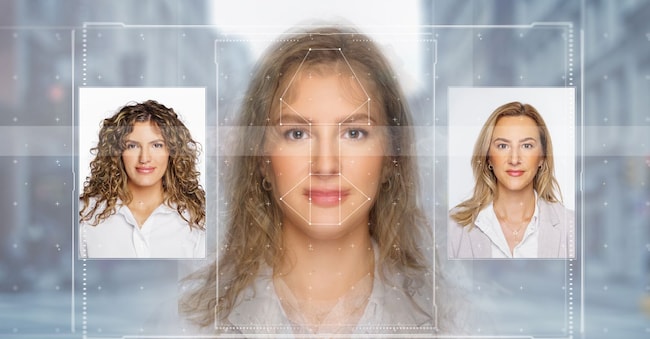
There was a time when seeing was enough to believe. Now, seeing has become the first step to being deceived. And the lie no longer needs to hide. It shows itself in high definition, looks into the camera, speaks with your voice. It is the deception that looks like you. It is the deepfake.
A conference was held in Milan - hosted by Intesa Sanpaolo - with a title that sounds like something out of a dystopian novel: 'Deepfake. Between reality and illusion. Unmasking manipulation. Protecting the truth'. Behind it, however, there is an Ipsos - Studio Previti survey that tells an established truth: deepfakes are not a geek's game. They are a real threat - cultural, economic, democratic.
74% of the world's population knows that you can make realistic videos with artificial intelligence. In Italy, 71% know this. Yet 38% do not know what a deepfake really is, while only 41% claim to be able to recognise it. The truth, in short, is under attack, but we are not yet equipped to defend it.
Companies are showing a little more readiness: 3 out of 4 fear fake news as a risk to their business. And it is not just caution. It is experience. "Every day we come across images created with artificial intelligence portraying important personalities from the worlds of show business, cinema, economics, and politics peddling phantom financial investments, miraculous slimming products, or fake competitions with prizes, misleading many people,' said Stefano Longhini, Director of Collective Entity Management, Copyright Protection, and Litigation. Legal Affairs Director Rti Spa. The list of falsified faces sounds like the cast of a fraudulent fiction: Maria De Filippi recommending miraculous slimming products, Paolo Del Debbio sponsoring bogus investments, Pier Silvio Berlusconi giving non-existent prizes. All invented, all convincing. More than it should be.
"The platforms," Longhini adds, "claim to be doing 'everything reasonably within their power' to prevent the phenomenon of ad grooming, but this is clearly not the case because it is clearly emerging in the proceedings that they have technologies that could decisively limit the phenomenon.


