Facebook

Supreme Court: no automatic compensation for defamation of Luigi Cadorna's nephew, damages must be assessed

The General's grandson's battle against his grandfather's detractors: injury to his honour must be justified for damages

by Patrizia Maciocchi

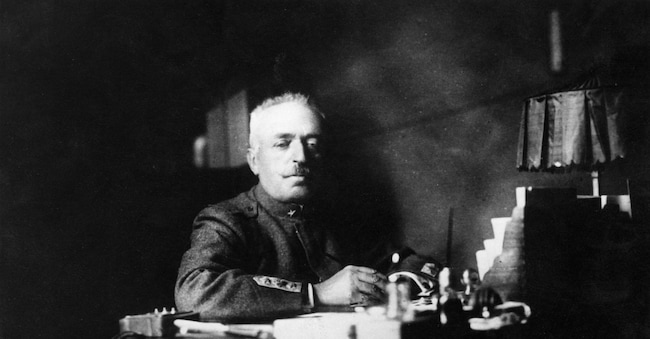
Il generale Luigi Cadorna (1850-1928), feldmaresciallo italiano, capo di stato maggiore dell'esercito italiano durante la prima parte della prima guerra mondiale.  Al lavoro alla sua scrivania.      Data: 1916 circa

3' min read

Translated by AI
Versione italiana

3' min read

Translated by AI
Versione italiana

To recognise thecompensation for non-pecuniary damage to the nephew of Luigi Cadorna, defamed on Facebook, the judge must clarify what consequences todecor and to the personal or family reputation he has suffered. The Court of Cassation has thus rejected - annulling only on this point the judgement with referral - the request for €10,000 in compensation asked by Carlo Cadorna a colonel on leave, nephew of the general who led the Italian troops in the Great War up to Caporetto.

In the case examined, the Court of Appeal had given the confirmation of the damage, confirming the first-degree conviction of Michele Favero, secretary of Indipendenza Veneta, for his harsh criticism of Commander-in-Chief Luigi Cadorna, who died almost one hundred years ago.

Loading...

Favero had accused the generalissimo on Facebook of having sent hundreds of thousands of men to the slaughter in practically suicidal and useless frontal attacks, forcing troops to come out into the open, for assaults on impregnable trenches, on pain of being shot in the back in case of hesitation, even resorting to the decimation of divisions in case of even slight insubordination.

The decimation of soldiers during the Great War

Decimation consisted of drawing lots and shooting every tenth soldier within a department for alleged dishonourable behaviour, when it was not possible to identify the direct perpetrator.

The civil judges, who confirmeddefamation, which had been ruled out in the criminal proceedings, were not, however, concerned with the historical criticism of the chief of staff, but rather with the terms used, which were out of relevance: insults and heavy statements against his grandfather, Marshal of Italia.

Unsuccessfully, the plaintiff had invoked the same treatment received in criminal proceedings, where for similar facts the Gip had asked for the case to be dismissed.

According to the defence, in fact, the criticism, however harsh and bitter published on social media, was to be considered mitigated by theright of criticism, historical and political protected by Article 21 of the Constitution. The importance of the values involved was also to be taken into account: 'the lives of innocent soldiers decimated in the field due to General Luigi Cadorna's dastardly orders and the existence of the public interest to know the tragic truth of the facts and to freely form and express a critical opinion on such serious historical facts'.

Historical criticism must respect continence

The Court of Cassation, however, recalled that the right of criticism, as an expression of the free expression of thought, has constitutional status on a par with the right to honour and reputation, over which it nevertheless prevails, justifying the unlawfulness of the offence, provided that certain limits are respected: the truth of the facts, the public interest in knowing them and the verbal continuity. The latter point - in the judges' opinion - was not respected by the applicant.

For the Court of Cassation, the Court of Appeal was correct in its opinion that 'the personal offence cannot be considered admissible and justifiable by the concomitance of negative judgments on the personal conduct of the offended person, with the consequence that the expressions themselves are, on the other hand, not in compliance with the principle of relevance'.

However, this is not sufficient to automatically recognise compensation for the non-pecuniary damage that the judges on the merits could not recognise without clarifying what detrimental consequences his nephew 'Carlo Cadorna had suffered to his honour, decorum and personal or family reputation deriving from the event of damage, even if ascertained'.

Grandson's 'war' against his grandfather's detractors

 The "war" of Luigi Cadorna's grandson against the detractors of his grandfather was lost against the pacifist and environmentalist Michele Boato, who was acquitted of the charge of defamation for having asked to change the name of a street named after Luigi Cadorna, taking this honour away from the "slaughterer of humanity"; in this case, according to the Gip, the sentence fell within the "legitimate expression of the right to criticism".

Instead, Carlo Cadorna won in court against Marco Mondini, associate professor of contemporary history at the University of Padua. His fault? Having mentioned on Facebook a certain Virginia 'late and tardy lover' attributed to the marshal of Italia.

A 'joke' that cost the professor EUR 3,500 in compensation.

Now the sword of Damocles of trial hangs over Anna Laura Remigi, mayor of Specchia.

The first citizen of the Salento municipality, who was also sued by Carlo Cadorna, for the speech he made at the laying of aplate dedicated to Gino Strada to whom the municipality had announced it would dedicate a street now named after Cadorna. Remigi had called the Italia general a 'poor idiot', 'bloodthirsty' and 'butcher'. The Prosecutor wanted to file, but the judge was against it.

Copyright reserved ©

Brand connect

Loading...

Newsletter

Notizie e approfondimenti sugli avvenimenti politici, economici e finanziari.

Iscriviti