Trump effect

UK and EU move closer on defence and youth mobility: agreement in sight

The UK and EU are moving closer to an agreement on defence and youth mobility, with details to be announced at the first bilateral summit.
by Nicol Degli Innocenti

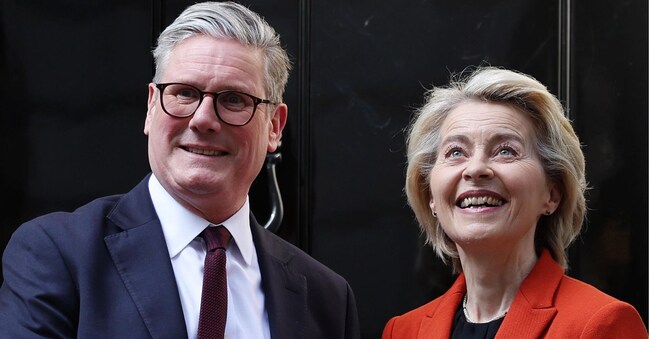
Il premier Keir Starmer accoglie a Downing Street la presidente della Commissione Ue Ursula von der Leyen

2' min read

2' min read

LONDON - Agreements in sight on defence and youth mobility between the UK and the European Union after a positive meeting yesterday in London between Prime Minister Keir Starmer and European Commission President Ursula von der Leyen.

The details of the understanding will be announced at the first bilateral summit scheduled for 19 May in London, but talks between the two leaders have led to substantial progress on both fronts.

Loading...

"In an increasingly unstable world with an uncertain future, it is good that we are working so closely together on so many issues, from defence and security to trade and the economy," Starmer said welcoming "friend Ursula".

The PM stressed that the revival of relations between London and Brussels will bring 'enormous benefits' to both sides, while von der Leyen spoke of the 'excellent relations' between the EU and Great Britain.

London hopes to gain access to the new $150 billion European Armament Fund, which would enable industry companies such as Bae to win major contracts and participate in joint defence projects with European partners. The British government is aiming for stronger industrial collaboration in the defence sector, but also for closer ties in areas such as military logistics and military technology development.

Starmer, a lifelong pro-European and anti-Brexit campaigner, has been aiming to revive relations with the EU since he was elected premier last July, but at the same time he is proceeding with great caution for two reasons.

On the external front, the British government wants to maintain good relations with the US administration of President Donald Trump. Today, Chancellor of the Exchequer Rachel Reeves will meet her US counterpart Scott Bessent in Washington in the hope of obtaining a reduction of the duties imposed by Washington and with the aim of concluding a bilateral trade agreement. Starmer cannot therefore risk appearing too 'pro-EU', given Trump's oft-expressed antipathy towards Brussels.

On the domestic front, the Labour Party, on the other hand, is threatened by Reform, the populist and anti-immigration party that is gaining strong support according to the latest opinion polls. Nigel Farage, former founder of the Brexit Party and leader of Reform, is ready to denounce any real or alleged rapprochement with the EU as a 'betrayal of the will of the electorate' expressed in the 2016 referendum.

Attempting to remain in the balance between the US and the EU and between the pro-European tendencies of his party and the hostility of the opposition in Brussels, Starmer nevertheless continues on the path of increased cooperation with his European partners.

This is evidenced by the increased willingness for an agreement on youth mobility proposed by the EU and initially rejected by London. Yesterday, however, Downing Street admitted that negotiations on the issue were continuing, while over 60 Labour MPs signed an open letter calling for 'a new visa system for young people under 30' to 'expand economic, educational and cultural opportunities for young Britons'.

Brand connect

Loading...

Newsletter

Notizie e approfondimenti sugli avvenimenti politici, economici e finanziari.

Iscriviti