The interview

‘Defence and common policies: the challenge for European integration’

According to Paolo Gentiloni, the former EU Commissioner for Economic Affairs, it is necessary to continue regulating the use of technology. Priority should be given to young people’s concerns about wage inequality

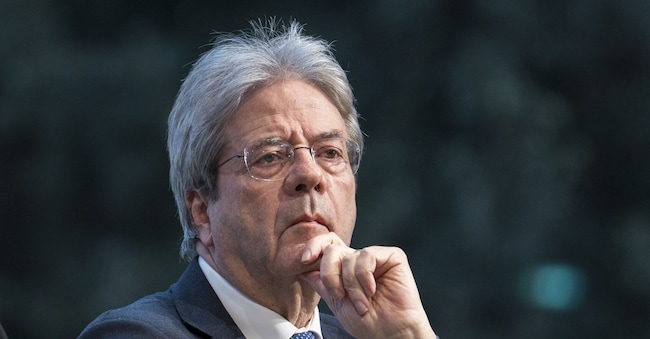
PAOLO GENTILONI, GIÀ COMMISSARIO EUROPEO PER GLI AFFARI ECONOMICI E MONETARI IMAGOECONOMICA

4' min read

Translated by AI
Versione italiana

4' min read

Translated by AI
Versione italiana

Widespread geopolitical tensions, rising social inequalities and, in recent weeks, repeated attacks on cybersecurity. The scenario Europe is currently facing reflects fragile balances and pieces that are struggling to fall into place. It is a situation that calls for swift yet measured strategies to help decision-makers, businesses and citizens draw up a roadmap for action across multiple levels. A challenge that Paolo Gentiloni, former EU Commissioner and former Prime Minister, sees as complex but achievable.

Faced with such a precarious situation, how is the European economy responding?

Loading...

These factors have undoubtedly exerted pressure on the European economy, which is experiencing modest growth and, at the same time, high inflation. Looking on the bright side, we can say that, net of the difficulties exacerbated by the war in Iran and the effects on energy prices, according to the Commission’s forecasts, the economy will see modest but significant growth in 2027. If, on the other hand, we focus on the negative aspects, there is no doubt that the tax burden will remain substantial, especially for countries such as Italia or France, which have high levels of debt and will experience growth below the European average.

Are there any priority areas that need urgent attention?

First and foremost, energy self-sufficiency is crucial. Over the last four to five years, the continent has responded to the repeated shocks it has suffered with a complex energy diversification strategy. These shocks have been less significant for countries such as Spain, which enjoy energy independence, but more severe for those, such as Italy, that are less self-sufficient and have an industry that struggles to compete with energy costs that are not comparable to those of its competitors.

Another key issue, particularly for businesses, is that of digitalisation as a means of simplification. There is, however, a downside: relying entirely on technology leaves us vulnerable. Is there a guide to striking the right balance?

If there were a handbook, we would all feel more at ease; instead, we find ourselves in a state of great uncertainty. Slowing down the pace of innovation cannot be a solution to the risks of cyber-attacks. There is no strategy for de-digitalisation to prevent the danger: the only credible course of action is to continue making progress whilst, at the same time, treating the issue of security with the importance it deserves personal data and business security. In particular, the smaller ones. As far as artificial intelligence, we know we need to make up ground in the race. But it also remains essential to regulate it, and in this respect, Europe is not doing too badly. The 2024 AI Act has been criticised by some, but I believe that incidents involving AI agents running amok, for example, clearly show us that the path towards regulation in the public interest is not only not a mistake but a duty.

Looking at young people, in recent weeks they have taken to the streets to demand the right to housing, education and fair wages. What do these protests tell us and, from an Italian perspective, what are the issues that need to be resolved?

The voice of young people must be heard, as President Mattarella pointed out. The latest protests began in Spain over housing issues and have spread to other countries, touching on schools, schooling and education. These are issues that European governments should place on the agenda, because the widespread trend in recent times – driven by an ageing population – has been to create an inappropriate hierarchy amongst social priorities, giving far too much weight to issues such as pension and healthcare systems and too little to the critical concerns raised by young people. Therefore, for Italy too, the three key points to emphasise remainhousing and education, which often overlap, and wages: the exodus of young Italian graduates is no longer confined to the South, and at the root of this – and of the fact that an equal number of foreign professionals are not coming to Italia – lies a gap in purchasing power and salaries.

What future challenges will Europe have to tackle?

Loading...

Caught between a war on its borders, the disengagement of its long-standing American allies and competition from Chinese manufacturing, Europe finds itself in a state of unprecedented danger. The challenge now is to respond by moving towards a degree of autonomy that will ensure a robust common defence, an attractive sovereign bond on the financial markets, and the ability to make decisions without being overly constrained by the timetable dictated by the most reluctant of the 27 Member States, which may well abuse its right of veto. It is a difficult challenge, but one which I hope Europe will be able to tackle, as it has already demonstrated in the past with similar undertakings.

Copyright reserved ©
Loading...

Brand connect

Loading...

Newsletter

Notizie e approfondimenti sugli avvenimenti politici, economici e finanziari.

Iscriviti