
Defence: from service accommodation to the centralisation of procurement – the operational measures set out in the DPFP
With the activation of the NEC (National Escape Clause), officially requested by the Government from the European Commission, it is envisaged that this will be used for defence spending amounting to 0.3 per cent of GDP in both 2027 and 2028

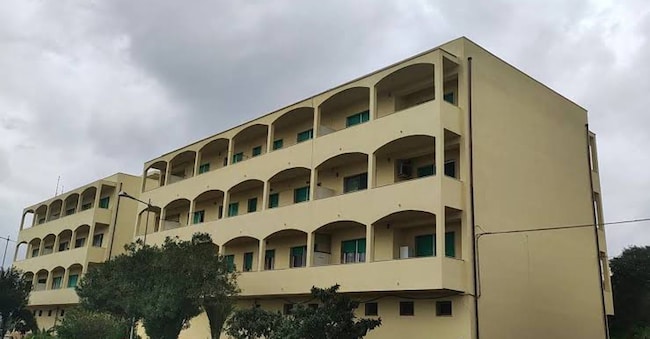
From staff accommodation to the centralisation of procurement, the 2026 Public Finance Policy Document approved by the Government outlines a whole series of operational measures. With the activation of the NEC (National Escape Clause), officially requested by the Government from the European Commission, it is envisaged that this will be used for defence expenditure amounting to 0.3 per cent of GDP in both 2027 and 2028.
Staff accommodation
The document explains that ‘in addition to the increase in resources already provided for in the 2026 Budget Act, the so-called “Housing Plan” has allocated 15 million annually for the three-year period 2026–2028, to enhance the Ministry of Defence’s property portfolio, and in particular its housing stock’.
Energy efficiency
The Dpfp points out that ‘the Ministry of Defence, with regard to energy efficiency measures for military property and infrastructure (barracks, bases, service accommodation, and logistical and operational facilities), has planned to integrate management databases into a centralised information system and to install systems for the real-time monitoring and control of energy consumption’.”
Centralised procurement
Finally, the document approved by the Council of Ministers highlights that ‘the centralisation of procurement within the Ministry of Defence has yielded positive results from both an economic and an operational perspective, with reductions in payment times to suppliers, greater discounts at tender and savings on the unit prices of the supplies analysed’.

