
NATO summit: no agreement on 5% spending, but compromise solution
Secretary Rutte speaks of a historic agreement, but the countries went in no particular order with Spain opposed to raising the threshold: yes for 3.5% in arms plus an additional 1.5% for related investments

4' min read
4' min read
At a meeting today in Brussels of the defence ministers of the 32 NATO countries, which Secretary General Mark Rutte described as 'historic', new defence capability targets were agreed, to achieve which military spending in each member state will have to increase significantly, according to a new investment plan that Rutte will propose for approval at the next Alliance leaders' summit on 24-25 June in The Hague.
The plan will propose that 3.5% of GDP per year be reached in the next few years (when exactly the leaders will decide) in expenditure strictly dedicated to increasing defence capabilities, and 1.5% for security and defence-related investments, for a total of 5% of the GDP of each allied country. Italy, for its part, is still a long way from reaching the American desires: '5% now for the Italian budget is impossible to think of. In the meantime, it can be a perspective, if the leaders set it, in the long term, in which there is a 3.5% that can be reached by 2035 and a 1.5% untied from pure defence investments that can instead be used in a dual way,' said Minister Crosetto.
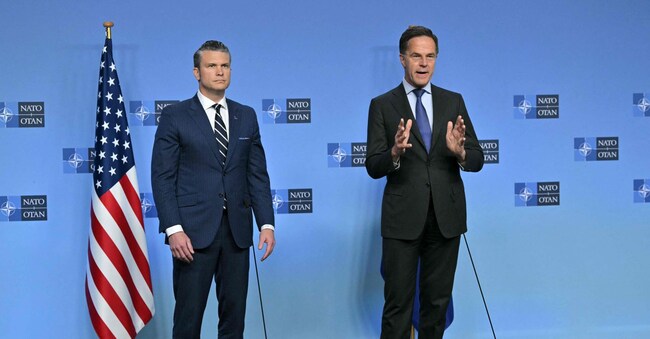
"There is broad support" from NATO countries for the 5% of GDP defence spending target, "I think US Defence Secretary Pete Hegseth has spoken in broad agreement. So we are really close'. So says Nato Secretary General Mark Rutte at a press conference after the meeting of Nato defence ministers in Brussels.
The Spanish Defence Minister, Margarita Robles, insisted that dedicating 2% of GDP to defence spending by this year is 'sufficient'. "We believe that it is not necessary to talk about percentages, nor about 3.5% plus 1.5%, but that each country, within its own approach, is able to meet the targets imposed," she said in statements to the media on the sidelines of the NATO defence ministers' meeting in Brussels. The minister argued, however, that the Spanish government would not go as far as to veto the five per cent at the NATO summit in The Hague. "We believe that it will not come to that. Spain will not veto anything because its commitment clearly shows that it is an ally that builds and does not place obstacles,' she said.
To be 'prepared for war' and 'not be attacked' will require 'considerable extra investment: I anticipate that much higher spending targets will be decided in The Hague for all NATO nations'. This was said by Nato Secretary General Mark Rutte on his arrival at the Alliance's defence ministerial. "We have to defend ourselves, invest in our long-range missiles, in our new national defence formations, in command and control systems. All this has to happen and it means huge investments that we need throughout NATO," he reiterated. "The new defence investment plan is based on what we need in terms of strategic capabilities," Rutte noted, saying he expected today "an understanding" between the defence ministers on capability targets, calling it a "historic" step.

