
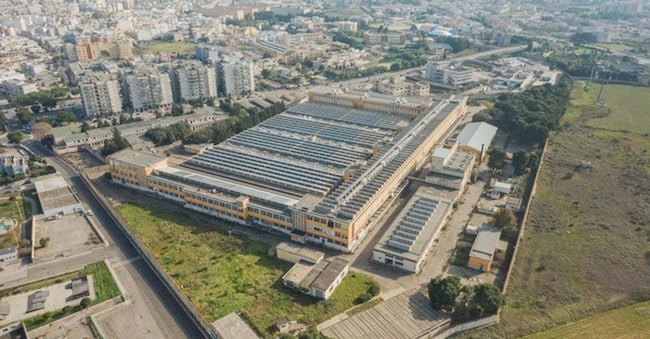
Deghi, headquarters in the former tobacco factory in Lecce
Since mid-March bathroom furniture has been produced on the ground floor of the building and marketed in Italy. The target is 140,000 pieces of furniture in one year

3' min read
3' min read
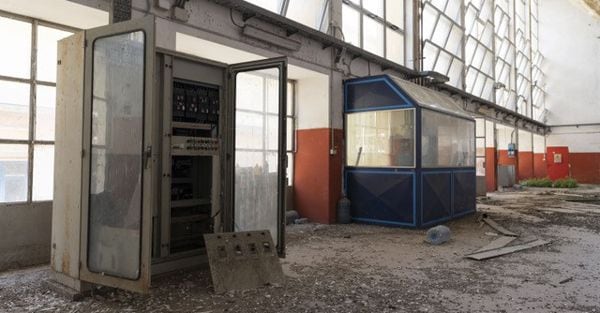
A virtuous example of industrial archaeology with the former tobacco factory in Lecce, built in the middle of the last century, abandoned for over 10 years and vandalised. It was purchased at the time and then recovered, with an investment plan of around 40 million euro, to make it the production heart and headquarters of Deghi, a leading spa in the online sale - for 90% of the total marketed - of home, garden and bathroom furnishings.
Since mid-March in the ex-Manifattura - taken over in May 2023 by British American Tobacco, the multinational cigarette manufacturer that has employed thousands of people in the capital of Salento for 50 years - bathroom furniture has been produced on the ground floor, which is then marketed throughout Italy. According to the forecasts of Deghi's industrial plan, the target is to produce 140 thousand pieces of furniture in a year, employing many of the 470 employees of the spa, average age 27 years, furniture then destined for an audience of all-Italian customers, which has grown to 750 thousand in just a few years. After the recovery of the ground floor, which covers 16,000 square metres, the renovation of the former tobacco factory will also involve - within the next three years - the first and second floors, which will be used as a management centre and training rooms. The recovery project therefore envisages a true 'Deghi Citadel', with offices, areas destined for advanced logistics, and spaces for production and innovation, further strengthening the company's presence on the local and national scene.

In fact, there is a strong rootedness in the city of Salento where it all began with the founder, Alberto Paglialunga, who 16 years ago started the company with an initial investment of 800 euro, in the classic sub-storey. "Back then," emphasises the chairman of the board, "there were no routers, no ultra-fast fibre. Today, on the other hand, everything is taken for granted. At that time, doing e-commerce was very difficult'. In 16 years, the group has grown to reach a turnover of 197 million in 2024, estimated to grow by 25% this year. Together with production, the Deghi group - in whose share capital, for 20%, an investment fund of Italian law has entered - has organised its logistics to support a distribution network that has had to take into account the peripherality of Lecce, with necessarily intermodal transport: by road between Lecce and Bari, then by rail up to the last mile and again by road for final delivery.
All of which could have been avoided if Deghi could count - like the entire Salento industrial area - only on the railway line using the Surbo freight yard, on the outskirts of Lecce, closed by Trenitalia on 1 July 2009 and still inactive, despite its strategic position. In Surbo, in fact, the group has its logistics centre, located in another building of around 5,000 square metres, acquired and restructured, also partly using the ZES procedures, where Paglialunga has built the 'Deghi Park', which he defines as 'one of the largest private logistics poles in Europe' to support the company's activities and prepare for further growth.
The hub covers a total area of 127,000 square metres, with a covered area of 57,000, which is being expanded by another 15,000. Completed in early 2024, the infrastructure has more than 50 loading docks, allowing a constant flow in the rapid handling of loading and unloading of goods. Along with online sales, the group can also count on a display space of over 3,000 square metres in Lecce, a physical store called Officine Deghi, which guarantees multi-channel products and services by integrating the online experience (the website) with the offline experience (the physical shop). And there is also a space dedicated to second-hand products, with reconditioned items offered on the market at a reduced price, in a logic of circular economy, preserving product quality and design. "All these investments represent a fundamental step for Deghi, not only for the company's growth, but also,' Paglialunga concludes, 'for our commitment to the Lecce area, the community.

