Cassation

Denise Pipitone, the case against former Pm Angioni returns to the Pm

Reasons published in which the Court of Cassation overturned the conviction for false declarations

by Patrizia Maciocchi

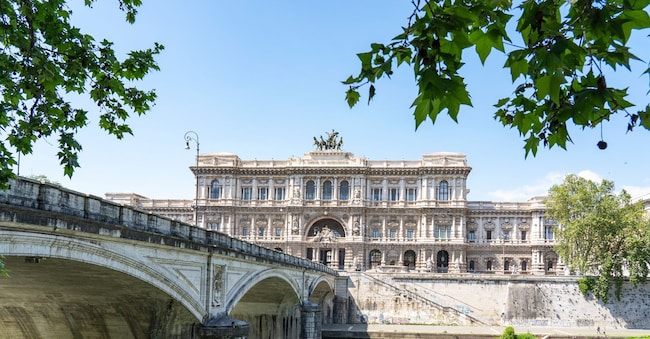
View over the river Tiber with the bridge Ponte Umberto I and in the background the city courthouse (Corte di cassazione) in Rome, Italy Emma - stock.adobe.com

5' min read

Translated by AI
Versione italiana

5' min read

Translated by AI
Versione italiana

The acts of the trial against the formerPm Maria Angioni, who had investigated the disappearance of Denise Pipitone, return to the public prosecutor. The Court of Cassation has filed the reasons with which, on 4 February, it annulled the rulings of the Court of Marsala and the Court of Appeal of Palermo, which had convicted the former deputy public prosecutor for the crime ofmaking false statements to the public prosecutor. A charge that had been triggered after the summary information, given in 2021 to the then Public Prosecutor of Marsala Roberto Piscitello, as part of the same proceedings. A blow passed on two conviction verdicts, which could not be adopted before the proceedings against Delle Chiave, a witness, now deceased, who was investigated together with Anna Corona, the ex-wife of Denise's biological father, were finalised. The Court of Cassation upheld one of the two main defence objections.

Criticism of police action

The one concerning the unusability of the statements made by Angioni to the Prosecutor did not pass, because he was heard as a witness or informed person and not as a suspect and, therefore, with the guarantees to which he would have been entitled, starting with the impossibility of using any self-accusatory statements. According to the plaintiff, in fact, the circumstantial elements of the accusation were already there at the time of a live intervention on 'Mattino Cinque', whose head office is in Cologno Monzese, in which Angioni had hypothesised misdeeds on the part of the police, accused of having committed errors and omissions in the course of the investigation.

Loading...

An argument that the Supreme Court disregards because, from the statements made to the press, it could not emerge "with sufficient clarity the untruthfulness of what was stated therein". On the other hand, the censure relating to the failure to suspend the proceedings against the suspect before the definition of the 'mother' proceedings is correct. The judges of legitimacy, in fact, brand as specious the distinction made by the Court of Appeal, according to which the case against Angioni did not concern the disappearance of little Denise, but the one against police officers for their statements via TV.

The consequences of not suspending the trial

A non-compliance on the consequences of which the Court of Cassation admits a contrast, while choosing a path. Specifically, there is no doubt that the failure to suspend the trial entails the cancellation of the sentences of conviction pronounced and the return of the acts to the public prosecutor for possible prosecution 'if, as it seems,' reads the sentence, 'the case against Delle Chiave and others, in which Angioni made her statements, turns out to have been subsequently defined'.

The next step that the Supreme Court takes is to establish the fate of investigative acts, carried out despite the suspension and pending it, and of the related evidentiary acquisitions, a subject not addressed by the precedents of legitimacy cited in the verdict. The Court distances itself from the Cedro judgement according to which the Pm would be precluded from carrying out even urgent acts. And this on the basis of the rule (Article 371-bis of the Criminal Code) that speaks precisely of suspension of the 'proceedings' and not of the 'trial'. And it does so without providing an exception for urgent acts unlike the Code of Criminal Procedure.

In the Supreme Court's view, however, the 'lexical' reference to process and procedure is weak, and used by the legislature in a generic and atechnical manner. The Court values, rather than the absence of a rule authorising the performance ofurgent acts, that of a provision prohibiting them. Hence the conclusion that opens the door to urgent acts and, therefore, those that cannot be postponed. More complex is the case of the validity or otherwise of acts of investigation, possibly performed during the suspension, but not urgent. Also in this case weighs - for the Court of Cassation - the absence of an express no of the legislature to exclude total unusability. Nor is it possible, however, to hold them free from "any procedural sanction". But the sanction cannot be the nullity of the act of prosecution by the public prosecutor and, consequently, of the entire trial. Thus, the interference of bodies other than the public prosecution in the formulation of the indictment must be sanctioned with absolute and irremediable nullity, 'but not also the eventuality in which it is that body,' reads the judgment, 'that exercises the right of action recognised to it, albeit in the absence of the relevant regulatory prerequisites.

The conclusion is that even the acts performed by the Prosecutor, other than those that cannot be postponed, during the suspension of proceedings, are valid, 'unless they affect the intervention, assistance or representation of the suspect for that offence'. The proceedings must, therefore, be placed back in the hands of the Public Prosecutor, as the body that was proceeding when the suspension by law automatically intervened, and "nothing excludes, that said acts, if necessary and for greater guarantee of the suspect's right of defence, may be renewed"

The second libel trial

Stressing his satisfaction with the suspension thesis accepted lawyer Stefano Giordano, who defends former Pm Angioni, and promising battle on the rest. "The Sixth Criminal Section of the Court of Cassation has annulled the sentences of the Court of Marsala and the Court of Appeal of Palermo, accepting the thesis that the defence had been arguing since the first instance: the proceedings against Dr. Angioni should have been suspended ope legis. The public prosecutor," says the lawyer, "exercised the prosecution when he could not, and the judges of merit did not notice. It is a serious mistake, which weighs even more in the light of the trial doggedness suffered by a magistrate who had only exercised his right to criticise the investigation for Denise Pipitone's disappearance. On the passage relating to the fate of the documents - on which the defence had not asked for a ruling - the Court has entered into anopen jurisprudential contrast: we will assert our reasons in the appropriate fora. But this is a secondary issue: on the merits we are convinced of Dr Angioni's innocence'.

Asecond trial for defamation against police inspector Vincenzo Tumbiolo, which had cost her a four-month imprisonment sentence in the first instance, is still pending for the former prosecutor. A decision that was later annulled by the Court of Cassation, which ordered the transmission of the acts to the Court of Monza for territorial jurisdiction, where a first hearing is set for 16 June 2026.

Copyright reserved ©
Loading...

Brand connect

Loading...

Newsletter

Notizie e approfondimenti sugli avvenimenti politici, economici e finanziari.

Iscriviti