
Denmark and Nordic countries, boycott of US-made products grows
From Facebook groups for alternatives to labels to recognising European products in Denmark's largest grocery chain

2' min read
2' min read
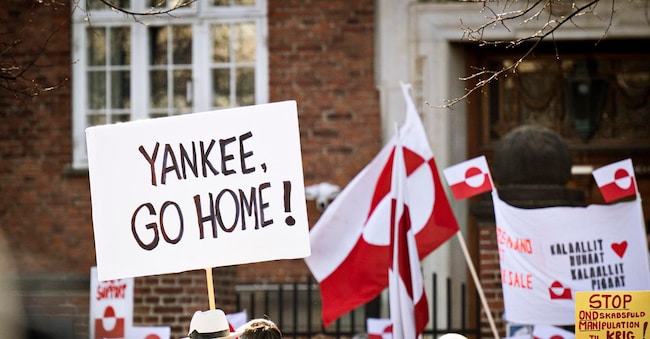
The impact on the American economy can only be limited, the symbolic value is certainly greater. A form of boycott of US-made products is gaining ground in the Nordic countries - but especially in Denmark - fuelled by the Trump administration's choices and stances which, for Copenhagen, are first and foremost the repeated claims on Greenland, Denmark's semi-autonomous territory.
Denmark's largest grocery chain, Salling Group, recently put a symbol, a black star, on price labels to identify European products, justifying the decision by strong customer demand. Bo Albertus, a school headmaster living in a Copenhagen suburb, administers a Facebook group that now has more than 90,000 members and literally lends a hand to people interested in boycotting American products. The group, de-named 'Boykot varer fra USA', like its Swedish twin 'Bojkotta varor fran USA', recommends local alternatives to US products, from shoes to lawnmowers.
"It is very difficult to boycott American products massively, quickly and permanently," reads the Swedish Facebook group, "but if you want to do something and don't know where to start, this may provide some help. A list of well-known US brands follows, flanked by Swedish or European alternatives.
Boycotting in some cases is not easy: buyers who want a new pair of Nike trainers are, for example, suggested to replace them with a pair of Salomon, owned by the Finnish Amer Sports group. But this group is also listed in New York. It works most noticeably for some iconic products, such as Elon Musk's Tesla, whose sales in Norway and Denmark plummeted in February.
On the long-term effects, however, experts remain sceptical. 'Experience,' Olof Johansson Stenman, professor of economics at the University of Gothenburg, told France Presse, 'shows that it is very difficult to achieve significant economic effects from voluntary boycotts.

