
Denmark, crisis of two national giants halves 2025 growth
Estimates lowered from 3 to 1.4 per cent due to the difficulties of Novo Nordisk and Ørsted. The country's vulnerability to the performance of a few large groups is reminiscent of other examples. Above all Finland, weighed down at the beginning of the century by the Nokia crisis
From our correspondent Beda Romano
COPENAGHEN - The threatening and recurring presence of drones over Denmark has highlighted the vulnerability of Europe's airspace. On the Danish side, this is not the only fragility. As in Finland in the 1990s and Iceland in 2008-2009, the performance of a handful of large companies is forcing the Scandinavian country to question the future of its economy. In the globalised world, the proportion between the size of companies and the size of the national economy has been decreasing.
In the space of a few weeks, two Danish companies have revised their accounts downwards. The multinational pharmaceutical company Novo Nordisk has lost its leading position in the US market for anti-obesity drugs. It has therefore warned that it will be forced to cut 9,000 jobs, 5,000 of which will be in Denmark. At the same time, the renewable energy giant Ørsted has been forced to make an eight billion euro capital increase after the recent US veto against a wind farm on the US East Coast.
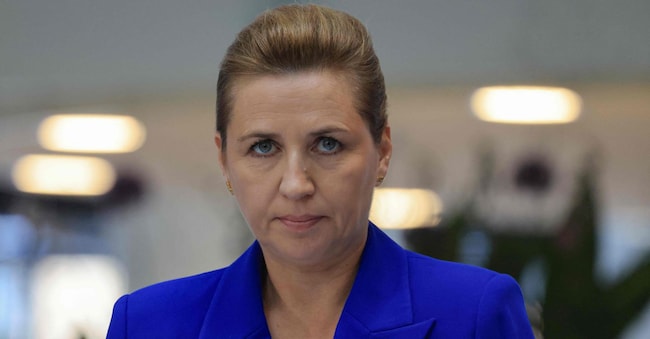
The Frederiksen government's reaction was swift. At the end of August, it revised the country's growth estimates for 2025 downwards, from 3% to 1.4% (compared to 3.7% in 2024). Market economists expect Novo Nordisk's contribution to merchandise exports to fall to 1.3 percentage points, compared to 8.1 percentage points last year. Growth in merchandise exports will be just 2.7% this year, compared to 10.5% in 2024.
Denmark is a small country, six million inhabitants, but with a traditionally flourishing economy. Apart from Novo Nordisk and Ørsted, other companies are world-famous: the shipowner Maersk, the brewer Carlsberg, the logistics group DSV, the wind turbine manufacturer Vestas and the toy manufacturer Lego. 'The 10 largest companies weighed 20 per cent of the national economy in the 1970s, 1980s and 1990s; today we are around 40 per cent,' explains Martin Jes Iversen, professor at the Copenhagen Business School.
The analysis by the business association Dansk Industri contributes new and interesting figures: 'Half of the growth recorded by the Danish economy over the past five years can be attributed to 20 superstar companies, and if we look at the most recent three-year period, almost all of the growth was generated by these 20 companies. The Danish economy grew by 4.6 per cent from 2021 to 2024, but if we exclude the 20 superstars, growth was only 0.2 per cent over the past three years'.


