
Fitto to the 27: EU funds can be used against the energy crisis
Letter from the Commission Vice-Presidents. EU executive opens up to countries in difficulty but provokes negative reaction from regions: 'Cohesion is not an emergency cash machine'
from our correspondent Beda Romano
 Aggiungi Il Sole 24 Ore
ai preferiti su Google
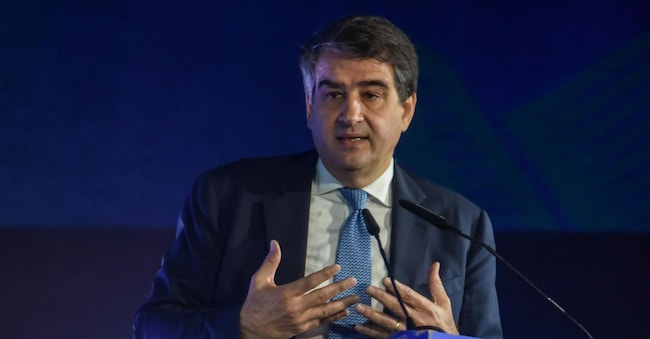
BRUSSELS - Against an economic backdrop made particularly uncertain by the energy shock, the European Commission yesterday urged EU member states to speed up the use of European funds and in particular the Just Transition Fund, the instrument created with the 2021-2027 budget to finance investments in environmental transition. On this occasion he pointed out possible room for manoeuvre in European legislation to support the most vulnerable.
In a letter sent to member countries, European Commission Vice-President Raffaele Fitto wanted to address the difficulties of some countries, primarily Italia, in coping with sharp increases in energy prices. The politician first recalled that the Fund for a Just Transition 'plays a key role in providing support to the populations, economies and environment of territories facing serious socio-economic challenges resulting from the energy transition'.
The Vice-President repeatedly emphasises that money from the Just Transition Fund should be used for investments (not current spending). The goal is in fact to help member countries pursue environmental transition and achieve climate neutrality by 2050. The fund has been endowed with EUR 17.5 billion, of which Italy has been allocated EUR 1.2 billion. According to the European Commission, as of 31 March, Italia had spent just EUR 21.8 million.
Having said that, the European Commission says it is willing 'to evaluate' the possibility of 'making the most of the opportunities offered' by the regulation that set up the Fund for a Just Transition. In this sense, Raffaele Fitto cites Article 8 of the legislative text in his letter. The regulation lists in detail the fields in which the money can be used for investment: from digital innovation to smart mobility and renewable energy.
The vice-president explains that the assessment will take place 'also considering the actions foreseen in the annexes of the AccelerateEU communication'. Among other things, Annex II stipulates that governments can 'issue energy vouchers for vulnerable households; consider (...) the application of temporary regulated prices reserved for vulnerable households (...); introduce targeted reductions, total or partial, of excise duties on electricity for vulnerable and energy-poor households'.


