
Dependent children over 30 outside the 730: around 300,000 people affected
The tax deduction is now only available for 21-29 year olds
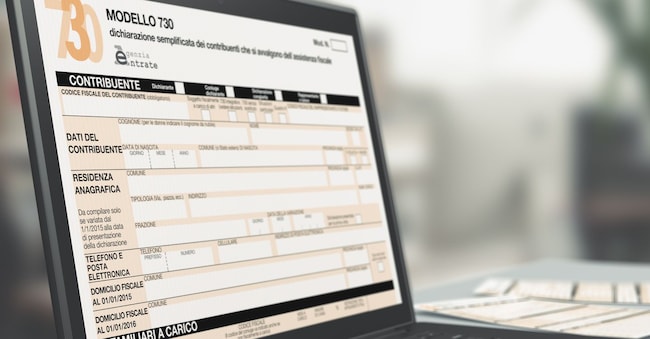
As the age up to which one is considered 'young' moves ever longer in our society, the tax authorities put a stop to this: in this year's tax returns, the bonus reserved for parents of dependent children who have crossed the 30-year mark in 2025 will disappear
Under the changes introduced in the Budget Law for 2025, the tax deduction remains reserved for parents of children aged between 21 and 29. Under this bracket there is the universal single allowance. From the age of 30 and above, on the other hand, the bonus is zero, unless the child has a disability ascertained on the basis of Law 104/92, Article 3: in this hypothesis, the deduction is maintained.
The numbers
According to ISTAT data, 28.7 per cent of young people between 30 and 34 years of age still live in their parents' homes. The stalemate situation concerns, in absolute terms, about 966 thousand young people: partly already employed (638 thousand), partly looking for work (227 thousand) and partly still in education (68 thousand). This is the main target group on which the 2025 manoeuvre (Law 207/2024, Article 1, paragraph 11) has intervened, although obviously there are young people who are not self-employed also among those over 34 years of age (a group not surveyed by ISTAT).
Since 1 March 2022, with the debut of the universal single allowance, the tax bonus had already been limited to dependent children 21 years and over. The new upper age limit - the technical report to the manoeuvre estimates - will result in savings for the public purse of 319.5 million euros per year. To have a reference, in the 2024 tax year - the last one before the cut - the total value of the relief for family members, including spouse and other dependent relatives, was 3.76 billion.
The effects
The impact on individual households can be derived by analysing Finance statistics. In the declarations submitted last year, the deduction for dependents relieved taxpayers' Irpef on average by 672 euro. It must be considered that the maximum amount of 950 euro decreases as income rises to zero at 95,000 euro (threshold increased by 15,000 euro for each child above the first). The bonus is multiplied by the number of children and is divided in half between the parents or attributed to the parent with the highest income. The average income of taxpayers with dependents in 2024 was 27,844 euro. Only three out of ten were in the range between 29 and 50,000 euro, and only 7% above the latter income level.


