Drawing attracts new collectors in Paris
At the Salon du Dessin and Drawing Now Paris many visitors to the works of old, modern and contemporary masters
by Marilena Pirrelli
 Aggiungi Il Sole 24 Ore
ai preferiti su Google
Key points
The 34th Salon du Dessin running until 30 March at the Palais Brongniart in Paris confirms itself as the leading event for ancient, modern and contemporary design. The fair, held on the ground floor of the neoclassical building, hosts 39 international galleries, including 18 foreign ones and four new entries (Demisch Danant, Lowet de Wotrenge, La Forest Divonne and Cazeau Gallery) and offers a prestigious preview of rare drawings, studies and works on paper by historical masters and contemporary artists. The focus this year on ancient, modern - including Tiepolo, Delacroix, Klimt, Picasso, Sam Francis - and contemporary drawings has an increasing emphasis on 20th century Ukrainian drawings and abstract works.
Drawing is the ideal starting point for starting a collection, so much so that the fair aims to be a meeting point for newcomers and experienced enthusiasts alike and has decided to introduce a route dedicated to 'New Collectors' with distinctive signage on the stands of the participating galleries (a purple sticker) showing visitors where to discover quality drawings at affordable prices (between €2,000 and €8,000), works on paper by renowned masters at prices within everyone's reach, artists unjustly neglected and promising artists worthy of investment. In addition, the "drawings in search of an author" stand also makes it possible to buy works whose authorship is yet to be ascertained but of obvious value presented by exhibitors.
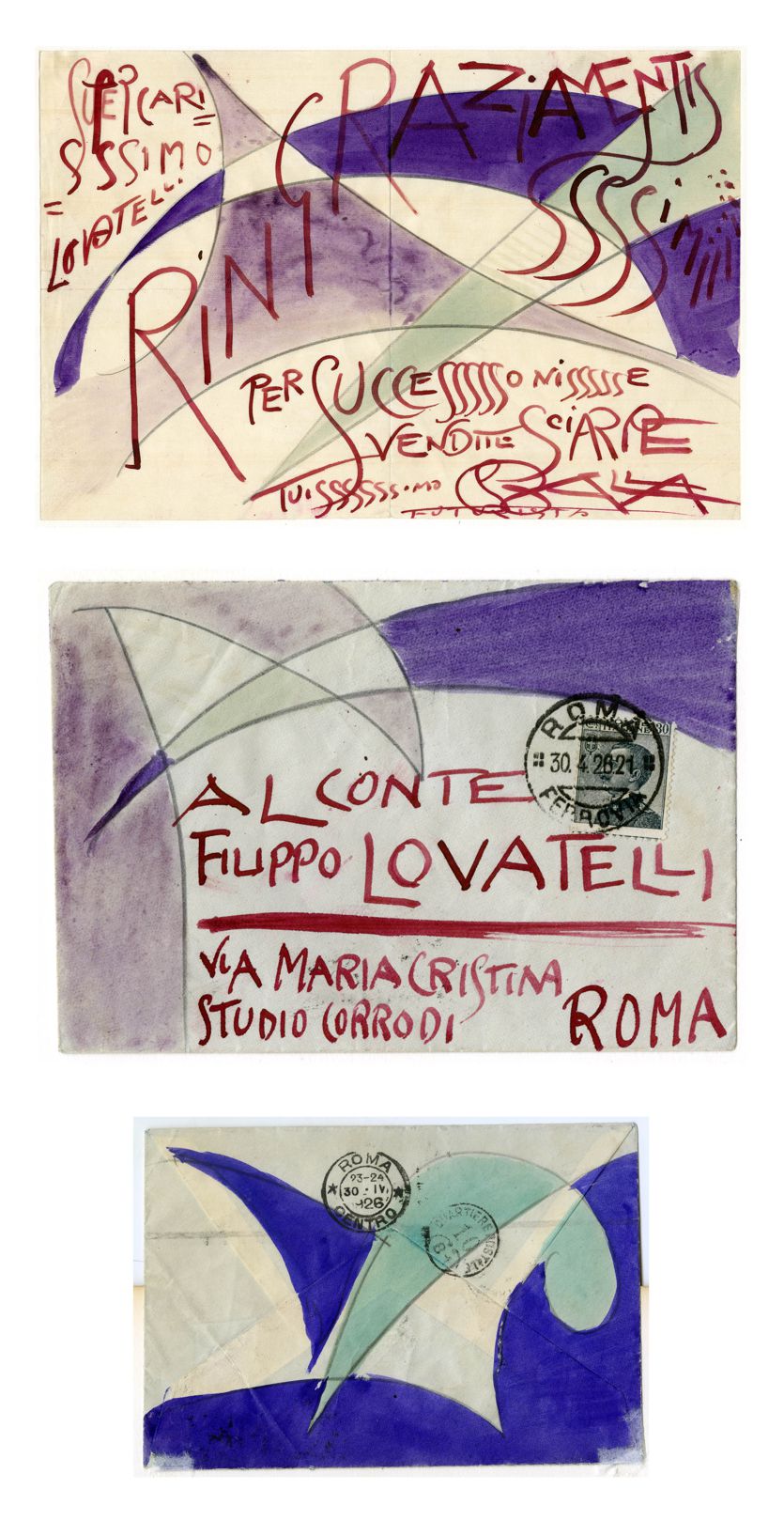
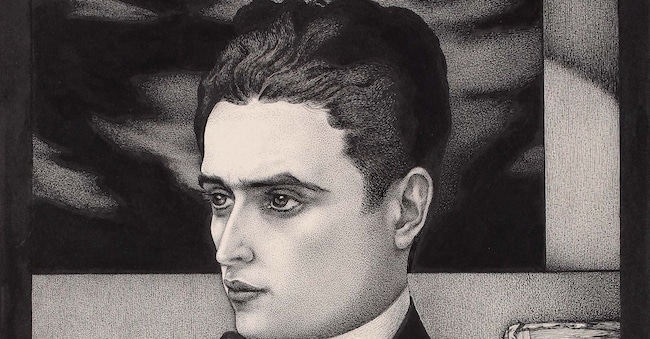
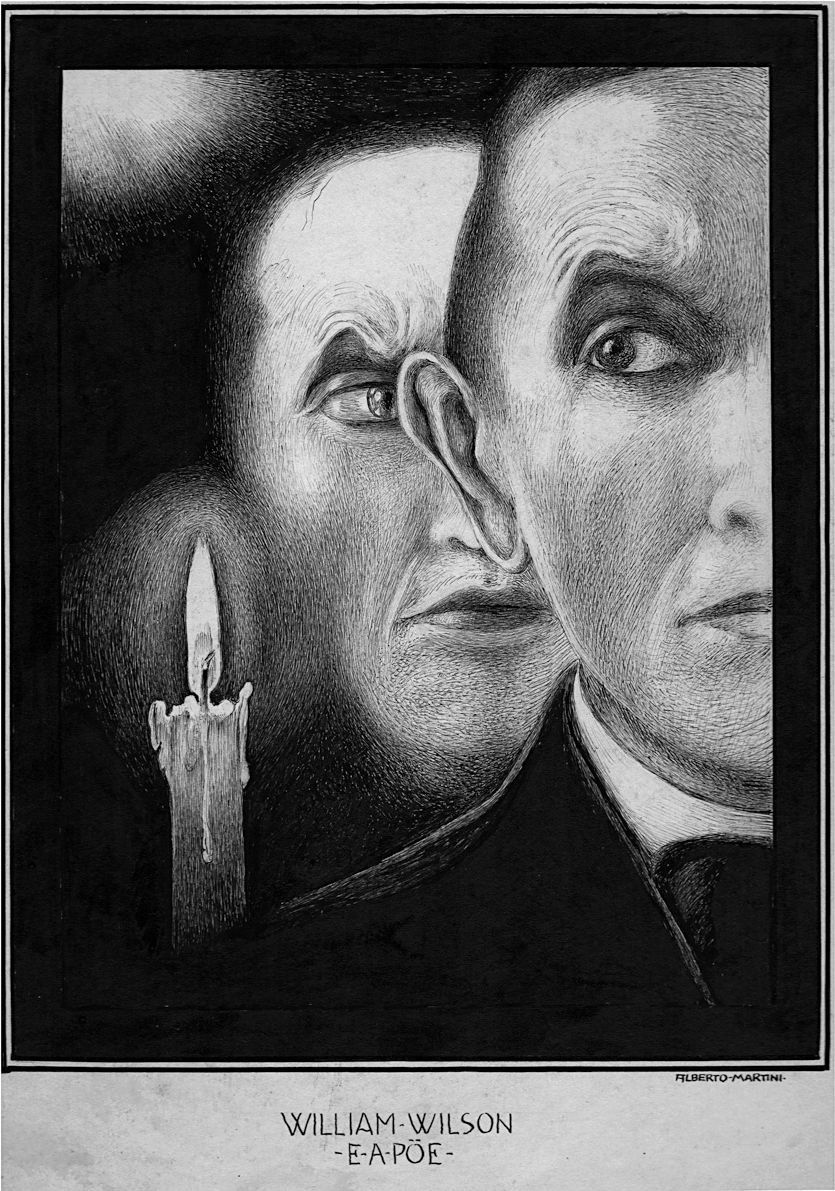
But what can you find? From the Laocoonte Gallery / W. Apolloni Monica Carderalli presents a 'Self-portrait', 1905 by Diego Martini, an Indian ink on cardboard (41.2 x 32.2 cm). "Vittorio Pica," explains the gallery owner, "said to be a magician of black and white Indian ink and was a resounding success at the time. This self-portrait restores the texture of the velvet and the intense expression of the face. He illustrated no less than 135 plates that were to have been included in a book that was never realised, of Edgar Alan Poe's horror stories. We bring two chine on cardboard: 'Hop Frog', 1905, (cm 27 x 20) and 'William Wilson', c. 1909 (cm 37 x 26)' a disturbing double portrait of the same artist'. The gallery also carries a Letter to Count Filippo Lovatelli, 1926 (19.4 x 28 cm) and envelope, by Giacomo Balla with Futurist writing and drawing, a pencil and tempera on paper. By Eugene Berman, a "Study for Cassandra", 1942, watercoloured red Indian ink on paper, (27 x 19 cm) and then again by Alberto Savinio, "Louis XVI and Marie Antoinette", 1931-1932, behind them the guillotine, grease pencil on paper, (32.5 x 48 cm) and by Mario Sironi an ink on paper, "Railway Viaduct", 1920 (14 x 21.5 cm). "Ever since the previw the fair has been crowded and we have seen a lot of drawing enthusiasts, operators and museum directors - continued Carderalli - it is a very refined fair with a very strict vetitng and you have to study what you bring, we have been careful, our things are 99% published and we have already had feedback". The price range? The proposals by W. Apolloni with drawings by Tommaso Minardi and Vincenzo Camuccini range from 25-30 thousand euro, while the range of values of the 900 does not exceed 90 thousand euro, some drawings can even start from 5 thousand euro.
Also confirming the attendance was Edoardo Baracco of the Enrico Frascione Gallery. "We saw American and French museum directors, the mood is good. Our stand is focused on ancient drawing but we are also open to the modern and contemporary as the market demands: we start with a 350 x 190 mm black stone drawing byJohannes S. Van Calcar, a preparatory study for table no. 1 for the first book of "De humani corporis fabrica libri septem", 1543 written by Andrea Vesalio, printed in Basel in 1543. It is the first anatomical diagram after Leonardo's tables. Also in black stone is the work 'Immigration stories' 2025 by Michele Del Campo (Bari, 1976 ) (356 x 432 mm). The artist works in Miami and has done a series of interviews and drawings with artists from all over the world: we have selected nine women out of the 17 interviews done so far). Each sheet thus brings together, in a rich material and conceptual continuity, a text handwritten by the artist telling the story of the subject and her effigy drawn with a rapid, material and observational stroke taken directly from life. Then again by the American Elsie Dodge Pattee Augur, the pastel on paper, with a possible self-portrait/female portrait, 1896 (650 x 490 mm). A key figure in the revitalisation of the modern miniature and the practice of pastel and watercolour. In drawing, clients are open to new contaminations," concludes the Italia gallerist who offers works from one thousand euro up to the 250 thousand requested for the Van Calcar, with an average range from 4 thousand to 25 thousand for the other offers.
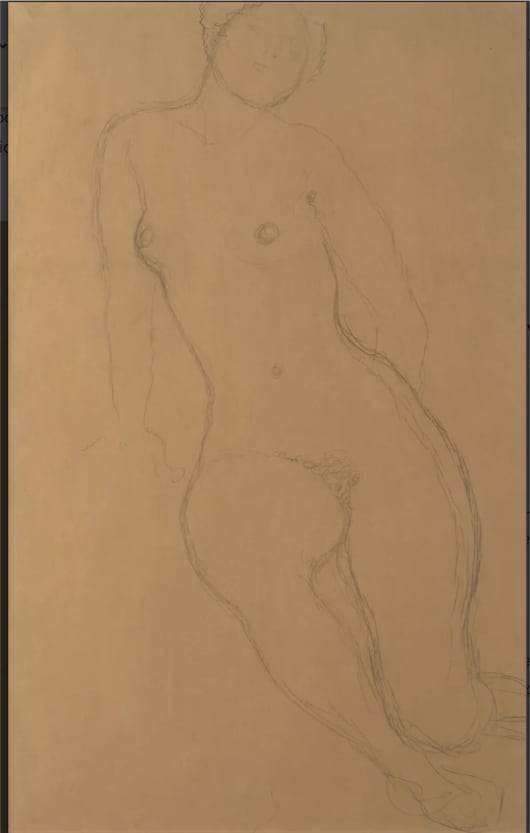
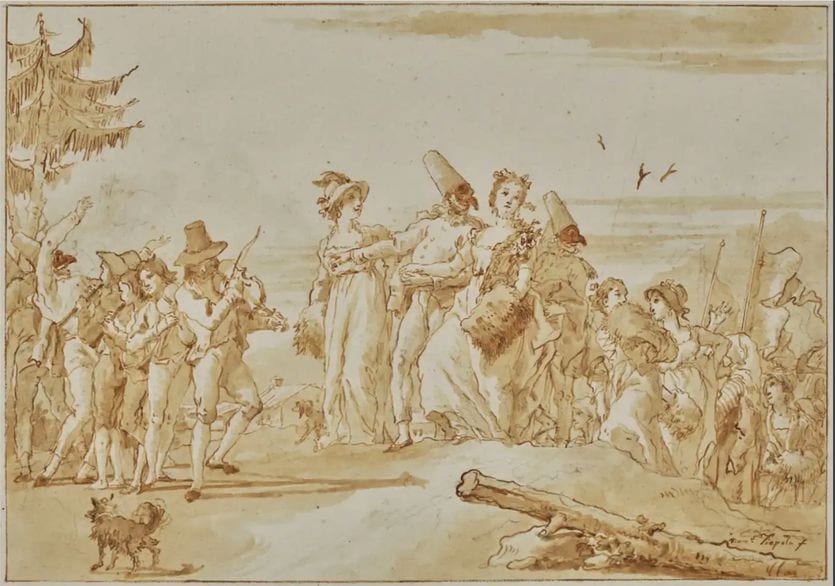
Among others, Paolo Antonacci exhibits a fresh watercolour on paper of Salomon Corrodi "Il Tevere e la campagna romana visti da Monte Mario", 1873, by Salomon Corrodi; Aleandri Arte Moderna offers a pencil on paper by Gustav Klimt 'Sitzender Akt von vorne (Seated Nude seen from the Front)', 1912, already published; Bottegantica brings a coloured pencil on paper by Cuno Amiet with an expressive portrait of 'Rosa Luder', 1900. Gallery Éric Coatalem offers by Giambattista Tiepolo a black chalk and diluted ink with 'The Wedding Procession of Polichinelle', already published and exhibited and changed hands several times. 'The Judgment of Midas', a pen, brown ink, grey watercolour, by Louis Cretey is presented by Michel Descours Gallery. And again byVincenzo Gemito, a 1923 'Medusa' from Pandora Old Masters Inc. But there are many other works that can attract the simple visitor.