
Giorgio Armani died, he anticipated 50 years of change

2' min read
2' min read
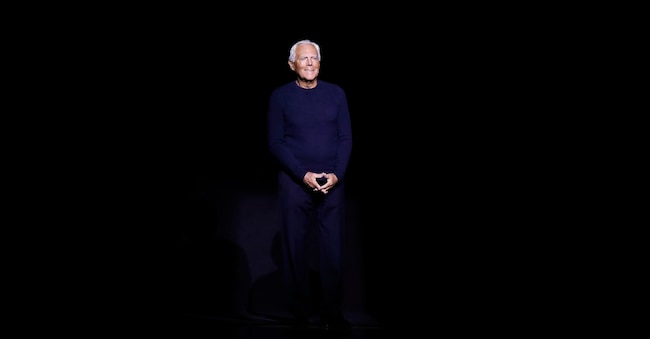
The news of the passing away of Giorgio Armani, the undisputed monarch, since 1975, of the group that bears his name, a character that has forever entered the collective imagination for his scathing yet profoundly human way of communicating, for his unique way of doing business, uniting in a coherent design fashion, furniture, hotels, cars, flowers, restaurants and much more.
Should he be remembered as the designer of the career woman and soft masculinity or as the theorist of strategic diversification? As the one who dressed the new Hollywood or for his ability to connect with a transversal audience? For the absolute logo or for deconstructed tailoring? Impossible to decide.
The scope of Giorgio Armani's work is titanic and sprawling, spanning five decades of profound changes, both social and aesthetic, that Armani saw first, anticipated, followed and modified, only to close in recent years, inevitably, in the stronghold of a style that is indeed timeless, but at times disconnected from today. One is only modern once, said Leo Longanesi. That Armani has been so for more than three decades out of a five-year career is a heroic achievement. The news of his passing leaves one astonished because Armani, the last surviving - and still active - exponent of that wild bunch that on the crest of the seventies and then in the eighties created the global phenomenon of made in Italy, seemed to have become immortal. Proudly and stubbornly independent, he worked to the end, with a stubborn decisionism that was his strength and, ultimately, his weakness.
He consigned to history a body of work of immense value: clothes of infinite softness, discreet but full of personality, made to mould themselves to the person. Never minimalist and renouncing, but not garrulous and exhibitionist either, he created a way and a world, made of balance and measure, declining his stylistic sign in dressing as in living, that is, constructing a lifestyle, a concept that is perhaps imposing and today not very relevant, yet the perfect synthesis of a delicately totalitarian vision. Along this path, unlike others, Armani has become a public figure, a sort of great collective father: not because of his undoubted style merits, but precisely because of his ability to really communicate with everyone, always putting his face on.
In the hard days of the pandemic, he created a bond with the whole world, and this is another achievement that cannot be forgotten. The group he is leaving behind is solid, with a driving business in the fields of perfumery and cosmetics, but the unknown of succession, a taboo that has always been postponed, almost as if to exorcise the fear of no longer being there, now suddenly becomes reality. The helm passes to the trusted lieutenants: Leo Dell'Orco and Silvana Armani, capable heirs of long experience. The sacred monster, of course, remains, leaving a void that will take a long time to fill, an absence that fills one with sadness and consigns him, rightly, to myth.

