Gourmet destinations: discovering Thessaloniki
Two thousand years of culinary tradition, Greece’s first UNESCO Creative City of Gastronomy, and a paradise of flavourful fusions blending Sephardic and Ottoman customs, Byzantine techniques and a touch of France.

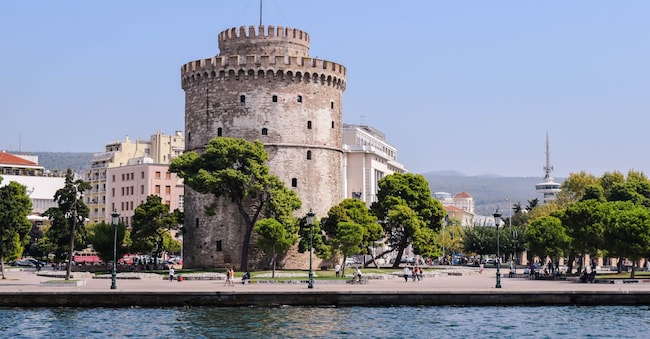
Zero stars, five Bib Gourmands and around fifteen recommended restaurants. On 20 October, the Michelin Guide ventured outside Athens for the first time, and this is the verdict on Thessaloniki. At first glance, it seems a rather stingy assessment for a city with over two thousand years of culinary history behind it and one that has always been at the forefront of trends. The guide, however, has painted an accurate picture. A port and a city of merchants, Thessaloniki has always eaten out – in patisseries, tavernas and at market stalls – and its greatness is measured by everyday meals rather than in the dining rooms of Michelin-starred restaurants.
UNESCO had recognised this, designating it Greece’s first Creative City of Gastronomy in 2021. Its history is woven into the rationale behind the designation: the Byzantine techniques that have never been abandoned, Ottoman court cuisine, families who arrived from Pontus, Asia Minor and Constantinople, Sephardic customs, the Balkans and even a hint of France. The result is a cuisine that has little in common with the Greece of the islands – the Greece of sunshine, tomatoes and grilled fish: here, memory is what counts, and the flavours are richer, spicier and more urban.
It is in the markets that this blend of cultures can be experienced first-hand. At Modiano, beneath the neoclassical vaults, fish sits alongside spices. At Athonos, at Harilaos’, you can stock up on the city’s finest dried fruit; at Kapani, on olives: a temptation that’s hard to resist, and one that weighs heavily on your suitcase on the return journey. Out on the streets, the day follows its own gentle rhythm: bougatsa for breakfast, with cream or feta, the sesame koulouri from street vendors; in the afternoon, trigona – puff pastry cones filled with cream – and siropiasta, soaked in syrup, which call for a Greek-style coffee to restore the balance.
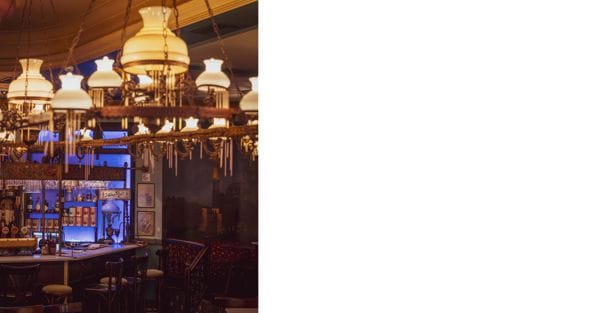
That Orient, after all, has never really left here. In Ano Poli, the upper town, at number 22 Via Apostolou Pavlou, coffee has been served since the nineteenth century. In 1929, the Loukidis brothers named the café Elpis, meaning ‘hope’, but to everyone it was simply Karamanlis’s café. Today it is called Prigipos, and the décor evokes those years: marble tables, oil lamps with fringed glass shades, three wall clocks, and a horn-shaped gramophone. A plaque in Greek sets out the house rules: due to the noise, please do not play tavli – the Greek version of backgammon – after eleven o’clock.
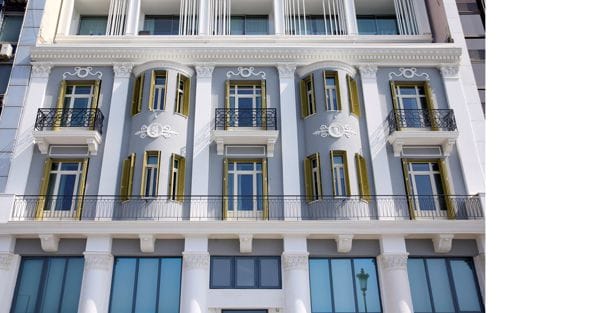
From the upper town, the path winds down to the seafront, overlooking the Thermaic Gulf, where, at sunset, the promenade leads towards the White Tower. Here, in 1925, in the city rebuilt after the great fire, the Birrerie Riunite Olympos Naoussa building was erected, and the following year the restaurant bearing the same name opened on the ground floor. For decades, it was the place where Thessaloniki went to see and be seen: waiters in white jackets, monogrammed porcelain ordered from Bavaria, and a mussel pilaf so famous that it was packed up and sent as far as Athens. In 1994, the shutters came down, and in 2022, it was Konstantinos Tornivoukas – heir to a family of hoteliers – who switched the lights back on, opening ON Residence, a sophisticated boutique hotel, within the building. This year, exactly one hundred years after its opening, Michelin has included the restaurant in its guide. It has awarded the hotel – the only one of its kind in the city – a key.