
Deutsche Telekom plummets in Frankfurt as increased competition from Starlink in the US takes its toll
SpaceX has acquired the necessary spectrum in the US to make Starlink a fully-fledged mobile network operator. The German group’s shares are heavily exposed to the US market through its subsidiary T-Mobile.

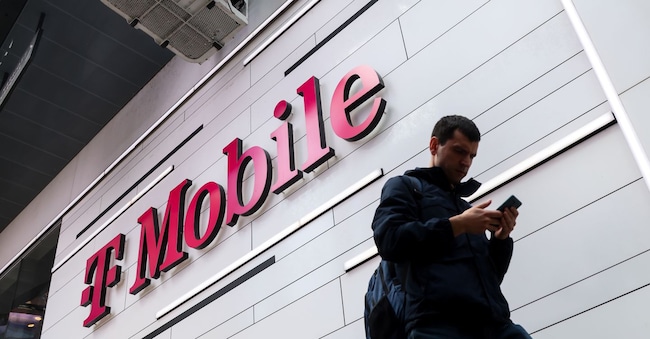
(Il Sole 24 Ore Radiocor) - Deutsche Telekom’s share price slumped on the Frankfurt Stock Exchange following SpaceX’s acquisition of the spectrum required in the US to make Starlink a fully-fledged mobile network operator, thereby increasing competition in the lucrative US market. Shares in the German group, which has significant exposure to the US via its subsidiary T-Mobile, fell by more than 7 per cent to €24.85, bringing up the rear of both the DAX and the Stoxx Europe indices. The decline has also affected other major European telecoms operators, such as Vodafone (-4.2 per cent), Orange (-3 per cent) and Telefónica (-3.4 per cent), whilst the previous day, in the wake of SpaceX’s announcement, the leading US telecoms groups had also seen their shares fall. AT&T shares fell by 6.6 per cent in after-hours trading, T-Mobile US lost 7 per cent and Verizon 5.7 per cent. SpaceX announced that it had acquired a portfolio of low-frequency spectrum licences, necessary to provide extensive and continuous mobile coverage across the US. The *Wall Street Journal* estimated the value of the deal at eight billion dollars. The seller is the Grain Management fund, which had in turn acquired the licences from T-Mobile earlier this year. The deal ‘removes one of the last key obstacles to transforming Starlink Mobile into one of the leading mobile operators in the United States’, SpaceX emphasised in a statement.
DT is feeling the impact more than other operators because the United States has become its main source of strength. The group owns 52.8 per cent of T-Mobile US, which had around 142 million customers at the end of 2025, and this subsidiary has driven its growth over the last decade. So SpaceX is not simply venturing into a sideline: it is positioning itself at the forefront of its core business. SpaceX already held the high-frequency spectrum, and until now Starlink had merely been providing satellite connectivity to existing operators. Satellite calls used to be a last resort in areas without coverage, but with the new low-frequency bands, a standard mobile phone could pick up a satellite signal even inside a building, without the need for special equipment, as some operators point out. Not to mention that the FCC, the US regulatory authority, authorised SpaceX on 6 October to launch a further 15,000 next-generation satellites for Starlink Mobile and, in early October, granted it the right to carry out communications between the United States and the rest of the world. Analysts at William Blair predict an ‘all-in-one’ offering from Starlink combining satellite internet, telephone service and perhaps Grok, Elon Musk’s virtual assistant. No traditional operator can offer a similar package.

