Blue diamonds, the final moments of the auction and the thrill of the unsold lot
With prices often running into millions, they rarely fall below six figures. But it can happen that, surprisingly, some remain unsold
Key points
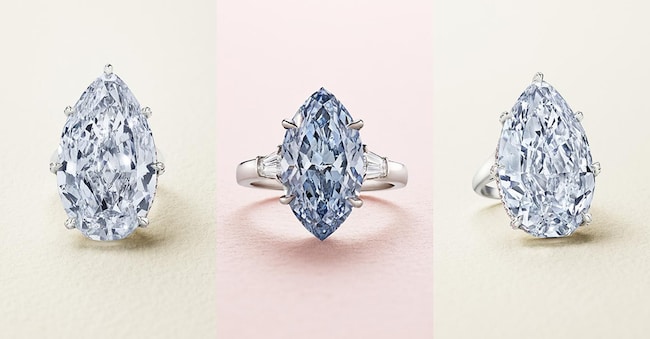
Born from boron and seawater: these are blue diamonds. Among the rarest of all on Earth, they account for 0.02% of all coloured diamonds, which in turn make up 0.01% of colourless diamonds (1 in 10,000). True geological anomalies, they fetch prices in the millions at auction, rarely falling below six figures.
The latest prices
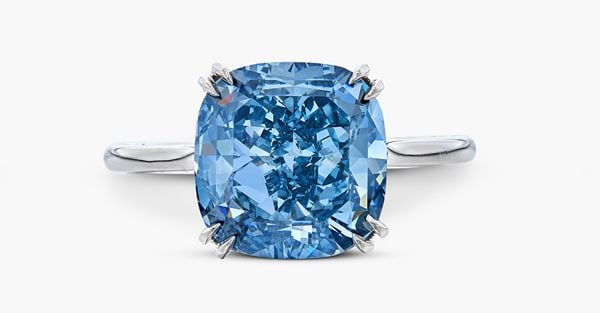
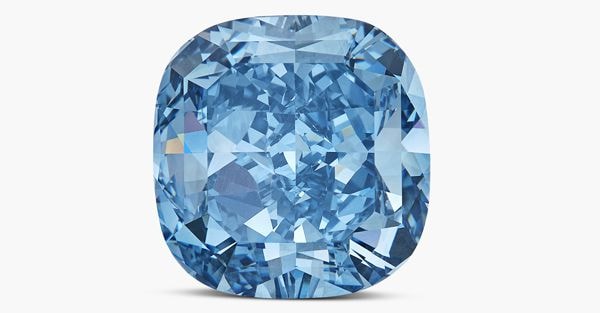
Christie’s New York’s latest Magnificent Jewels auction on 9 June 2026 sold two such stones, both set in platinum rings. The most significant, ‘The Azure Blue’, weighing 31.62 carats (18.1 grams) and boasting an extremely high clarity grade (VVS1), was sold for $8,371,000, in line with the pre-sale estimate of $6.5–8.5 million. ‘The largest fancy blue diamond ever offered at auction,’ announced Claibourne Poindexter, Head of Jewellery for the Americas at Christie’s, ‘one of the most significant light blue diamonds to have appeared on the market in recent years’. The other blue diamond fetched a similar sum, $8,127,000.
From boron and seawater
Natural diamonds are generally blue due to infinitesimal traces of boron, whose atoms can replace carbon in the gem’s crystal structure. However, their colour may also result from structural defects caused by the stone’s selective absorption of light, hydrogen or other types of inclusion. Natural boron-coloured blues are classified as ‘Type IIb’, according to the GIA (Gemological Institute of America). And there are only a few hundred of them. Boron is abundant on Earth, but extremely rare at great depths. Blue diamonds formed between 400 and 660 km below the Earth’s surface – within subducting oceanic crust – between one and three billion years ago, where boron from the oceans had seeped in. Most other diamonds form at a depth of 150–200 km. These stones remain shrouded in mystery, with new scientific studies on their inclusions dating back only to 2018 (published in *Nature*).
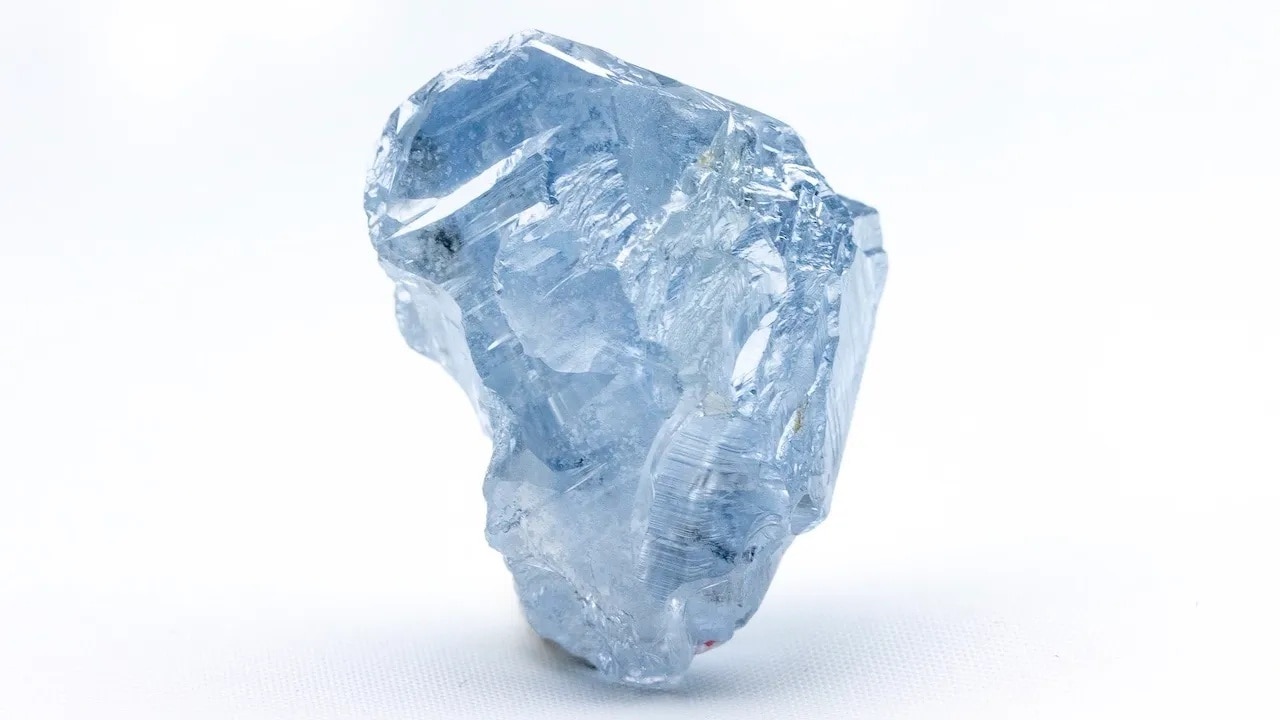
They are found mainly in Botswana and South Africa (in the famous Cullinan mine). In the past, they were also mined from the legendary Golconda mine in India, which is now exhausted. The latter, for example, has yielded museum-quality stones such as the Hope Diamond (also known as the ‘Blue of France’), the Farnese Blue and the Wittelsbach. But discoveries continue, however rare they may be: in January 2026, Petra Diamonds announced that it had extracted a 41.82-carat rough stone from the Cullinan mine itself.
A seamless chromatic scale
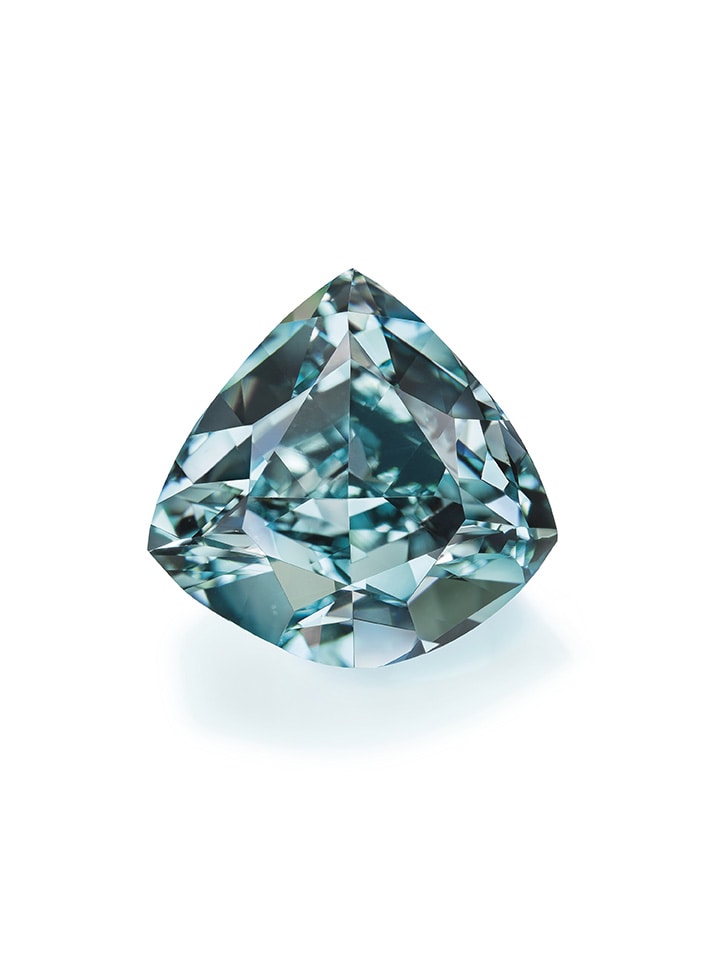
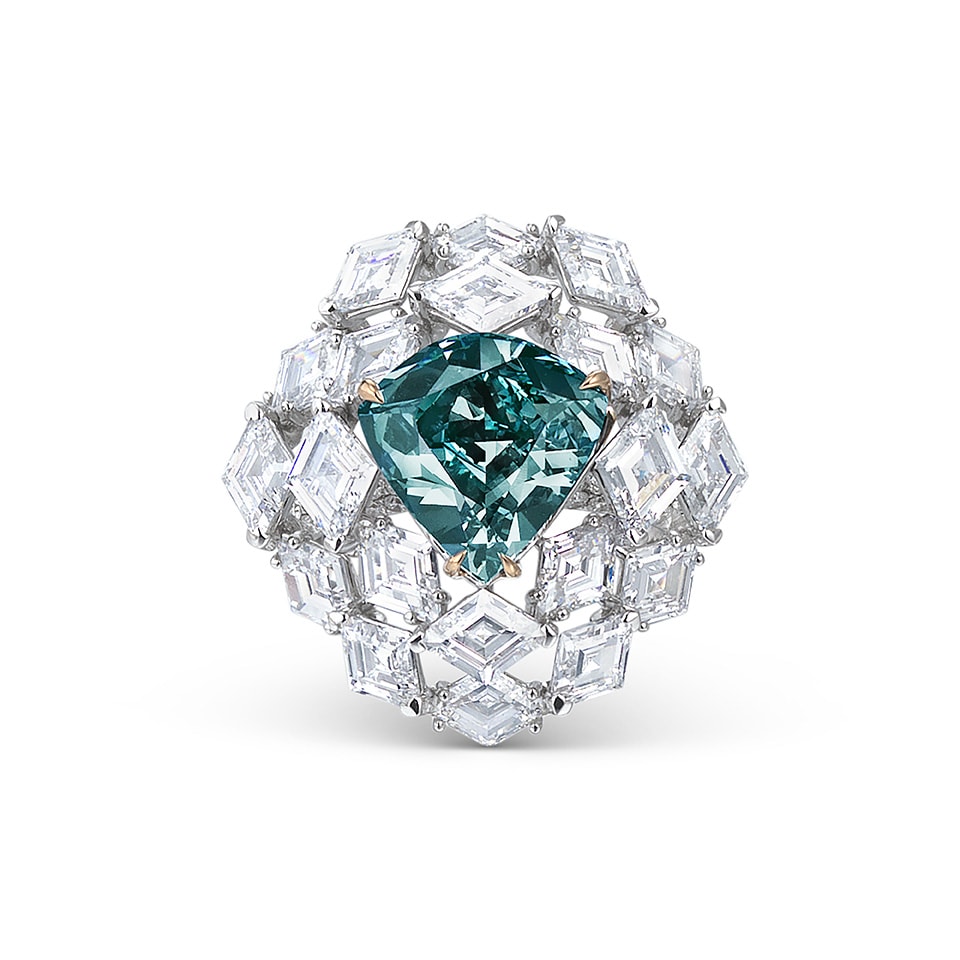
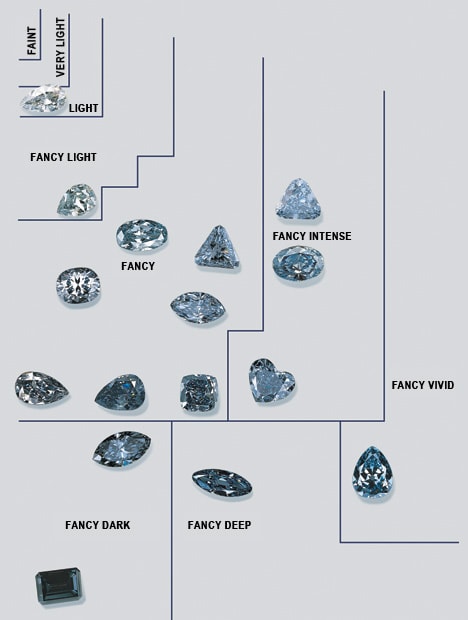
The appeal of ‘coloured diamonds’ also lies in the fact that they can be placed on a colour scale that is virtually seamless. To give an example, it takes next to nothing for a diamond to shift from the ‘blue’ classification to blue-grey. Or to the elusive green-blue of *The Ocean Dream*, a 5.50-carat green-blue diamond, sold by Christie’s Geneva on 13 May 2026 for 13,567,500 Swiss francs (17,366,400 dollars) after 20 minutes of bidding. It is the most expensive fancy vivid blue-green diamond ever sold at auction, partly because it is virtually the only one of its kind, as well as being one of the eight rarest diamonds in the world. The rough stone, discovered in the 1990s, weighed more than 11 carats.