
Luigi Nicolais, former minister and former president of the CNR, dies
He was 83 years old. He was Minister for Reforms in the second Prodi II government and headed the National Research Council from 2012 to 2016
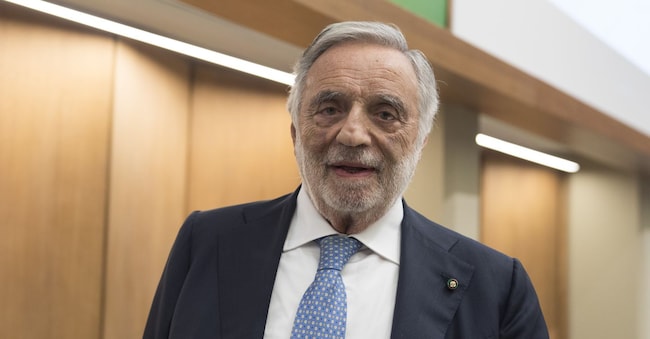
Luigi Nicolais has died at the age of 83. He was Minister for Reforms and Innovations in Public Administration in the Prodi II government and president of the National Research Council from 2012 to 2016. He was also a councillor in the Campania regional government under Antonio Bassolino from 2000 to 2005 and an MP from 2008 to 2012. A chemical engineer, he has taught at the Federico II University in Naples.
Teaching and political engagement
Born in Sant'Anastasia (Naples) on 9 February 1942, Nicolais graduated in engineering from the Federico II University, where he later became full professor of Polymer Technologies. He also taught in the USA, at the University of Washingon and the University of Connecticut. He also directed the Institute for Composite Materials Technology at the CNR and was a member of the 2003 Group for Scientific Research, which brings together the most cited Italian researchers in the world. In 2004, he founded IMAST, the technological district on polymeric materials and structures engineering, of which he became president. In 2005, he was also president of the City of Science in Naples and ARTI (Regional Agency for Technology and Innovation in Puglia).
His political activity has also been intense since 2000, when he was councillor in charge of universities, scientific research and technological innovation in the Campania region, a role he held until 2005. In 2006, he joined the second Prodi government as Minister for Reforms and Innovations in Public Administration, and remained in office until 2008. In that year he was elected to the Chamber of Deputies on the Democratic Party lists, a position from which he resigned in 2012. That same year he was appointed president of the CNR.
Bernini: Nicolais has left an indelible mark on the scientific community
'Competence, science, imagination, passion, a sense of institutions. This was and is Luigi Nicolais. I would like to express my deepest condolences for his passing. We will miss his talent and timeless intelligence, but also his rare kindness, humanity and sympathy": this is how the Minister for Universities and Research, Anna Maria Bernini, remembers Luigi Nicolais. "He left an indelible mark on the Italian and international scientific community. His contributions to materials research, his commitment to innovation, his ability to hold together scientific vision and public responsibility,' Bernini continues, 'have marked generations of researchers. In recent years I have had the privilege of working closely with him, in his capacity as Research Advisor, a position he took on with generosity and passion, representing our country at its best in European innovation bodies, always making a decisive contribution. Luigi Nicolais,' he concludes, 'was and is an extraordinary scientist. His gentle and empathetic determination will remain an example for all of us'.

