Pollution

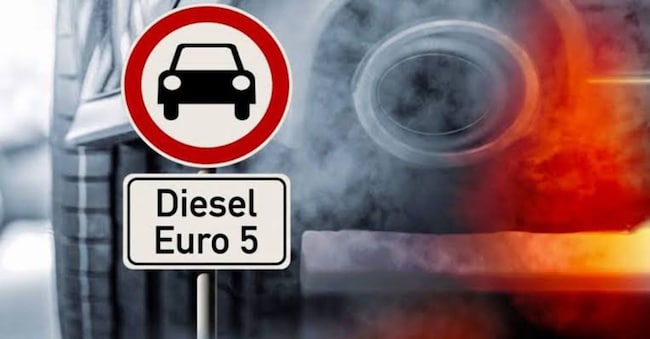
Euro 5 diesel vehicles, driving ban from 1 October: which regions are affected?

The measure applies to vehicles registered between 2011 and 2015 and covers the Po Valley. Lombardy has confirmed the restrictions, whilst Piedmont has decided to adopt alternative measures. Efforts are being made to avoid a ban in Emilia-Romagna and Veneto as well

4' min read

Translated by AI
Versione italiana

4' min read

Translated by AI
Versione italiana

From 1 October, traffic restrictions on Euro 5 diesel vehicles could come into force in the regions of the Po Valley. The measure is designed to reduce emission levels in one of the most polluted areas in Italia and across Europe. The ban, however, will not apply indiscriminately across the entire Po Valley. Regions have the option of adopting alternative measures to reduce emissions, as Piedmont has done and as Veneto and Emilia-Romagna appear set to do. At present, the restrictions have been confirmed in Lombardy.

The vehicles involved

The measure, which was originally due to come into force a year ago, on 1 October 2025, applies to Euro 5 diesel vehicles, that is, those falling within the emissions class approved in accordance with the European anti-pollution standards that became mandatory for new cars from September 2011 and remained in force until the introduction of the Euro 6 standard in September 2015.

Loading...

These vehicles are fitted with more advanced filtration systems than previous generations, but they still emit significant quantities of nitrogen oxides and fine particulate matter, particularly in urban areas with heavy traffic.

Lombardy

Whilst the initial version covered all urban centres with more than 30,000 residents, the scope of the measure – which is due to come into force in less than a month – imposes the ban only on municipalities with a population of over 100,000. The regulation, however, allows regional authorities to avoid a total ban, provided that alternative measures are put in place to ensure an equivalent reduction in pollutants.

This clause has given rise to a varied and inconsistent situation within the Po Valley. In Lombardy, the ban on weekdays in the main urban centres (Milan, Brescia, Bergamo and Monza) has been confirmed, where owners of the vehicles concerned must comply with the ban from Monday to Friday, between 7.30 am and 7.30 pm. The restrictions on Euro 5 diesel vehicles will come into force from 1 October 2026 for passenger cars, from 1 October 2027 for categories M2, N1 and N2, and from 1 October 2028 for all other categories.

Veneto and Emilia-Romagna

In Veneto and Emilia-Romagna, the picture is not yet clear, and work is under way to finalise the analysis of local environmental plans and, consequently, to determine the operational procedures to be adopted.

In August 2026, Alberto Stefani, Governor of Veneto, explained that ‘it is unacceptable to prevent so many Venetians from getting to work or taking their children to school simply because they cannot afford to buy a new car’ and that, for this reason, the process had been set in motion ‘to lift the ban on Euro 5 diesel cars’. According to the region’s estimates, the ban could have a direct impact on at least 150,000 vehicles.

“The environment in which we live,” continued Stefani, “must be defended vigorously, but also sensibly, and the costs of the ecological transition cannot be borne by families and workers. That is why we have devised a series of alternative solutions that will make it possible to avoid a ban on Euro 5 diesel vehicles, whilst still safeguarding the quality of the air we breathe. The idea is to accompany the measure to lift the ban with a number of compensatory measures.”

Among the measures under consideration are bringing forward the call for tenders for the conversion of Euro 5 diesel vehicles to dual-fuel and, in the event of an orange or red PM10 alert, the use of remote working for civil servants, except for those whose duties must necessarily be carried out on site. The measure, designed to avert the ban scheduled for next month, is now under consideration by the Regional Council.

In Emilia-Romagna, however, the Pair2030 (Regional Integrated Air Quality Plan) sets out restrictions which come into force on 1 October each year and remain in place until the following 31 March, applying from Monday to Friday, from 8.30 am to 6.30 pm. Unless alternative measures are adopted, from 1 October 2026 the ban will also apply to Euro 5 diesel vehicles.

Loading...

The Piedmont model

Piedmont, on the other hand, has opted for structural compensatory measures, thereby avoiding a blanket ban on vehicles. In July 2026, the region approved by a majority a resolution updating the Regional Air Quality Plan and announced that, as a result, it had averted a ban on the circulation of Euro 5 diesel vehicles.

“We are achieving our target of reducing emissions and protecting air quality through measures other than banning Euro 5 vehicles ,” announced President Alberto Cirio, “because we are convinced that the ecological transition is a necessary challenge, but it must not fall on the shoulders of the most vulnerable families and the less well-off.”

Instead of imposing blanket restrictions on private transport, the region has identified a series of ‘structural and innovative measures that will deliver equivalent results in reducing pollutant emissions’, including incentives for the use of HVO (Hydrotreated Vegetable Oil) biofuels for local public transport and for Euro 5 and Euro 6 diesel vehicles – a solution that ‘enables a significant reduction in climate-changing emissions and local pollutants without requiring the immediate replacement of the existing vehicle fleet’.

Penalties

Motorists will be able to check whether their vehicle falls into one of the classes subject to restrictions by consulting their vehicle registration certificate or, alternatively, by entering their vehicle’s number plate on the Motorist’s Portal. Vehicles potentially affected are those registered between 2011 and 2015, but the actual outcome depends on the technical specifications stated on the vehicle registration certificate.

Breaches of these prohibitions are punishable by administrative fines ranging from 168 to 679 euros. If a driver who has already been fined commits the same offence within a two-year period, they will face a driving ban for a period of between 15 and 30 days.

Copyright reserved ©

Brand connect

Loading...

Newsletter

Notizie e approfondimenti sugli avvenimenti politici, economici e finanziari.

Iscriviti