Energy

Diesel: the excise duty cut is back on the table. Flexibility under discussion at Ecofin

The government is working on reinstating the discount on diesel. An EU official has ruled out Italy’s request for flexibility during the talks in Luxembourg. The Ministry of the Economy responds: “It will be discussed.”

3' min read

Translated by AI
Versione italiana

3' min read

Translated by AI
Versione italiana

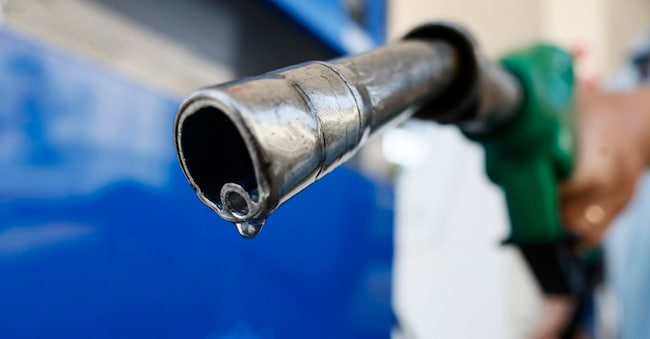
The decision to put an end to the long series of extensions to the fuel duty cuts lasted less than 24 hours. The change of heart took shape from the early afternoon yesterday. Barring any surprises, this will shortly result in the publication of a new interministerial decree to reinstate the ‘variable excise duties’. These are set to be slightly higher than on previous occasions, as motorists faced higher prices in September.

Variable excise duties

It was the predictable side effect of the expiry of the old discount that quickly reignited work on the measure. This has also pushed up the price cap – introduced in recent days by Eni, closely followed by IP and Q8 – by 6 cents; a list that in the last few hours has also come to include Esso and Tamoil petrol stations.

Loading...

In economic terms, the change is not huge. But on the political front, it is enough to spark controversy over a price cap on which the Government has placed great emphasis, precisely to ease the burden of measures on the public budget. On the subject of variable excise duties, “we are working on it”, explained Deputy Minister for the Economy Maurizio Leo as early as this afternoon, and Pichetto Fratin took a similar line, whilst from the broader coalition, M5S leader Giuseppe Conte spoke of a “price cap that lasted as long as a cat on the ring road” and the leader of the PD senators, Francesco Boccia, thundered against ‘the failure of Giorgetti and Meloni’.

The European match

More significant, at least in the long term, is the European issue, over which, however, tensions were once again flaring up at the very same time – fuelled, as in recent days, by a series of statements from officials, which were subsequently corrected yesterday by diplomatic sources.

There are two key issues at the heart of the negotiations with the EU, ahead of tomorrow’s Eurogroup meeting and Friday’s Ecofin meeting in Luxembourg: an EU tax on windfall profits, called for by Italy alongside Germany, Austria, Spain, Portugal and Poland, and ‘flexibility’ regarding assessments of compliance with the spending ceilings imposed by the new Stability Pact, requested by Rome alongside Greece but also being discussed in recent days with other countries.

According to the account given mid-afternoon by a Eurogroup official, the flexibility requested last week by Prime Minister Giorgia Meloni in the letter to Commission President Ursula von der Leyen would not be on the Ecofin agenda. Furthermore, the taxation of windfall profits – the inclusion of which on the agenda for the new meeting had been a key focus of the last informal Ecofin meeting in Dublin – is said to have been downgraded to a topic for discussion during the ‘informal breakfast’.

Italian reconstruction

The spark quickly ignited a row, which was defused by a senior EU diplomat, who stated that ‘obviously, any letter from a head of government is given due consideration’, and that the uncertainty concerned only ‘the precise way in which it fits into the management of Ecofin’. The Italian account is different, as supported in the evening by a statement from the Ministry of the Economy. According to the Ministry, the absence of a specific agenda item on ‘inflation and the expenditure rule’ ‘does not mean that it will not be discussed, as has happened on other occasions’. Indeed, the formal setting for the debate has already been identified: tomorrow’s Eurogroup meeting, under the agenda item on ‘the impact of energy markets on the euro area economy’, and at the start of Friday’s Ecofin meeting, when the ‘European economic situation’ will be discussed.

In short, the game is still wide open. And it is also crucial in the run-up to a budget bill which, according to the tables in the Public Finance Policy Document, currently does not provide for any budgetary leeway from the deficit for the key measures on the Government’s agenda for the final budget bill before the election, ranging from the IRPEF cut to the extension of preferential tax rates (see Sunday’s edition of *Il Sole 24 Ore*).

With regard to the expenditure rule, the Italian request does not trigger an ‘extra deficit’ as is the case with the safeguard clause for energy and defence. However, proposing a flexible assessment of the expenditure rule could help to create some scope for action: not a great deal, because with a trend deficit of 2.8 per cent (net of the clause), the margin for avoiding further risks under the excessive deficit procedure remains minimal. But in difficult times, every little helps.

Copyright reserved ©
Loading...

Brand connect

Loading...

Newsletter

Notizie e approfondimenti sugli avvenimenti politici, economici e finanziari.

Iscriviti