Fuels

Fuel prices: diesel on the verge of an all-time high. Variable excise duties possible in August

Diesel at 2.141 euros per litre, 1.3 cents below the weekly high of 14 March 2022. Further price cuts will only come after the VAT windfall in July

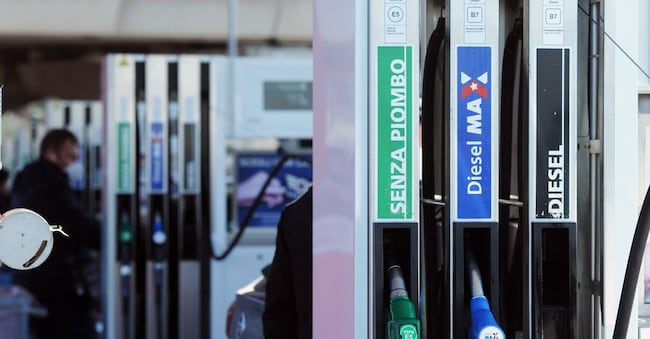
 IMAGOECONOMICA

4' min read

Translated by AI
Versione italiana

4' min read

Translated by AI
Versione italiana

The latest surge in fuel prices is outpacing the pace at which economic policy can respond. But also for timing reasons, diesel – now just a stone’s throw from the all-time highs reached in March 2022 – promises to reignite the political debate, on the eve of August, which is traditionally the holiday month in Italia. But the tools of public finance have been blunted: both at national and EU level.

Share prices at record highs

In yesterday’s figures, the Ministry of Enterprise reported an average diesel price at the pump of 2.141 euros per litre. The most comprehensive publicly available time series are those from the Ministry of the Environment, which records weekly averages every Monday: the highest figure is recorded for 14 March 2022, just over two weeks after Russian tanks entered Ukraine: 2.154 euros per litre, 1.3 cents higher than yesterday’s figures.

Loading...

That week, on 15 March, diesel prices soared to 2.231 euros per litre , almost 8 cents above yesterday’s levels. And it is precisely up to 8 cents that the forecast increase put forward by Unem president Gianni Murano is based on the dynamics of price of oil. However, yesterday the price took another leap, once again breaking through the $100 per barrel mark, which it had fallen below in May.

The previous (different) one

Three days after that summit, on 18 March 2022, the Draghi government introduced the first cut of 25 cents in excise duty per litre plus 6.5 cents in VAT, which was then extended, through a series of extensions, to cover the whole year (in a reduced form, including under the Meloni government which took office on 22 October) at a cost of 7 billion euros. However, with the exception of the price of diesel – which rose by 25.7 cents per litre this month, compared with a 15.1-cent increase for petrol – the current situation is not comparable to that of the time.

In 2022, inflation soared to 8.1 per cent, boosting VAT revenue in a public budget which – no longer having to comply with the Stability Pact, which had been suspended due to the pandemic – ended the year with a deficit of 8 per cent of GDP, a reduction of one percentage point compared with 2020. Today, the government, still struggling to exit the excessive deficit procedure, has already allocated almost 2 billion to reduce fuel prices from 18 March to 3 July, before hopes of a de-escalation in the Strait of Hormuz and the surrounding area were dashed by the return of a crisis that has now doubled in Suez.

What happens next

So what now? At the moment, the only option on the table appears to be that of variable excise duties. But it has a twofold problem: one of timing and one of effectiveness. Today, the mechanism – which relies on the additional VAT revenue generated by the very same price rises at the pump – is undermined by the fact that, in June, the easing of tensions and the price-capping effect of discounts drastically reduced the available resources.

We can discuss this again after the first week of August, once July’s revenue figures have been finalised, and Economy Minister Giorgetti himself confirmed on Wednesday that the matter will be ‘assessed’. However, experience shows that variable excise duties, on their own, do not work miracles. For this reason, and to avoid the regressive effect of across-the-board discounts that favour those with greater spending power, the Ministry of the Economy has for some time been studying a system to incentivise companies to recognise, as a fringe benefit, financial assistance for their employees on low to middle incomes who need to use a car for work. However, the proposal has not yet taken the form of a legislative measure.

EU problem (with no solutions)

Nor can any help be expected from the European ‘flexibility’ quota for energy. This is because, in order to utilise the additional deficit, a budgetary deviation is required – which is not scheduled to take place until autumn, at the end of the process that will begin on 5 August with Giorgetti’s statement to Parliament. And in any case, that deficit cannot be used for reductions inexcise duties or fuel subsidies, as it is earmarked for investments (yet to be defined) aimed at reducing dependence on fossil fuels.

Against this backdrop, any invocation of the clause this year would be irrelevant. The surge in prices at petrol stations is not unique to Italy.

The weekly bulletin published yesterday by the EU Commission – which, however, is based on national surveys finalised last Monday – shows a 4.6 per cent increase in diesel prices in Italia over the past month, compared with +11.42% for the EU average and +24.8% in Germany, which, like us and Spain, phased out discounts at the start of July.

Today, among the major European countries, only France provides financial assistance, in the form of a one-off lump sum of 100 euros for those with an annual income of up to 16,880 euros who have to travel at least 30 kilometres a day for work.

Copyright reserved ©
Loading...

Brand connect

Loading...

Newsletter

Notizie e approfondimenti sugli avvenimenti politici, economici e finanziari.

Iscriviti