
Dieselgate 10 years later. The scandal that changed automotive history
On 18 September 2015, the case of VW diesel engines that do not comply with CO2 and NOx emission limits explodes

6' min read
6' min read
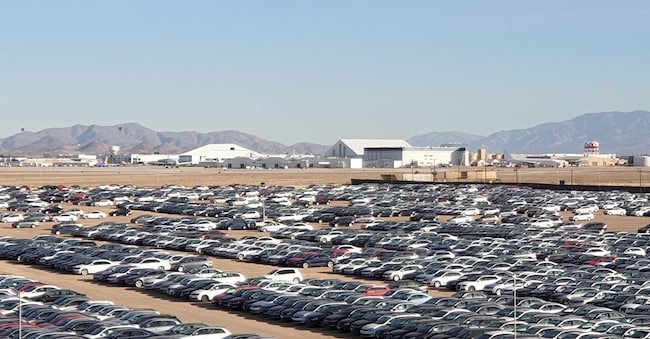
September 2015, Frankfurt Motor Show. It was the calm before the storm at the greatest and most excessive automotive kermesse of those years, the temple where the pagan ritual of the car and the German superpower seemed to fear no-one. Yet the clouds of the first epoch-making storm were on the horizon: the dieselgate that, unleashed in the USA, swept the Volkswagen group from 18 September for having altered the NOx emissions of its diesel engines with a cheating device. It was an epoch-making disaster with billions in fines as well as millions and millions of new cars in the US piled up under the sun in makeshift car parks in deserts because they had to be scrapped (and were certainly less polluting than the old cars in the US fleet). Dieselgate was a real tsunami that swept through the automotive industry worldwide and especially in Europe and Germany. Apart from the direct damage to the VW group: about 11 million diesel vehicles to be scrapped or upgraded worldwide (7.5 million in Europe, 500,000 in the USA) with Euro 5 EA189 1.2, 1.6 and 2.0 TDI engines, more than 30 billion euros in fines, lawsuits and recalls (especially in the USA and Europe). Dieselgate was the Hiroshima of the car, with the Volkswagen group swept up in a geopolitical game that started in America, and the ten years after 18 September 2015 are the ones where the industry has never been the same again.
Blow to the heart for European industry
.A real blow to the heart of European and German industry that effectively put one of the most efficient and least impactful engines in terms of carbon dioxide emissions out of action. Volkswagen, the diesel engine and the entire automotive industry suffered an unprecedented shock, also in the media, and in the dock (due to Volkswagen's fault) all manufacturers ended up and this ignited the spark, in a probably malicious confusion in the media, between climate-altering emissions and polluting emissions, until the beginning of the end for the combustion engine. Dieselgate gave the media coram populo, also due to the lack of technical knowledge in many newspapers, to support in a European Commission with Dutch traction the start of the process that led, two years ago, to the historic decision to ban the internal combustion engine in 2035 with a decision of the European Parliament that only on paper is technologically neutral but, in reality, imposes only one choice: that of the electric car with lithium ion batteries.
The NOx emissions scandal has been enormous and the entire automotive industry has been in the dock: ugly, dirty, polluting and bad in a confusion between pollutants (NOx) and climate-changing agents (CO2) that leads to technological and cultural-engineering changes of enormous magnitude. "Diesel is dead, long live lithium-ion electrics", became the mantra of an epoch-making transformation made up of the storytelling of autonomous driving, flying cars (never seen before) and electric cars that were supposed to cost little and win hordes of customers.
The consequences
.No, things have been different, after a pandemic, wars and chip crisis. The European mega-groups are struggling. But it is above all Germany, the homeland - and symbol - of the excellent car, that is suffering from a technological industrial crisis and marketing strategies based on non-existent matching of supply and demand. The German car stronghold, Europe's locomotive for technology, innovation and employment is faltering and risks collapse like Nokia. And this two and a half years after the EU decision to halt the use of thermals from 2035 and an endless series of "stop petrol" chants starting even 7 or 8 years before the European deadline, with a series of choices (see Porsche) dictated more by the desire to please the stock exchanges and analysts than by rational industrial and commercial choices. Not least because in front of them is the daring advance of Chinese manufacturers, strong in their dominance of electric cars, extended-range hybrids and, above all, software, an area in which Europe and Germany have historically been weak, despite attempts to react (the collapse of VW's Cariad division is a case in point). And so those that were at the technical forefront find themselves under pressure from Chinese giants, heavily subsidised by the Beijing government, which propose valid, digitally innovative products (capable of challenging Tesla), but which must demonstrate that they are capable of competing across the board with cars that are more than just smartphones on wheels: the Chinese are very good at singing excellence on social networks.
It is precisely in these days, ten years later, that we begin to see the first stages of the industrial disaster that the choice of the Ice Ban helped to bring about. In front of everyone's eyes these days are the factories that will be closed by the Volkswagen group and soon we will see other employment and industrial tragedies, also due to the 2025 Cafe regulations. A situation that is tragically reminiscent of the crisis of the Weimar Republic or the terrible automotive crisis of the 1970s in Germany and especially in England.


