
Several generations in the company: a debate takes centre stage in Bologna
On 7 October, a new stop on the roadshow organised by 4.Manager in partnership with *Il Sole 24 Ore*. A comparison of coaching, age management, active ageing and tools for career transitions

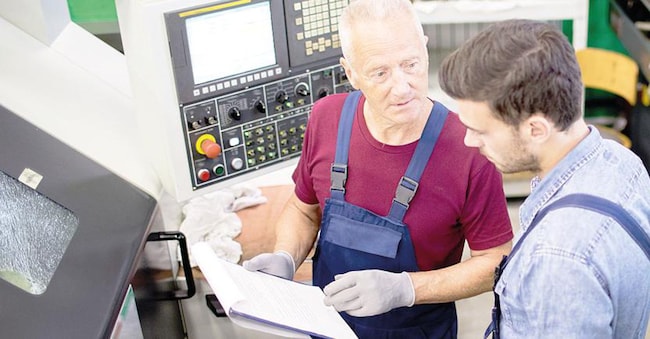
From an organisational challenge to a competitive advantage. Because demographic decline, longer working lives and the coexistence within organisations of people of different ages, with different experiences and expectations – both in life and in their careers – are changing the composition of the workforce and require us to rethink organisational models, skills development pathways and leadership styles. But let’s make one thing clear straight away: this is by no means yet another ‘threat’ to our manufacturing backbone. Far from it. In fact, having ‘multiple generations in the workplace’ is now one of the most strategic issues for businesses and managers, and targeted initiatives are springing up all over Italia: from age management policies to active ageing practices, from the development of junior and senior staff to tools to support the increasingly frequent career transitions.
These are complex yet stimulating challenges, all of which share the same objective: to manage generational diversity by transforming it into a driver of innovation, growth and competitiveness. And there is no shortage of best practices from many small and large companies that are already at the forefront in this area (see the related article on this page). All this will be discussed on Wednesday 7 October in Bologna, at Palazzo Pepoli – the museum of the city’s history – as part of the second stop, ‘Generations at Work’, of the ‘Corporate Culture 2026 – Values that Create Value’, promoted by 4.Manager in collaboration with *Il Sole 24 Ore*. A series of high-calibre events across the country (the first took place in Turin on 8 July, focusing on corporate security and AI) to explore the role of corporate culture as a strategic lever for business growth and the development of the national economy.
At the Bologna event (you can register for the event via the following link: 24oreventi.com/generazionialavoro), experts of the calibre of Paolo Sestito (Bank of Italy), Elena Bonetti (Chair of the Parliamentary Commission of Inquiry into the economic and social effects of the ongoing demographic transition), labour law expert Ciro Cafiero, and economist Claudio Lucifora, alongside business representatives and managers (including, amongst others, representatives from Philip Morris Italia, Essay Group and Fastweb+Vodafone). They will discuss data and best practices to foster collaboration between people of different ages, attract and retain talent, transfer skills, and rethink roles and careers.
Because, as is now clear to everyone, the value does not lie in the mere coexistence of several generations, but in the company’s ability to transform differences and experiences into mutual learning, the continuity of knowledge and sustainable development. The opening remarks will be delivered by Tiziana Ferrari, Director-General of Confindustria Emilia; Francesca Mazzolari, Director-General of 4.Manager; and Paola Boromei, Chief Operating Officer of the Il Sole 24 ORE Group.
The figures, in fact, paint a clear picture of the situation. According to the CsC’s 2026 labour survey, which is due to be presented in December, workers under 30 currently account for 15.6 per cent of the workforce, whilst those over 60 make up 9.9 per cent. 81.2 per cent of companies have adopted at least one measure to attract, recruit or retain young people, and 77.1 per cent have put in place measures to manage older workers. Mentoring and intergenerational support play a central role for both age groups. For young people, key factors for attracting and retaining talent also include flexible working arrangements, welfare initiatives, flexible working options and bonuses. For older workers, the focus is primarily on managing the generational transition and retaining the skills developed within the company. Replacement following retirement and mentoring are much more common than retraining or job adaptation measures.


