
Digital natives, analogue shoppers: GenZ chooses the physical shop
Young people still like to shop 'between the shelves'. Because, in addition to products, traditional shops provide a social experience. Things change when they are asked if they would like to pursue a career in retail, but only due to a lack of knowledge about professional opportunities

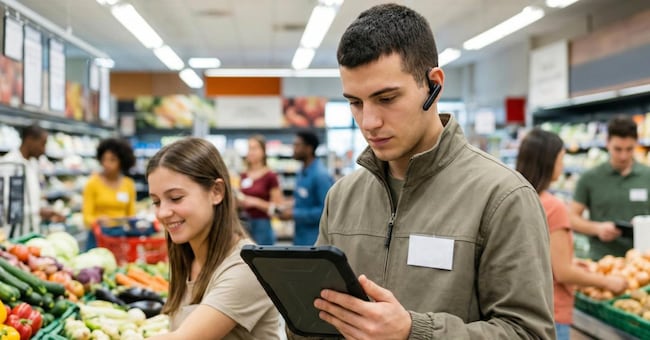
After a post-pandemic digital binge, the young people of Generation Zeta are now re-appropriating a 'disconnected' dimension of life: not only the Y2K fashion accompanied by old-school mp3 players or digital cameras, but also a return to analogue shopping, which brings them back to traditional physical outlets, alone and with friends. More than 3 out of 4 young people, in fact, still shop in shops, 'go shopping' together with friends and (even) often dictate the family shopping agenda.
Low attractiveness
However, this deep relationship with the retail world does not translate, in their eyes, into immediate attractiveness in terms of work. As 4 out of 10 reject a priori the idea of working in a shop or for a chain of shops. This is a pity, since the modern retail sector is booming and offers numerous employment opportunities that are not always taken up.
Photography
This is the picture of the relationship between GenZ and consumption that emerges from the Young & Retail 2026 Observatory, the research project developed by Skuola.net in collaboration with Noi Distribuzione, the initiative promoted by Federdistribuzione, the association that brings together and represents Modern Distribution companies in Italia. A survey that involved a sample of 1,000 girls and boys aged between 17 and 25.
The investigation
The survey, as anticipated, brought out some surprising results. With 45% of the young people interviewed stating that their predominant purchasing channel remains the physical shop, flanked almost equally - in 32% of cases - by the online. These data therefore belie (adults') belief that we are dealing with a generation lost in the digital world and confirm young people's desire for a return to more physical experiences, such as going to a shop or shopping centre more (24%) or less (51%) often to spend time with their friends.
The reasons for choosing offline
If we then go on to analyse in detail the main reasons why people still buy offline, we can isolate three major reasons that drive their behaviour: firstly the product - being able to try it (53%), the wide choice (43%), prices and promotions (24%), quality (24%), exclusive articles not available online (9%) -, secondly sociality - shopping with other people (14%), the relationship with the shop staff (14%) -, and finally the emotional aspect.
In fact, people buy in certain types of physical shops not only for the content but also for the type of aura - using a term very much in vogue among the younger generations - that they convey in the form of presence on social trends (7%), approval from the peer group (7%) or the setting of the location (12%).
By virtue of this precise and articulated selection of primary needs to be satisfied, there is also a certain utilitarian dimension to shopping: 59%, for example, say they are not loyal to the point of sale but go where they find what they need, while 38% more or less often try in the physical shop and then buy online (implementing the practice of so-called showrooming).
Brand connect


Newsletter Scuola+
La newsletter premium dedicata al mondo della scuola con approfondimenti normativi, analisi e guide operative
Abbonati