
Digital payments, for apps and 4 million Pos the IRS aligns data to receipts
The operation foreseen by the 2025 manoeuvre kicks off: 65 million euro recovery expected Trade associations call for attention to anomalies: from vending machines to group lunches

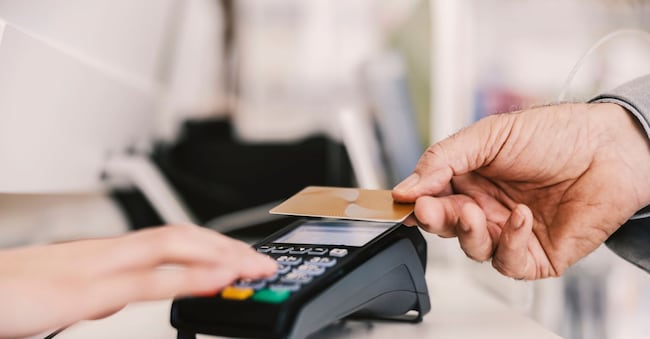
Closing the circle is near. The Inland Revenue is waiting for the aligned data of telematic receipts and payments that take place via apps and the more than 4 million Pos active throughout Italy (Bankitalia numbers). After a year of fine-tuning, the move outlined in the 2025 manoeuvre to give the revenue agency an additional tool to counter evasion becomes operational.
The higher revenue estimated in the technical report - EUR 50 million in VAT and EUR 15 million in direct taxes - is 'absolutely prudential', because it is calculated only on taxpayers with a 'very high risk profile'. But the aim is to obtain large flows of information to cross, strongly minimising the risk of so-called 'false positives', i.e. the possible anomalies that do not turn out to be such. A decisive pivot will be the telematic procedure that the Agency will make available at the beginning of March and which will allow traders, shopkeepers and artisans to match the telematic registers to the Pos identifiers transmitted by the institutions.
This is an important piece of data, considering that, according to the Milan Polytechnic Observatory, in the first half of 2025 the value collected in physical points of sale through digital payment instruments reached EUR 188 billion (+4% over the same period in 2024). But there is another figure that gives us pause for thought: 20 billion (10.6%) comes from foreign cards. The strength of tourism has in fact forced a cultural change in shops and public establishments. The 'sanction' of the market, i.e. the risk of not intercepting the cashless buying habits of customers, pushes digital micropayments and reduces the average receipt, proving more powerful than the bogeyman of possible reports to the Guardia di Finanza or local police (the penalty for those who do not accept cards and apps is 30 euros plus 4% of the value of the denied transaction).
On the pairing of Pos and recorders, the trade associations highlight some critical aspects. "The pairing mechanism developed by the Inland Revenue represents a simplification, but there is a broader problem represented by the need not to introduce new obligations for small businesses," explains Marino Gabellini, head of the tax office of Confesercenti. Looking ahead, the shopkeepers ask that great attention be paid to certain situations in which the data of electronic receipts and payments may not match. For example, explains Gabellini, "there are consumption habits that risk causing misalignments in the data: just think of a restaurant bill among several diners followed by a single receipt but with payments in different modes of the fees between cash and electronic money". Another front that requires a great deal of attention is that of retailers of goods subject to a premium, the most typical cases being tobacco retailers and petrol stations: 'In these cases, the value of the positive income components, i.e. the premium, does not coincide with the consideration subject to VAT'.
"The telematic matching procedure adopted without the physical connection between telematic registers and Pos certainly eliminates the costs for traders and reduces their administrative requirements. However, some particular situations remain to be resolved,' points out Vincenzo De Luca, head of taxation at Confcommercio. 'For example, those of the distributors on the motorway networks who partly sell goods subject to surcharges, such as fuel, and partly sell other types of goods. Moreover, payments made by bank transfer should not be included in the new telematic procedure, but we are waiting for official clarification from the Inland Revenue in this regard'.


