Digital Economy

Digital sovereignty and Europe: Microsoft wants to offer greater control over the cloud and AI

5' min read

Translated by AI
Versione italiana

5' min read

Translated by AI
Versione italiana

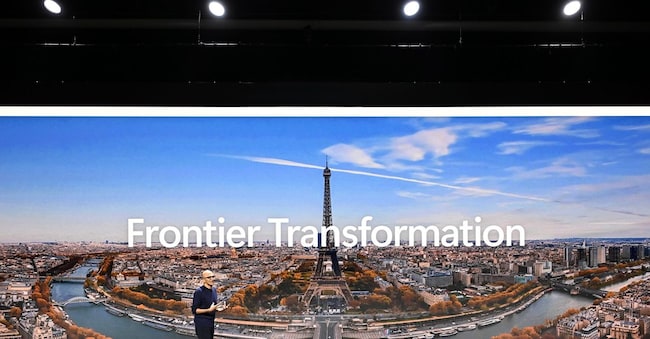
Microsoft’s CEO himself, Satya Nadella, was on hand to kick off the Paris leg of the Frontier Tour – organised by the American software giant to take stock of its artificial intelligence strategy and announce a series of new developments relating to the features of Sovereign Cloud – with his keynote address. The aim, explicitly stated the day before, is to broaden the range of solutions designed to help businesses (many of which were mentioned during the various presentations, from Stellantis to Club Med, including Saint-Gobain, the French giant in sustainable building materials) to assess their level of digital sovereignty and accelerate the adoption of AI within their processes, whilst providing them with the necessary tools for data protection and access governance.

In short, Microsoft’s aim is to take organisations by the hand and guide them into the age of agents, with a view to overcoming a challenge in which Google is the main rival. The tools for this battle are a clear strategy – which Nadella has summarised under the slogan ‘building the frontier ecosystem’ – and the software, comprising tools and platforms such as Copilot, Microsoft IQ and Agent 365.

Loading...

AI must enhance people’s capabilities

Speaking from the stage at the CNIT (Centre for New Industries and Technologies) in La Défense, Nadella linked the race towards artificial intelligence to Microsoft’s historic mission: from ‘a PC on every desk’ – a vision so dear to Bill Gates – we have moved on to ‘empowering every person and every organisation to achieve more’. The key point is understanding how to apply new technologies so that they have a tangible impact (on society and in businesses), and for this to happen, three conditions are needed: that people are empowered by technology, that businesses retain control over what they learn, and that the use of AI is based on a system of trust. Even as models become more powerful, Nadella said, the goal remains to “amplify the ambition, dignity and capacity for action of every individual”.

Translated into business terms, artificial intelligence must therefore be integrated into processes without replacing the human role, and this must be a design principle which, according to the CEO, represents “one of the most important things to achieve”. Companies, Microsoft’s CEO continued, must therefore use AI to build up a body of knowledge linked to the data and expertise that belongs to them, which they control and can continue to develop. And it is this autonomy, together with trust, that forms the framework for the so-called ‘frontier ecosystem’.

Copilot, the new operating system for work

The tool Microsoft intends to use to bring AI into everyday work is well known: it is Copilot, which Nadella has described as an interface that supports people by offering various models via chat, collaboration tools, programming functions and automated agents. The aim is to make these capabilities available for different tasks, both in the cloud and on-premises, with a view to turning it into ‘a new operating system for work’.
For businesses, however, the generative AI model is just one part of an architecture at the heart of which lies Microsoft IQ – the ‘layer’ that connects agents and artificial intelligence with the organisation’s context, and thus with people, documents, projects and interactions, as well as the data and tools already present in corporate systems. The CEO emphasised the need to separate this context from individual AI models (there are over 11,000 available through Microsoft Foundry) because, by doing so, the business can switch models, identifying the most suitable one on a case-by-case basis (the collaboration with Mistral AI was also mentioned during the presentation), without losing memory, authorisations or operational capabilities. The architecture, according to Nadella’s thinking, must be able to combine choice and control, maximising efficiency in the use of tokens, and enable companies to build their own learning cycle, using the best available components without being tied to a single model.

Agents, security and Azure as a global computer

If agents and models become more autonomous, their management must evolve in tandem, and Nadella has identified as a priority in this regard the ability to observe what they do, recording their actions and traces in a verifiable manner, defining which operations they can perform and with what privileges, and monitoring their behaviour whilst they are running. “The fundamental challenge remains aligning and understanding how these systems work,” said the CEO as he introduced Agent 365, describing it as a sort of control and governance framework for IT and security functions. The underlying aim is to improve the performance of the agents over time, and in this regard, Project Perception was also mentioned – a system for coordinating agents that simulate attacks, identify countermeasures to contain them, and help to rectify vulnerabilities.


At the heart of it all, as always, lies the infrastructure, and on this front Nadella obviously did not miss the opportunity to sing the praises of Azure, describing Microsoft’s cloud platform as “a global computer” that operates thanks to more than 500 data centres and over 80 dedicated regions. Finally, when it comes to AI chips, the strategy focuses on a heterogeneous fleet, with processors from Nvidia and AMD joining Microsoft’s own Maia chips: the new 300 series, due to arrive in 2027, as Nadella pointed out, will deliver over 40 per cent more tokens per megawatt, although the real challenge lies in optimising the entire chain, from the chip to the data centre, right through to the models and multi-agent systems. Only in this way, the Microsoft chief declared, can AI be delivered with adequate performance and at sustainable costs.

Sovereign Cloud expands and is updated

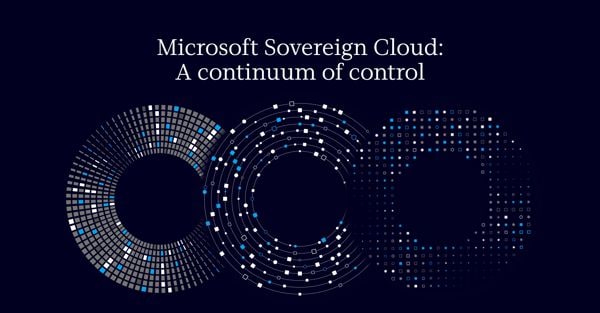
During the French leg of the Frontier Tour, Microsoft also announced new features for digital sovereignty, delivering on the commitments it made to Europe in early 2025 with the launch of the ‘Digital Resilience Commitments’. The updates specifically concern new options for the public cloud, customer-managed private environments and the partner network. The new Sovereignty Control Panel brings together information on sovereignty controls within the Azure portal and helps identify gaps and necessary actions, whilst Sovereign Private Cloud is being extended to include data services, developer tools and AI that can also be used in offline environments.

Loading...

Redmond’s strategy is based on the idea that sovereignty does not equate to a single architecture that applies to everyone, a point also highlighted by Stuart Russell, Vice-President of Engineering for International Sovereign Cloud, during the event in Paris. According to Microsoft’s guiding principle, organisations must have a comprehensive overview of data residency, confidentiality and business continuity in order to verify, for example, which resources meet geographical requirements and which require adjustments, and to assess whether critical workloads are ready to migrate from Azure to the on-premises Azure Local platform. The presentation also outlined a disconnection scenario, demonstrating how workloads transferred to an on-premises environment can continue to operate even without a connection to Azure, thanks to systems (Foundry Local and GitHub Enterprise Local) that bring development models and tools closer to the organisation’s most sensitive data and critical processes.

Microsoft’s approach to digital sovereignty is, in essence, a tiered one, built around individual workloads, with the public cloud offering scale and innovation, whilst other systems may require local management, operational independence or a partner with an autonomous management model. Sovereignty, as Satya Nadella concluded, is not a one-size-fits-all solution but rather a portfolio of options to be tailored to each customer’s needs, ensuring the freedom to choose how to manage systems, models, data and information that may remain on-premises.

Copyright reserved ©
Loading...

Brand connect

Loading...

Newsletter

Notizie e approfondimenti sugli avvenimenti politici, economici e finanziari.

Iscriviti