
Sexual violence, lawyers' and magistrates' guidance on when and how to give consent
Legal experts analyse the operational and interpretative difficulties in defining free and current consent and propose changes to ensure clarity and protection of the parties involved.

Key points
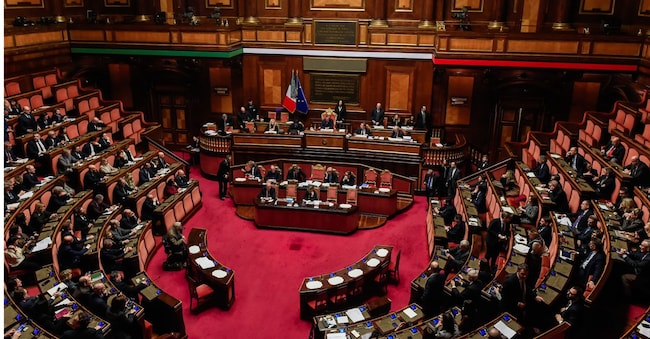
Hearings on the proposed laws on sexual violence and the free expression of consent have begun in the Senate Justice Committee. The hearings were the subject of fierce controversy between the majority and the opposition because they were interpreted by the latter as delaying the approval of the text that had been given a unanimous green light in the Chamber of Deputies and was considered proof of an albeit laborious possibility of collaboration between opposing political camps on sensitive issues.
Anm's intervention
The interventions of magistrates and lawyers were central. For Anm president Cesare Parodi among the operational problems 'one concerns the assessment of the subjective element, the perception of the hypothetical perpetrator. One thing is a relationship that starts in one evening and ends with a sexual act, another is episodes of violence within continuous relationships. The bills focus on free and current consent. The discourse on revocability is important: it is difficult to think of an irrevocable consent. If this is clear, the problem comes down to an analysis of the case: how should we read the issue of the negative fact that the prosecutor must prove, namely the absence of consent. The most delicate aspect is the method, the rule must more or less specify the manner in which this consent must be expressed'.
The right not to answer
Moreover, 'as of today, I do not know whether it will be possible during the investigation phase for the suspect to make use of the right of silence. During the investigation phase, it is impossible for the suspect not to answer, in fact it is indispensable for the suspect to bring his version of the facts'.
Objected burden of proof
For the ANM, on the other hand, the fear, expressed by several parties, of a reversal of the burden of proof does not seem well-founded. In fact, the absence of consent cannot be proved through presumptions, but by indicating the elements and circumstances aimed at possibly also reconstructing the context, the dynamics of the facts, the behaviour assumed before and/or afterwards by both protagonists of the affair, avoiding however intrusive and victimising questions to the offended person and the consequent risk ofsecondary victimisation.
The task of the prosecution
The onus is always on the prosecution to prove the absence of free and actual consent at the time of the commission of the sexual act; it is then up to the judge to reconstruct the historical fact, in the light of the available elements, to reconstruct whether or not, in a given context, there was consent to the act.


