Cinema and media

Disability, on-screen pietism and 'inspiration porn' do not tell the truth

From cinema to music, from TV series to infoteinement there is no room for the reality of people with disabilities, we proceed by stereotypes.

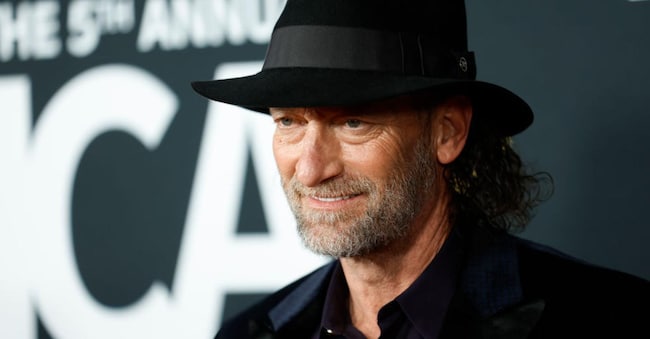
by Nicoletta Labarile

L’attore sordo Troy Kotsur. (Getty Images)

6' min read

6' min read

Only three people with disabilities have won an Oscar. Deaf actor Troy Kotsu was awarded the Oscar for Best Supporting Actor in 2022: 'I just want to say that I dedicate this award to the deaf community, the C.O.D.A. community and the disabled community. This is our moment,' he said in his acceptance speech. Before him, deaf actress from childhood Marlee Matlin in 1987 and World War II veteran Harold Russell in 1946.

Talent comes first but, in the case of artists with disabilities, this is not a guaranteed right: the world of entertainment, from music to film, does not welcome disability. But it oppresses its spaces and representations by excluding talents with disabilities through "ableist" narratives that, by leaving behind "non-conforming bodies", suggest the existence of a socially established norm with respect to what is considered "conforming". Exclusion is one side of the same coin: the one whereby, when disabled artists are not cut off, they are considered solely and exclusively by virtue of their disability. A similarly ableist approach that, with the apparent intention of inclusion, discriminates.

Loading...

Inspiration porn, disability as 'super power' distorts reality

It is called 'inspiration porn' and it is the expression that activist Stella Young explored in her famous 2012 Ted Talk to describe a rhetoric that made many people with disabilities uncomfortable but still unnamed. In the rhetoric of inspiration porn, a person with a disability is shown as inspiring not so much because of achievements, but because of the fact that he or she succeeds despite the disability. The use made of these stories is far from true empathy. "I use the term pornography deliberately," says Young in the Ted Talk, "because it implies the objectification of one group of people for the benefit of another group of people.

Loading...

This can apply both in representation and in behaviour: it is an effect of inspiration porn, for example, to consider it right to congratulate a person with a disability because 'in spite of everything' they go to work, have children or simply have a social life. This approach emerges clearly both in narratives that represent people with disabilities through pietism and in those in which they are portrayed as superheroes in possession of some superhuman power or strength that, despite their 'diversity', allows them to be special and therefore better than others.

Both representations, from literature to film and TV series, have distorted the perception of disability in reality. "The purpose of these images is to provide inspiration so that you can look at them and think: Well, as difficult as my life is, it could be worse. I could be that person. But what if you are that person?" adds Young in another passage of his speech, continuing: "Those images reduce disabled people to objects for the benefit of non-disabled people.

Disability in cinema, an unattractive and 'niche' topic

.

Not only is disability rarely portrayed in an appreciative manner on screen, it is hardly ever a protagonist. Still too often, the few available roles are entrusted to non-disabled actors and actresses: this is what emerges from the Diversity Media Report 2024, the annual research conducted by the Diversity Foundation on the representation of diversity in the Italian information and entertainment media.

As Marina Cuollo - a writer, D&I consultant and editor of the Diversity Foundation report - points out in the report, the presence of characters with disabilities remains scarce and the circulation of series featuring them as protagonists or as figures of value is severely limited. The film industry seems to continue to perceive disability as a niche and unattractive issue, relegating it to a few products or using it as a tragic narrative hook in its romances, if not as an element of terror in the horror genre.

The 'inspiration porn' approach persists, consolidating the error of limiting oneself to a pietistic or paternalistic narrative. Or, worse, aimed at inspiring non-disabled people. Indeed, the characters that appear in the international media landscape today are still too often treated as tragic or heroic stories of 'overcoming disability', as if disability were something that can and must be overcome, at the cost of ignoring one's own mental and physical health.

What is missing, the report points out, is the existence of disabled characters whose identity is not thematised, but is simply one of the many elements of their existence. This means that their storylines do not necessarily have to revolve around their physical and bodily characteristics: it is possible to show people who live peacefully with their disability and whose storylines revolve around all the classical themes of seriality instead.

Animated series and young, virtuous examples

.

Representing characters with disabilities more naturally and sensitively are the animation series (such as 'Blue Eye Samurai', cited as a virtuous example of liberation and inclusion) that are making their way as bearers of real innovation and diversification, bringing intersectional stories and diverse characters from underrepresented groups even into the same product.

Even young series manage to break out of the pitying and stigmatising parameters of the contemporary media landscape, giving space and representation to explicitly disabled characters in which disability is not seen as a problem to be faced or overcome, but as one of the traits of the individual. This is true both at international level, with series such as 'Il Trenino Thomas' and 'The Dragon Prince', and at Italian level with products such as 'Il cercasuoni'.

On the international front, the Diversity Media Report 2024 records, awareness is higher and the products make a significant contribution to an authentic and participatory representation of people with disabilities. Aspects to work on clearly emerge: a persistent critical point, for example, is the very scarce presence of professionals with disabilities and neurodivergents behind the scenes, in writing and directing roles.

Awareness of adequate counselling is growing: the Italian production of Prime Video, for the series 'Prisma', relied on the advice of activist and expert Sofia Righetti to create the character of 'Carola', a girl with disabilities with a multifaceted history whose disability is only a part of it. However, while recognising the importance of counselling, it is essential to provide concrete opportunities for creatives with disabilities and neurodivergent people to actively participate in the industry.

Morbid and ableist, the narrative of disability on TV

Even on television, as in the cinema, there is a lack of truthful portrayals of the daily lives of people with disabilities. Far from calling themselves 'superheroes'. With reference to the various TV programmes analysed in the report, in relation to disability the predominant tendency is to give in to inspirational and emotional narratives, often falling into a mechanism of 'trauma porn' that links the account of disability to painful emotions and directs various elements of the product (lighting, music, questions, tone of the conduction) towards the pity of the host.

In fact, the representation of disability on TV does not only concern dramas. But also many talk shows and entertainment programmes where people with disabilities are often only invited to talk about their experience of illness or disability. This mechanism risks confining them to a single aspect of their own, ignoring their complexity and individuality. To reverse this, we need to implement what Cuollo indicated: to involve people with disabilities not only as guests or victims, but also as authors, directors and producers.

Record market, no data on inclusiveness

On the music front, there is no specific data on the inclusion of artists with disabilities in the mainstream market. Despite the strong economic value of the music market - according to FIMI (Federazione Industria Musicale Italiana) the Italian record market in 2023 recorded a significant growth of 18.8% with a total turnover of 440 million - it remains a challenge in Italy to make it more inclusive.

"Today, music is subjected to the market. It is not addressed. And this means that a person with a disability sees the doors closed in their face regardless of their talent,' explained record producer Carlo Martelli during the press conference 'Enthusiasm, music and inclusion', sponsored by RAI and organised in collaboration with the 'Entusiasmabili' association to raise awareness of the issue.

The composer Ezio Bosso did not want to be named as an example of life, but to be regarded 'only' as a musician. Instead, as in film and TV, the prevailing approach in music is one of pietism or the valorisation of disability taken as an example 'in spite of everything': 'Talent must be master. In everything and for everything. But the doors must be opened with more confidence with respect to disability,' Graziella Saverino, artist and president of the association Entusiasmabili dedicated to the inclusion and support of people with disabilities, told Alley Oop. The road is uphill but, in the meantime, for the song contest of excellence in Italy - the Sanremo Festival - a precise appeal arrives from Montecitorio: give space, if they deserve it, also to artists with disabilities.


Copyright reserved ©
Loading...

Brand connect

Loading...

Newsletter

Notizie e approfondimenti sugli avvenimenti politici, economici e finanziari.

Iscriviti