
Catastrophic experts, the list is the first step for a quick and congruous reconstruction
Building an 'ecosystem of resilience', where public and private work together to protect citizens, businesses and territory, is the challenge of the future
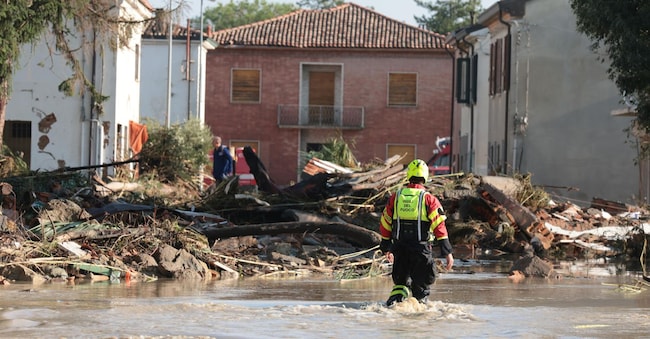
In the last fifty years Italy has faced more than 115 catastrophic events including floods, earthquakes, landslides and fires, with 253 billion euro of damage and 56 thousand victims. It is the most affected country in Europe, but with the lowest level of insurance coverage: only 7% of homes are insured for natural risks, compared to 75% in Spain, 80% in France and over 90% in Germany.
A paradox we can no longer afford. Climate change has turned risk into certainty: extreme events are occurring with increasing frequency. We must move from a logic of emergency to one of prevention and protection. In this scenario, the Public Insurance Service Concessionaire, which I have the honour to preside over, and the new Role of Catastrophic Experts, established by law no. 40 of 2025, assume decisive importance. Without a qualified, independent and recognised expert opinion, there can be no fair compensation. Post-disaster reconstruction begins with a correct, uniform and timely assessment of the damage, which protects families, businesses and insurance companies.
The list of catastrophe experts established at Consap SpA represents a fundamental step for the country's security. The new Role will have two key functions: on the one hand to make certified professionals publicly available, and on the other to protect the category, preventing such delicate tasks from being entrusted to unqualified persons. A concrete way to put an end to 'legal abusiveness' and enhance competence. But the issue is also cultural. 94% of Italian municipalities are exposed to catastrophic risk and 80% of Italians are homeowners, but most homes are not insured. A change of mentality is needed: insurance is not a tax, but a protection, an economic and social shield. The Budget Law 2024 introduced compulsory insurance against catastrophic risks for companies and homes that benefited from the super bonus. The next step should be the semi-compulsoriness also for private homes purchased with a Consap guarantee.
If cat-nat insurance were then extended to all private buildings, with an average premium of around EUR 100 per family per year, this could save over EUR 4 billion in public expenditure. According to Unipol estimates, in 25 years catastrophic events have increased by 120%. Without prevention, damage could reach 590 billion over the next 50 years. Every euro invested in prevention saves the community eleven. Behind these numbers are families who lose their homes, businesses that close, territories that empty.
Catastrophic expertise, if carried out competently and swiftly, is the first instrument of equity: it guarantees fair and rapid compensation, reducing the economic and psychological impact of disasters. Consap is ready to play its part by managing the cat-nat expert list with a digital, transparent and interoperable system with companies to ensure traceability and uniformity of assessments. Alongside technology, ongoing training of adjusters will be essential, in cooperation with universities, associations and the insurance world.

