
Discovering Oaxaca for an immersion in Mexico's best culinary scene
Pre-Columbian and Hispanic heritage, extraordinary biodiversity and high quality ingredients make it one of the most interesting and visited destinations in Central America
by Javier Arredondo
3' min read
3' min read
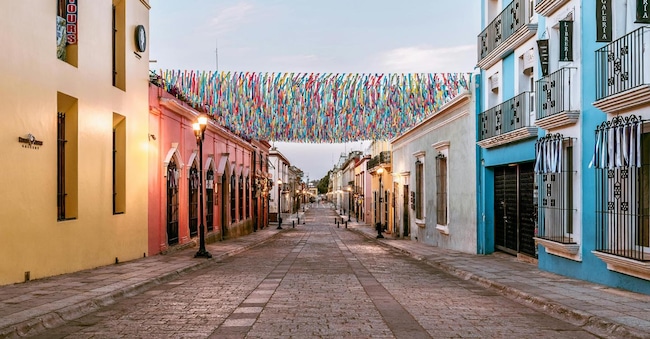
Not long ago, I was walking through the beautiful Jardín Etnobotánico with Alejandro de Ávila Blomberg, its founder and director. When I asked him how he explained the extraordinary biodiversity of this region, he replied that 'it all depends on the soil'. That diversity in terms of biology and geology, capable of expressing itself in a riot of flowers, plants and landscapes, translates into an equally astonishing multiplicity of cultures and traditions: food, architecture, design, here they live on variety. These are the reasons why Oaxaca is one of the most interesting and visited states in Mexico. I was born and live in Mexico City, but I have been travelling to Oaxaca for as long as I can remember. If someone asks me why I love this place so much, the answers are always two, the same: its blue sky and its transparent light. The architecture of the city of Oaxaca tells both ancient and contemporary stories. The streets and squares of the centro histórico are dotted with colonial convents, most often flanked by inviting new restaurants, mezcalerias and design ateliers. The characteristic green stone - cantera verde - distinguishes the city's old buildings, but is also used by contemporary architects: when it rains, it takes on a soft hue that is almost unreal to me, an optical effect that has always fascinated me.
Then there are other places, nestled in the countryside not far away, that take me back in time: Monte Albán - the large and sumptuous Zapotec city perched on top of a hill -, or the more intimate Mitla, with its small courtyards and fascinating geometric structures and decorations. They offer realistic glimpses of the area's pre-Hispanic history, although both have been reached by increasing urbanisation. In the more remote Yagul, a walk among the ruins opens the imagination: I can spend hours fantasising about what life must have been like here during the height of pre-Columbian civilisation. There is also no shortage of natural wonders.
Loading...
Such as Hierve el Agua, an expanse of water pools on craggy rocks, considered by some to be a mystical spring with healing properties. These travertine rock formations look like waterfalls hibernated in time, while the man-made pools offer a connection to the primordial elements of this land, and are accessible for a refreshing bath. The convents and churches one encounters have been built largely since the 16th century by Dominican friars. With thick walls, vaulted ceilings and small windows, they are an excellent refuge from the heat and sultriness, as well as an example of the interpenetration of Spanish and indigenous elements, right down to the architecture.
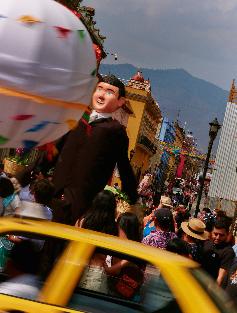
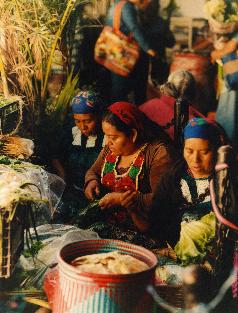
But this region does not live in the past. The city of Oaxaca, in particular, is constantly evolving, but the whole state is multicultural, although not the multiculturalism typical of the large western metropolises. Here, 16 indigenous languages are still spoken, including Amuzgo, Chatino, Zapotec and Mixteco, there is a large community of Mexican and foreign pensioners and young digital nomads, who have brought creativity and dynamism. Some will say they have been attracted mainly by the food, and in part this is true: the culinary scene is considered the best in Mexico, with flavours reflecting pre- and post-Hispanic heritage, and high quality, locally grown ingredients.
Finally, for those who want to immerse themselves in a distant world, the ancient Zapotec culture flourishes in the quiet enclave of San Juan Guelavía, a small town of 3,300 inhabitants outside Oaxaca. It is less well known than neighbouring Teotitlán del Valle and San Jerónimo Tlacochahuaya, with their lively weaving traditions and ornate Baroque churches. But in its squares, streets and markets, there are authentic glimpses of the past. In the impalpable light one can discover something far removed from the hustle and bustle of modernity: a place as eternal as the earth on which it was built.


Loading...
