DigitEconomy.24

“Diversifying energy sources and greater cooperation between EU countries to tackle high energy prices”

Ambassador Giampiero Massolo speaks out: ‘Europe needs a missile defence shield; no to dogmatism’

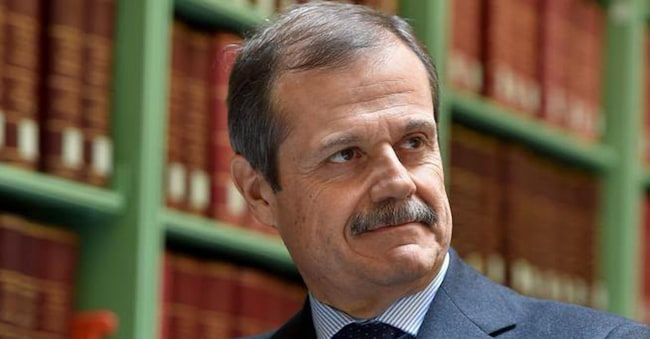
Giampiero Massolo, ambasciatore, vicepresidente di Mundys

6' min read

Translated by AI
Versione italiana

6' min read

Translated by AI
Versione italiana

(Il Sole 24 Ore Radiocor) – Data centres are now a strategic asset that is essential to the Italian and European economies and to the development of AI. However, the issue of energy costs must be resolved. This can be achieved by diversifying energy sources, fostering collaboration between European countries and encouraging public-private partnerships. This is the view expressed by Giampiero Massolo – ambassador, chairman of Fincantieri Next Tech, vice-chairman of Mundys and director of the Geopolitical Risk Observatory at Luiss – in an interview with DigitEconomy.24, in collaboration with Digit’Ed (a group active in training and digital learning). We must also be aware that this is not an Italian issue but a European one. And Europe must also reflect on excessive regulation and the geopolitical role it wishes to play. On the defence front, in particular – a field increasingly linked to technology and digitalisation – Massolo rejects dogmatism: Europe needs ‘a missile defence shield’, and if the US has objections, it must provide an alternative: ‘there is no such thing as a “no” for the sake of it when it comes to security’.

It is often said that we need to strive for greater strategic autonomy for Italia and for Europe. Such autonomy cannot be achieved without digital assets. Is Italia in a position to position itself as a hub for data centres, given the need for investment and energy?

Loading...

The challenge of striking the right balance between capacity, computing speed and the energy required to run data centres is common across Europe, perhaps with the exception of France, which relies on nuclear power – though this is not without its own issues, currently linked to heatwaves and a power station fleet that is not exactly state-of-the-art. The problem of how to secure energy sources is, therefore, a shared challenge. It represents a fairly significant constraint, making it even more difficult for Europe to compete. How can this be overcome?

In the meantime, we must give a decisive boost to European energy policies. It is no coincidence that I am talking about Europe; this is not just an Italia issue. We need to act swiftly by diversifying our energy sources, moving straight and swiftly towards nuclear power, and strengthening cooperation between European countries. The aim? To create a genuine European energy market, with a grid capable of being accessed from anywhere in Europe on more favourable economic terms. This brings us to the issue of national self-interest and regulations, and the sensitivity of public opinion towards this or that energy source. Furthermore, public investment must be promoted through incentives and public-private partnerships. It will not be a panacea for all ills, but if we never get started, we will never achieve the goal of increasing Europe’s level of independence and boosting our capacity to generate energy and become more self-sufficient, if not entirely independent.

Do you think the current ‘golden power’ legislation – that is, the Italia Government’s special powers – is suitable for protecting strategic assets, or does it risk deterring foreign investment?

Golden power is a protective measure designed to prevent non-national, foreign economic interests from causing harm to a particular company or a particular sector of industry. It also prevents the transfer of technology into the wrong hands or opportunistic takeovers aimed at driving successful Italian companies out of the market. If we go too far and turn the ‘golden power’ into an instrument of industrial policy, we are misusing it. It must serve as a defensive tool, whilst industrial policy should be pursued by the government using the instruments specific to industrial policy. We must take care to ensure that this measure does not become protectionism for its own sake, as this discourages foreign investment.

In the current geopolitical landscape, what role can Europe carve out for itself, particularly in light of the latest legislation on digital sovereignty (such as the recent Cloud and AI Development Act)?

On either side of the Atlantic, we have two contrasting examples. On the American side, the digital sector is dominated by large companies with virtually no limits. They strike deals with political powers as and when it suits them, all in the name of deregulation. On the other hand, Europe has traditionally been a regulatory powerhouse. It suffers from excessive regulation. In the past, it was a strength of Europe to dictate and impose standards, with those who did not accept them facing exclusion from the European market; today, in an era where digital technologies are highly advanced, no regulation can meaningfully stand in the way of progress. The EU must take stock and determine whether the future still lies in such detailed regulation or whether, instead, a better compromise with technology companies should be sought and established. Ultimately, much of this regulation risks stifling even our own individual European initiatives. We cannot generalise, but a critical analysis of European regulations is needed on a case-by-case basis – not to do Trump a favour, but to avoid creating too many obstacles for domestic companies as well. It is in our own interests too. We do not want to abandon our culture, nor do we want a ‘Wild West’ scenario, but a critical analysis of the regulations must be carried out.

Is it possible today to counterbalance our dependence on US big tech by looking to Beijing?

We risk moving from one form of dependence to another. Today we are dependent on fossil fuels and American technology, but we risk moving towards a dependence on renewable energy sources and the related technologies from China. From this point of view, we should draw up clear agreements with the US and say: “We realise that there is a security issue with China; on the other hand, it is a major provider of technology. If we agree not to depend on China, you must regard cooperation with Europe as strategic, just as we regard that with you. You must not rule it out by decree.” This is the idea of a new transatlantic pact.

When discussing technology today, in the current geopolitical context, one cannot avoid the subject of defence. How can Europe’s defence capabilities be strengthened?

We need to take action on three fronts. The first is to make the most of all the partnerships that can be established under existing treaties within the European Union, extending them as far as possible to make initiatives both feasible and less costly. One might think, for example, of a common industrial base and financial resources that would allow borrowing at lower costs.

Secondly, we must make the most of all our partnerships with the ‘Volenterosi’, involving non-member European countries such as the UK, Norway, and, in the future, Ukraine and Turkey. We must also look to Asian democracies such as Japan and South Korea. All this can be achieved through the ‘Volenterosi’ system by forging flexible partnerships on individual projects. Italia cannot afford to lose touch with this leading group formed to safeguard the eastern borders. If anything were to happen in the Balkans in the future, it would be the south-eastern borders – and therefore Italia – that would be at risk. This must be explained to the public; our security is at stake.

Third point: we have less US involvement than we need, because – it is worth reiterating – we still need it. We can, therefore, strengthen NATO’s European pillar, making cooperation possible even with a reduced US presence. And this could align with their objective of limiting their presence in theatres that are less of a priority for them than the Indo-Pacific. In short, Europe must do more for security.

Were projects such as Leonardo’s Dome therefore heading in the right direction? 

I don’t think we need to be dogmatic. We can discuss anything, provided we take the right approach. There is a security aspect that makes it preferable for the US that EU countries make certain choices rather than others. But we must ask ourselves: what are the consequences for European countries? Our security is also guaranteed by a missile defence shield; we could launch a European collaboration on this. The aim is to ensure security; it is all very well if this can be achieved with the US, but if there are objections – assuming they were indeed objections – then the US must provide an alternative. ‘No just because’ does not exist in security matters.

Copyright reserved ©
Loading...

Brand connect

Loading...

Newsletter

Notizie e approfondimenti sugli avvenimenti politici, economici e finanziari.

Iscriviti