
“Diversifying energy sources and greater cooperation between EU countries to tackle high energy prices”
Ambassador Giampiero Massolo speaks out: ‘Europe needs a missile defence shield; no to dogmatism’

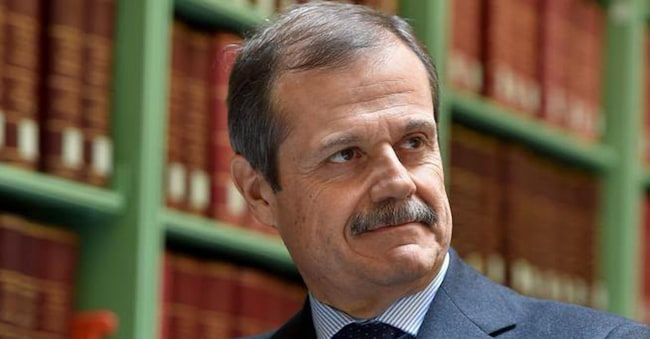
(Il Sole 24 Ore Radiocor) – Data centres are now a strategic asset that is essential to the Italian and European economies and to the development of AI. However, the issue of energy costs must be resolved. This can be achieved by diversifying energy sources, fostering collaboration between European countries and encouraging public-private partnerships. This is the view expressed by Giampiero Massolo – ambassador, chairman of Fincantieri Next Tech, vice-chairman of Mundys and director of the Geopolitical Risk Observatory at Luiss – in an interview with DigitEconomy.24, in collaboration with Digit’Ed (a group active in training and digital learning). We must also be aware that this is not an Italian issue but a European one. And Europe must also reflect on excessive regulation and the geopolitical role it wishes to play. On the defence front, in particular – a field increasingly linked to technology and digitalisation – Massolo rejects dogmatism: Europe needs ‘a missile defence shield’, and if the US has objections, it must provide an alternative: ‘there is no such thing as a “no” for the sake of it when it comes to security’.
It is often said that we need to strive for greater strategic autonomy for Italia and for Europe. Such autonomy cannot be achieved without digital assets. Is Italia in a position to position itself as a hub for data centres, given the need for investment and energy?
The challenge of striking the right balance between capacity, computing speed and the energy required to run data centres is common across Europe, perhaps with the exception of France, which relies on nuclear power – though this is not without its own issues, currently linked to heatwaves and a power station fleet that is not exactly state-of-the-art. The problem of how to secure energy sources is, therefore, a shared challenge. It represents a fairly significant constraint, making it even more difficult for Europe to compete. How can this be overcome?
In the meantime, we must give a decisive boost to European energy policies. It is no coincidence that I am talking about Europe; this is not just an Italia issue. We need to act swiftly by diversifying our energy sources, moving straight and swiftly towards nuclear power, and strengthening cooperation between European countries. The aim? To create a genuine European energy market, with a grid capable of being accessed from anywhere in Europe on more favourable economic terms. This brings us to the issue of national self-interest and regulations, and the sensitivity of public opinion towards this or that energy source. Furthermore, public investment must be promoted through incentives and public-private partnerships. It will not be a panacea for all ills, but if we never get started, we will never succeed in increasing Europe’s level of independence and boosting its capacity to generate energy and become more self-sufficient, if not entirely independent.
Do you think the current ‘golden power’ legislation – that is, the Italia Government’s special powers – is suitable for protecting strategic assets, or does it risk deterring foreign investment?

