
US: Doctors and priests campaigning against genocide call on Congress to take immediate action on Gaza
Doctors Against Genocide and Priests Against Genocide have a joint network spanning 60 countries

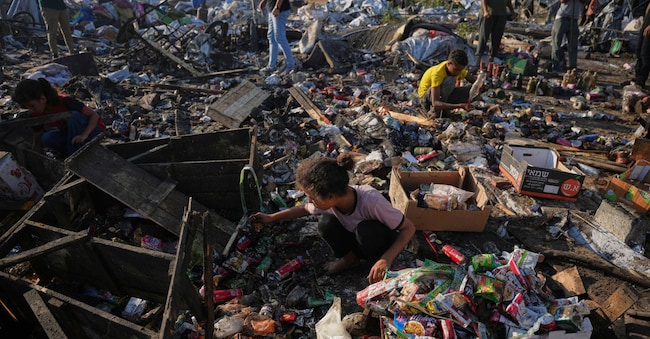
Concrete action for Gaza: this is what Doctors Against Genocide and Priests Against Genocide are calling on members of the US Congress to take in order to ‘put an end to the humanitarian catastrophe’ currently unfolding in the Strip. The demands are set out in a letter, sent to mark the 250th anniversary of the Declaration of Independence, which recalls the founding fathers’ principles of freedom and equal justice. ‘We share a calling to healing,’ write the international organisations of doctors and priests, which form a joint network spanning 60 countries, united in requesting a meeting with legislators on 22 July.
“A thousand days after the start of the siege of Gaza, over a million children remain trapped in unimaginable conditions,” says Dr Nidal Jboor, co-founder of Doctors Against Genocide, “the world cannot look the other way. It must take action.”
The organisations are calling for full compliance with US human rights laws (the Leahy Amendments); the rejection of provisions linking US and Israeli intelligence and armed forces (Sections 219 and 622 of the NDAA), in favour of blocking arms transfers between the two countries (the Block the Bombs Act, H.R. 3565); the release of the nearly 10,000 Palestinians detained without due process (including the ‘Gaza 18 Doctors’) and an end to settlement expansion in the West Bank. It calls for the withdrawal of the IDF from Gaza and for the ceasefire to be enforced, whilst ensuring humanitarian aid reaches the Strip.
The issue of funding for UNRWA
The letter also calls for the full restoration of funding to UNRWA, the UN agency for Palestinian refugee relief. However, the UN agency is at the centre of a row during the Board of Peace meetings currently taking place in Cyprus. A post on the Board’s X account read: ‘UNRWA will no longer have a place in the new Gaza’, justifying the stance by rejecting the ‘complex system of aid dependency and perpetual conflict. The people of Gaza deserve better’. However, UNRWA’s acting commissioner, Christian Sauders, responded by stating that the agency has ‘a workforce of 11,000 people, comparable to that of a state-run public service’ and that ‘around 1.7 million Palestinians depend on (these) services’.
According to the newspaper Israel Hayom, at the meeting the Board of Peace finalised ‘a pilot programme’ aimed at establishing ‘humanitarian zones’ outside Hamas’s control. According to the newspaper, “aid, doctors and food will be sent to the humanitarian zones in an attempt to gradually loosen Hamas’s grip on the population, bit by bit”.

