
Dorothy, Kathleen and the other teachers of the past
Andrea Augenti recounts the industry with biographies of the protagonists, including discoveries, remote locations, twists of fate and low blows

3' min read
3' min read
Wonder moves the world. In 1927, Freya Madeline Stark arrived in Beirut, travelled to Syria and wrote in her notes: 'I would never have imagined that my first time in the desert could arrive with such a shock of beauty and enslave me, immediately'. That astonishment changed her life. She had heard of the 'assassins', a Persian sect that terrorised the East between the 11th and 12th centuries, and she set out on their trail to find their locations and material remains. Then, she became an archaeologist and in Persia she divided her time between the 'assassins' and their castles, climbing the fortress of Alamut barefoot, and the bronzes of Luristan, precious objects produced in the first half of the 1st millennium BC between Iran and Iraq. Freya Stark's story is one of the most compelling in the book Archeologists. I maestri del passato, written by Andrea Augenti, professor of Medieval Archaeology at the University of Bologna. He declares his intention, to retrace archaeology through the biographies of its protagonists: "because only after understanding what and how our predecessors did, can we understand why we do our job in one way and not another, the reasons for our choices, and how we can improve ourselves by pushing the limits"..
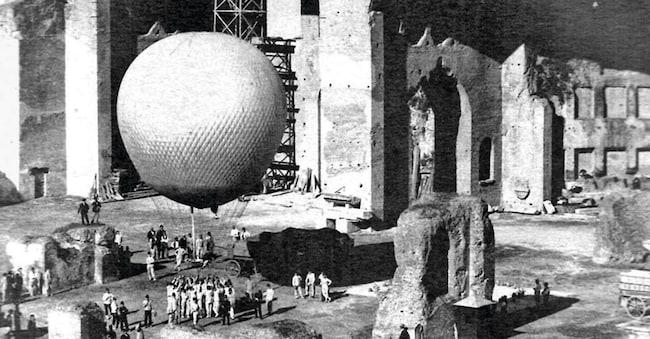
Thus, archaeology becomes science and wonder, amidst adventurous lives and remote locations, twists of fortune and low blows. Augenti does not propose 'the Pantheon of archaeology' but page-turners capable of reaching everyone. The journey begins with John Aubrey, one of the last antiquarians, and one of the first archaeologists, as he raises the bar of scientificity. Of course, one cannot miss Johann Joachim Winckelmann, with his History of Art in Antiquity (1764) and capable of introducing fundamental themes such as systematicity, first-hand observation and the historicisation of works of art through the analysis of ancient texts. Or Heinrich Schliemann with the discoveries in Troy or Arthur Evans with those in Crete. Giuseppe Fiorelli, attentive to culture, politics and the smoke of his cigar, 'invented' the plaster casts of Pompeii, Rodolfo Lanciani the topography of ancient Rome and Paolo Orsi the Magna Graecia. Without Giacomo Boni, who plumbed the heart of Rome and used the balloon to shoot from above the Roman Forum, archaeology would never have changed pace. The stratigraphic method is his: 'It is advisable to use, if possible, for initial explorations the pits resulting from previous excavations, in which case the walls must be cleaned vertically so that the stratification appears [...]. Once the layers have been identified, all that remains is to study them, according to their natural deposit'.
The protagonists flake through like archaeological layers, but perhaps the most passionate biographies are the female ones. Breaking through the glass ceiling is Dorothy Garrod. She goes to Iraq, to the Kurdistan region, she is on the trail of the Neanderthal culture: 'she sniffs them out, she follows them like a detective'. Which she finds in the Mount Carmel area, now in the State of Israel, and decides to hand in her application for the prestigious Disney professorship at Cambridge: 'I won't get it, but I thought I'd give the voters a run for their money'. Instead, she wins: she is the first female professor of archaeology at Cambridge University, but in victory she is considered a man, the proper man got in. Kathleen Kenyon, who perfected the stratigraphic method with Mortimer Wheeler and spread it to the Near East, also changed history: in 1927, she became the first woman president of the Oxford University Archaeological Society. Not to be forgotten is Mary Leakey, holding a cast of the skull of Zinjanthropus, one of our most ancient ancestors.
Every archaeologist is a piece of the immense puzzle that helps us to understand who we are, above all, as Ranuccio Bianchi Bandinelli, an open-minded and innovative scholar, wrote: 'the archaeologist and his works will have to speak to everyone, not only to the learned [...] and spread in everyone's minds the luxuriant seed that he has taken from the inapparate heaps of ruins and has made ripen in his brain. He must not, the archaeologist, be only the chronicler, but also primarily the historian, more: the biographer, the philosopher, the evangelist of the past'.
Andrea Augenti, Archeologists. I maestri del passato, Carocci, pp. 316, € 24


